View methods side by side.
Choose up to four methods. Add them using the search and share the comparison by copying its link.
| Criterion |  Product Strategy DIBB |  UX Design Lean UX Canvas |  Systems Thinking Current Reality Tree | 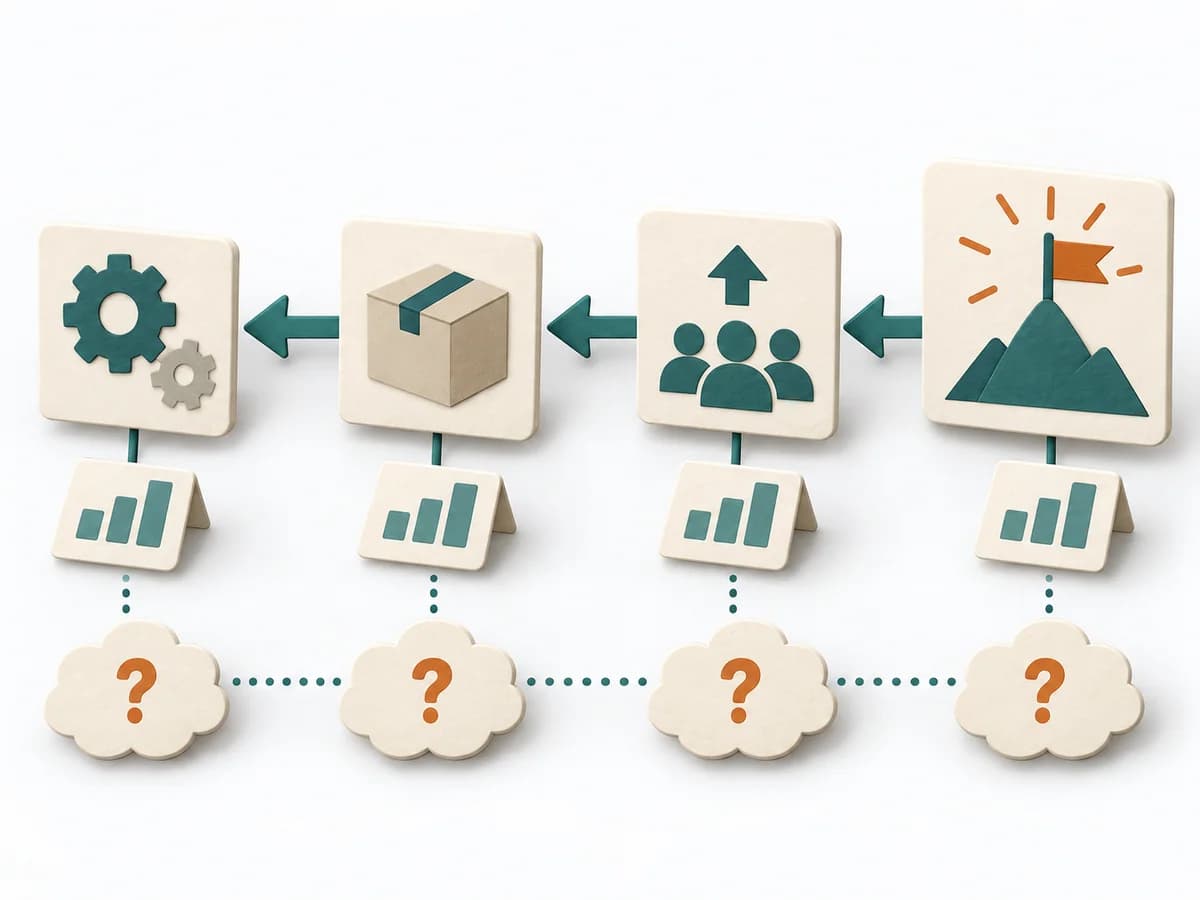 Systems Thinking Theory of Change |
|---|---|---|---|---|
Purposedifferent | DIBB helps clarify target groups, value, goals, and priorities by making the logic behind a decision explicit. It captures results as a DIBB document, belief list, bet list, and learning report. | The Lean UX Canvas helps clarify user behavior, touchpoints, and concept decisions. It makes assumptions and desired outcomes visible and captures the result as a completed canvas, hypothesis list, and first experiment. | A Current Reality Tree condenses many symptoms into a few causal chains. The method makes visible which core problems drive several negative effects at once. | Theory of Change translates a desired impact into a traceable chain of change. It makes assumptions, intermediate goals, and measurement points visible before a program is rolled out at scale. |
Complexitydifferent | Low | Medium | High | High |
Timedifferent | 1-2 h | 2-3 h | 2-6 h | 2-6 h |
Participantsdifferent | 2-8 | 3-8 | 3-8 | 4-12 |
Formatdifferent | Workshop + async | Workshop + async | Workshop | Workshop |
Outputdifferent | DIBB document, Belief list, Bet list, Learning report | Completed Lean UX Canvas, Hypothesis list, First experiment | Current Reality Tree, Core Problems, Intervention Ideas | Theory of Change Map, Assumptions, Outcome Measures |
Tagsno overlap | StrategyDecisionAssumptionsHypothesis | CanvasHypothesisOutcomesDiscovery | Systems thinkingRoot causeConstraintsCausality | ImpactOutcomesSystems thinkingStrategy |