View methods side by side.
Choose up to four methods. Add them using the search and share the comparison by copying its link.
| Criterion |  Product Strategy DIBB |  Decision Making Force Field Analysis | 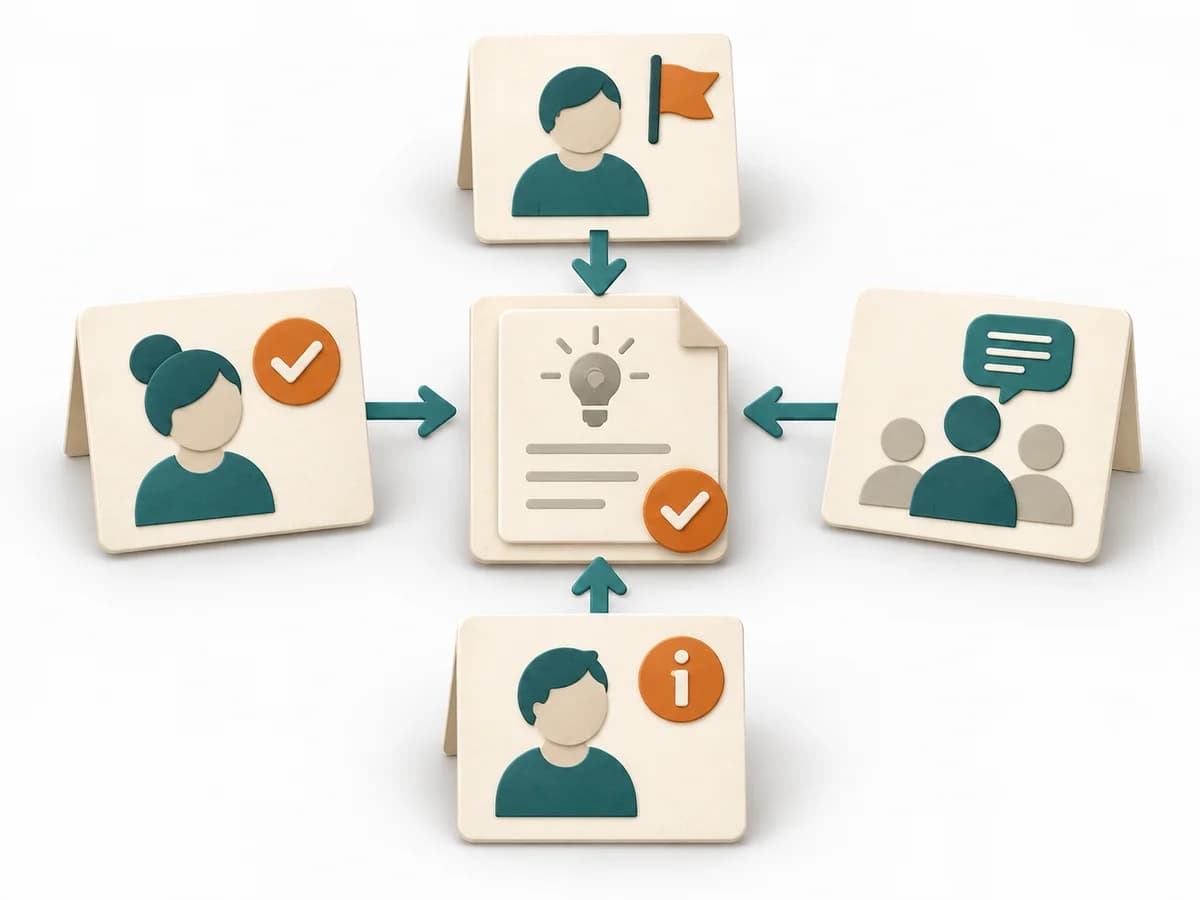 Decision Making DACI |  Decision Making Decision Rights Mapping |
|---|---|---|---|---|
Purposedifferent | DIBB helps clarify target groups, value, goals, and priorities by making the logic behind a decision explicit. It captures results as a DIBB document, belief list, bet list, and learning report. | In change initiatives, supporting and restraining forces sit at the table at the same time. Force Field Analysis makes these tensions explicit and shows where change can be pushed forward by strengthening or relieving. | In cross-functional decisions, responsibilities quickly blur between approval, influence, and execution. DACI arranges these roles so decision pressure, contribution, and information stay cleanly separated. | In organizations with many stakeholders, it often blurs who actually decides and who is merely consulted. It separates options, evaluation criteria, and open risks. The result is captured as a Decision Rights matrix and an agreement. |
Complexitydifferent | Low | Low | Low | Medium |
Timedifferent | 1-2 h | 45-90 min | 30-60 min | 90-180 min |
Participantsdifferent | 2-8 | 3-12 | 2-10 | 4-12 |
Formatdifferent | Workshop + async | Workshop | Workshop + async | Workshop |
Outputdifferent | DIBB document, Belief list, Bet list, Learning report | Force Field Map, Change Levers, Risk Notes | DACI Matrix, Decision Owner, Decision Log | Decision Rights Matrix, Agreement |
Tags1 shared | StrategyDecisionAssumptionsHypothesis | ChangeDecisionStrategy | DecisionRolesGovernanceAlignment | DecisionGovernanceAlignmentResponsibility |