View methods side by side.
Choose up to four methods. Add them using the search and share the comparison by copying its link.
| Criterion |  Product Strategy DIBB |  Decision Making Force Field Analysis | 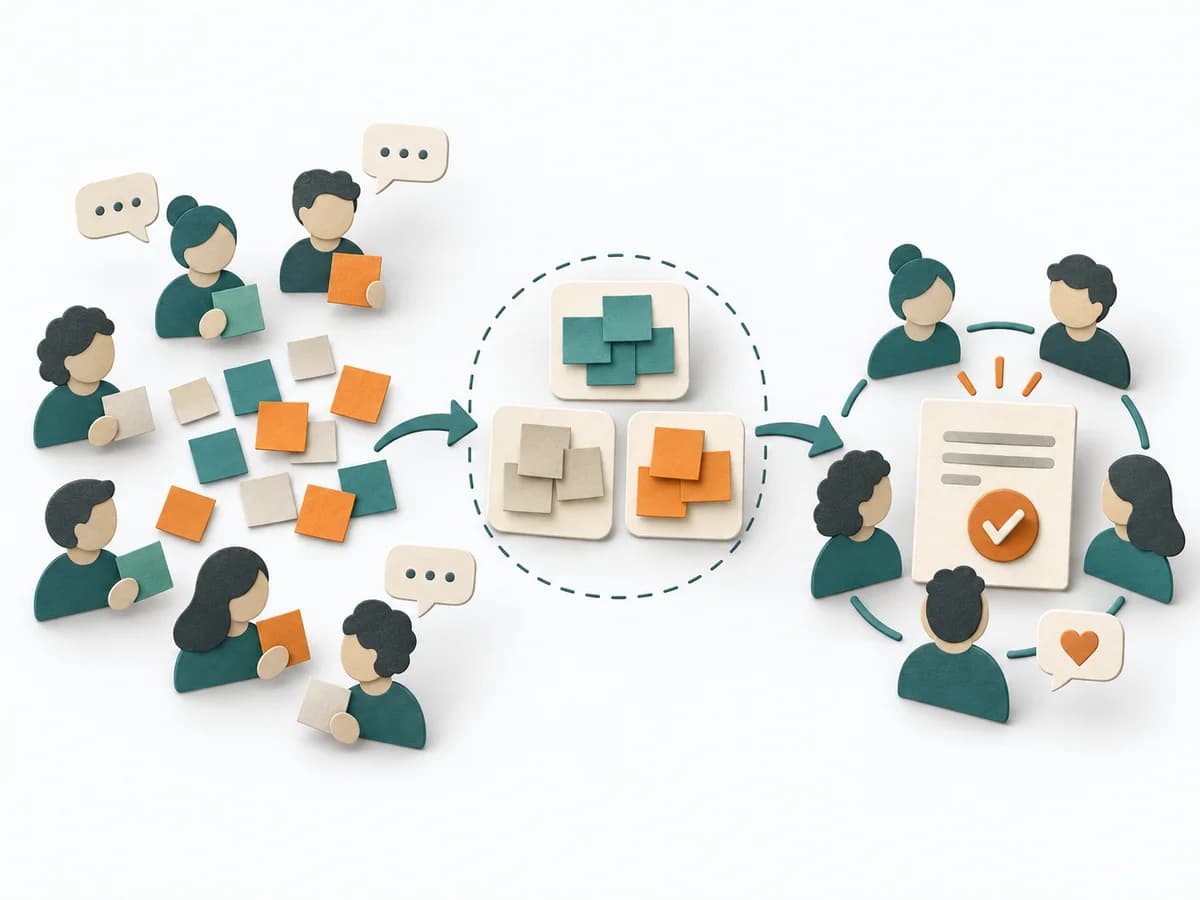 Facilitation Consensus Workshop |  Facilitation Alignment Mapping |
|---|---|---|---|---|
Purposedifferent | DIBB helps clarify target groups, value, goals, and priorities by making the logic behind a decision explicit. It captures results as a DIBB document, belief list, bet list, and learning report. | In change initiatives, supporting and restraining forces sit at the table at the same time. Force Field Analysis makes these tensions explicit and shows where change can be pushed forward by strengthening or relieving. | When a group needs a solid decision without outvoting individual factions, a Consensus Workshop creates a negotiable common ground. It makes agreement, reservations, and open tensions discussable at the same time. | When several people work toward one goal but hold different mental maps, Alignment Mapping makes the discrepancies visible. It arranges goals, assumptions, and priorities so shared direction becomes verifiable. |
Complexitydifferent | Low | Low | Medium | Medium |
Timedifferent | 1-2 h | 45-90 min | 1-3 h | 1-2 h |
Participantsdifferent | 2-8 | 3-12 | 5-30 | 4-12 |
Formatdifferent | Workshop + async | Workshop | Workshop | Workshop |
Outputdifferent | DIBB document, Belief list, Bet list, Learning report | Force Field Map, Change Levers, Risk Notes | Consensus Clusters, Theme Titles, Priority Areas | Alignment Map, Open Issues, Decision Questions |
Tagsno overlap | StrategyDecisionAssumptionsHypothesis | ChangeDecisionStrategy | FacilitationConsensusWorkshopAlignment | AlignmentStakeholdersStrategyFacilitation |