View methods side by side.
Choose up to four methods. Add them using the search and share the comparison by copying its link.
| Criterion |  UX Research Diary Study | 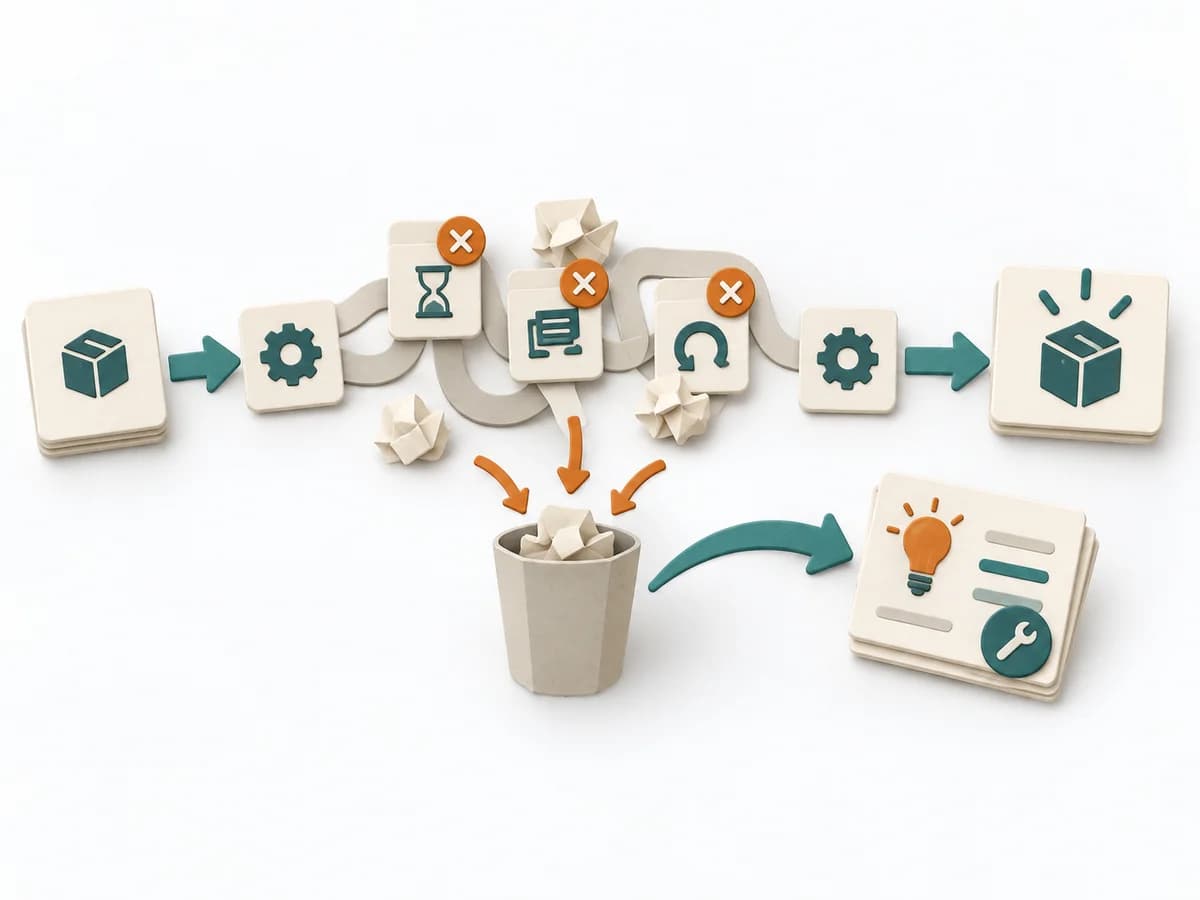 Operations Waste Analysis | 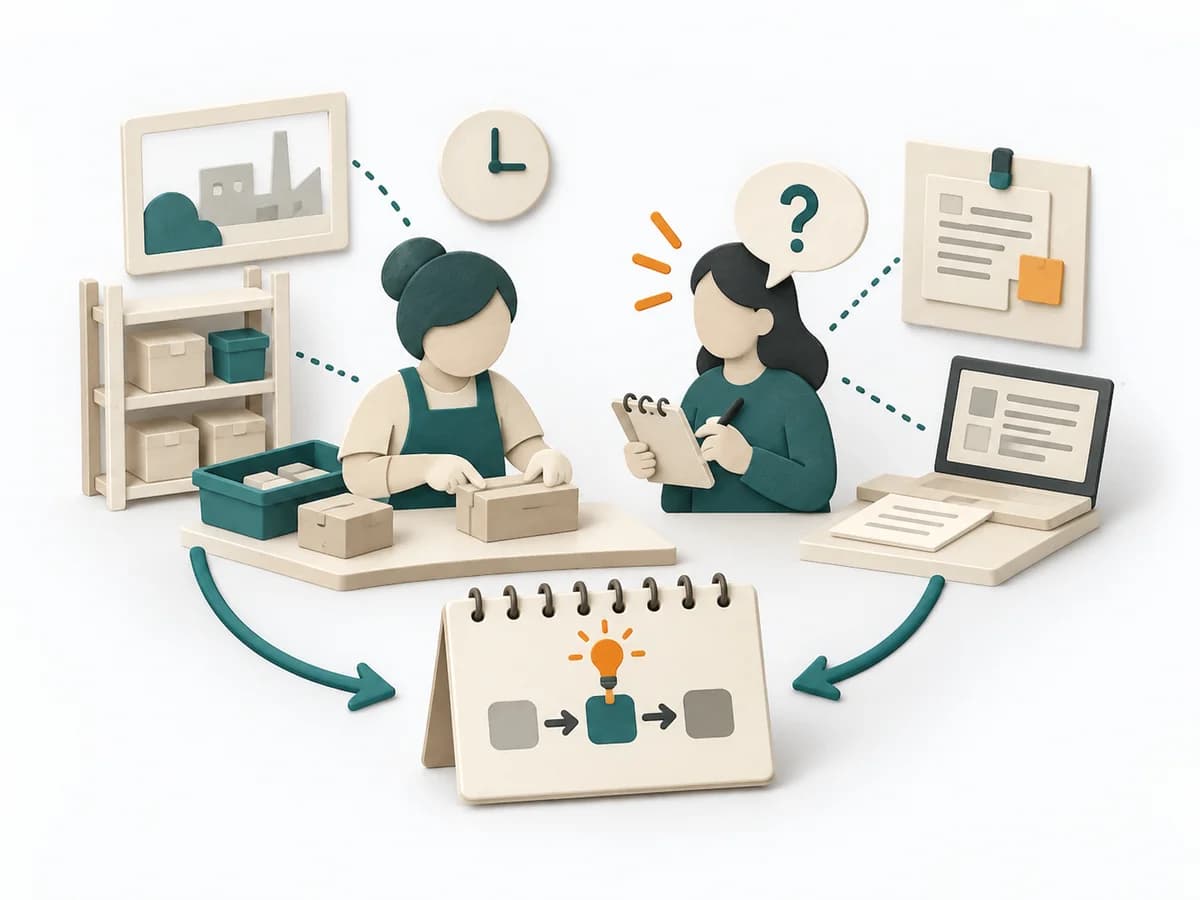 UX Research Contextual Inquiry | 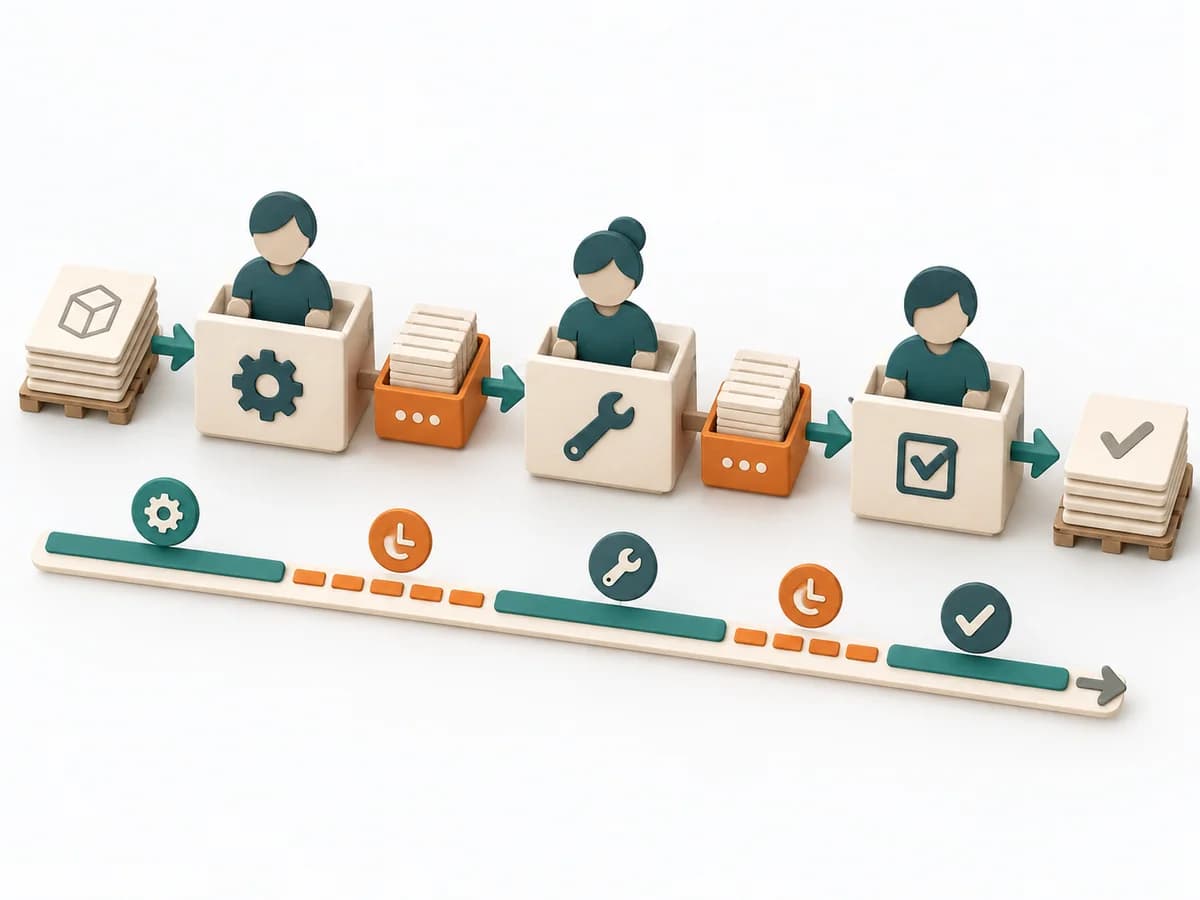 Delivery Value Stream Mapping |
|---|---|---|---|---|
Purposedifferent | When experiences build up over days or weeks and a single session cannot capture them, Diary Study records the course of everyday life. Recurring triggers, moods, and habits become visible this way, beyond the sharpness of memory. | For a process that keeps people busy but creates little value, the method exposes waste. It directs attention to unnecessary movement, waiting times, rework, and overdelivery. | When work processes are known only from accounts and the real context stays hidden, Contextual Inquiry makes behavior at the workplace visible. Observation and follow-up questions together show how people actually work, get interrupted, and improvise. | When delivery work dissolves into wait times, handoffs, and hidden effort, Value Stream Mapping makes the actual flow visible. The method exposes bottlenecks, idle time, and feedback loops so lead time and improvement levers become tangible. |
Complexitydifferent | Medium | Low | Medium | Medium |
Timedifferent | 1-4 Wochen | 45-120 min | 1-3 Wochen | 1-3 h |
Participantsdifferent | 5-20 | 2-8 | 4-12 Beobachtungen | 4-10 |
Formatdifferent | Async | Workshop | Workshop + async | Workshop |
Outputdifferent | Diary Entries, Longitudinal Patterns, Experience Timeline | Waste Map, Prioritized Waste, Improvement Backlog | Field Notes, Workflow Insights, Pain Points | Current-state map, Future-state map, Bottleneck list |
Tagsno overlap | UX researchTrackingBehavior | WasteLeanProcess improvement | UX researchObservationContext | LeanFlowWasteDelivery |