View methods side by side.
Choose up to four methods. Add them using the search and share the comparison by copying its link.
| Criterion |  UX Research Diary Study | 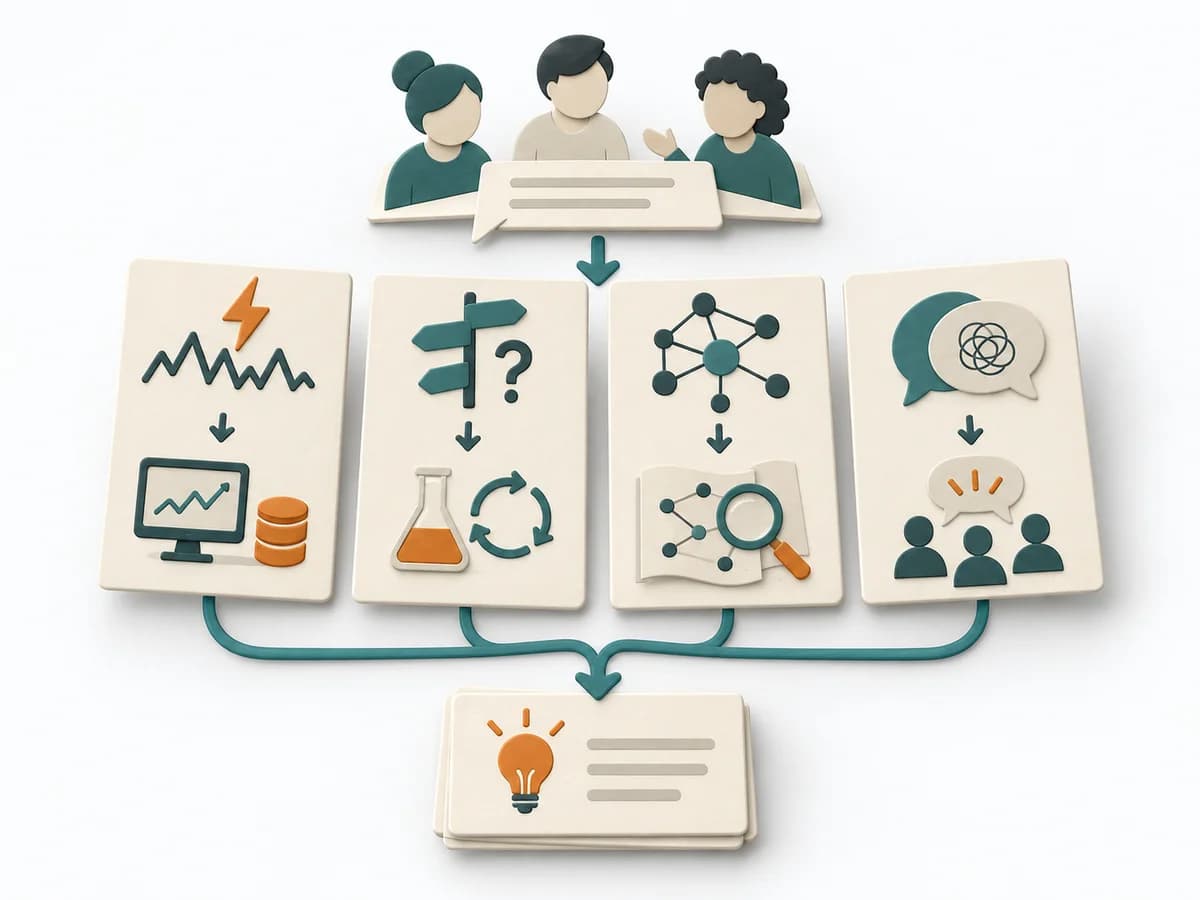 Systems Thinking VUCA Scan |  Growth Funnel Analysis | 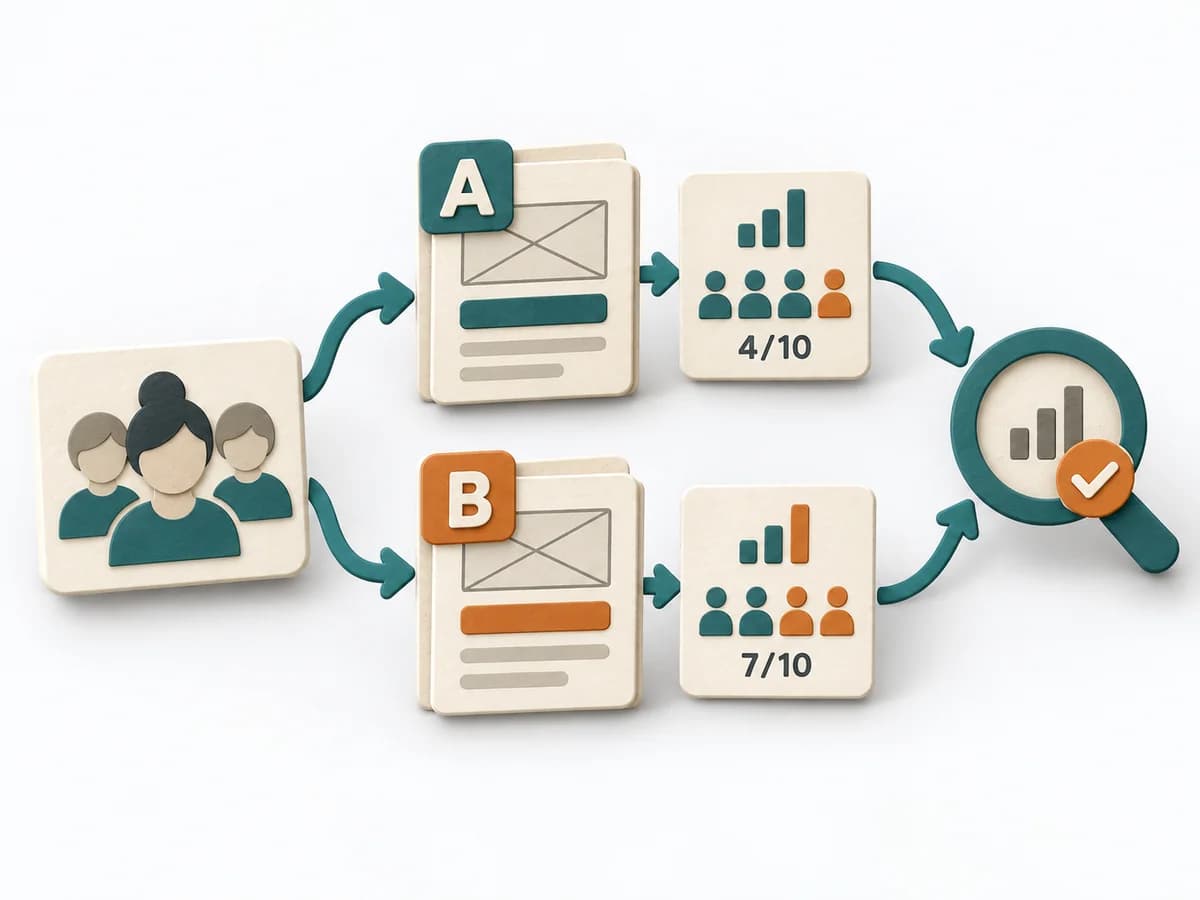 Growth A/B Testing |
|---|---|---|---|---|
Purposedifferent | When experiences build up over days or weeks and a single session cannot capture them, Diary Study records the course of everyday life. Recurring triggers, moods, and habits become visible this way, beyond the sharpness of memory. | The VUCA Scan helps read difficult situations more precisely. Instead of treating unclarity as generally complicated, the method separates fast change, missing knowledge, systemic entanglement, and ambiguous interpretation. | When many visitors or users drop off along the way, the reason behind the number often stays hidden. Funnel Analysis exposes these transitions and makes visible exactly where the path collapses. | When two variants compete, discussions quickly decide by taste rather than effect. A/B Testing checks behavior under controlled conditions and separates real improvement from chance or expectation effects. |
Complexitydifferent | Medium | Low | Medium | High |
Timedifferent | 1-4 Wochen | 30-90 min | 1-3 h | 1-4 Wochen |
Participantsdifferent | 5-20 | 1-10 | 1-5 | 1-6 |
Formatdifferent | Async | Workshop + async | Async | Async |
Outputdifferent | Diary Entries, Longitudinal Patterns, Experience Timeline | VUCA Map, Response Options, Signal and Learning Plan | Funnel report, Drop-off analysis, Optimization hypotheses | Experiment results, Decision log, Learning summary |
Tagsno overlap | UX researchTrackingBehavior | SensemakingUncertaintyComplexityStrategyForesight | AnalyticsConversionGrowth | ExperimentsGrowthAnalyticsValidation |