View methods side by side.
Choose up to four methods. Add them using the search and share the comparison by copying its link.
| Criterion |  UX Research Diary Study | 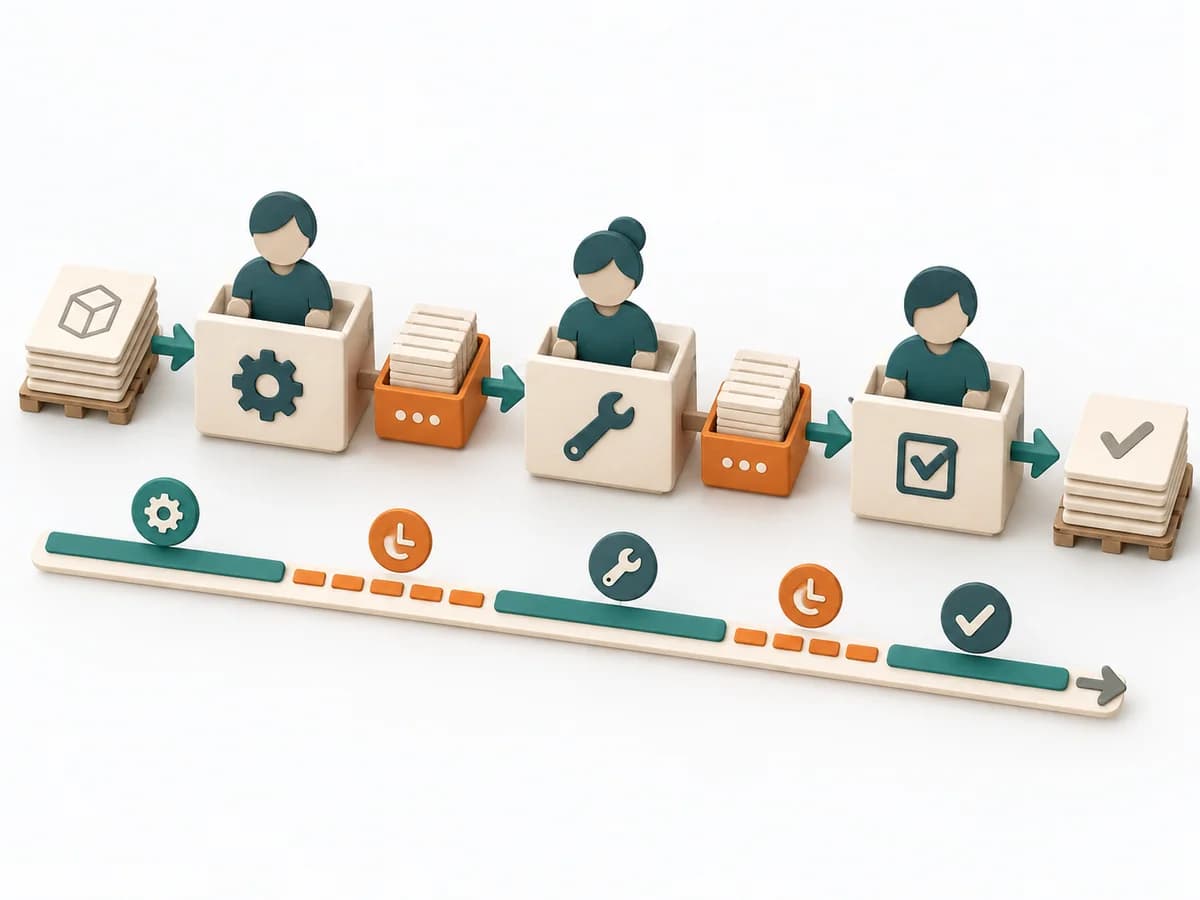 Delivery Value Stream Mapping |  Operations Failure Mode and Effects Analysis |  Operations 5 Whys |
|---|---|---|---|---|
Purposedifferent | When experiences build up over days or weeks and a single session cannot capture them, Diary Study records the course of everyday life. Recurring triggers, moods, and habits become visible this way, beyond the sharpness of memory. | When delivery work dissolves into wait times, handoffs, and hidden effort, Value Stream Mapping makes the actual flow visible. The method exposes bottlenecks, idle time, and feedback loops so lead time and improvement levers become tangible. | For a process, product, or service with noticeable failure risks, the method assesses possible failure modes in advance. It directs attention to combinations of occurrence, effect, and detectability. | For a single, hard-to-explain deviation, the method exposes the causal chain behind the visible symptom. It keeps the cause open until a controllable condition emerges instead of a mere description. |
Complexitydifferent | Medium | Medium | High | Low |
Timedifferent | 1-4 Wochen | 1-3 h | 2-6 h | 15-30 min |
Participantsdifferent | 5-20 | 4-10 | 3-10 | 2-6 |
Formatdifferent | Async | Workshop | Workshop | Workshop |
Outputdifferent | Diary Entries, Longitudinal Patterns, Experience Timeline | Current-state map, Future-state map, Bottleneck list | FMEA Table, Risk Priority, Mitigation Actions | Root cause notes, Countermeasures |
Tagsno overlap | UX researchTrackingBehavior | LeanFlowWasteDelivery | RiskQualityOperationsRoot cause | Root causeIncidentLeanProblem solving |