View methods side by side.
Choose up to four methods. Add them using the search and share the comparison by copying its link.
| Criterion |  UX Research Diary Study |  Facilitation Stakeholder Mapping | 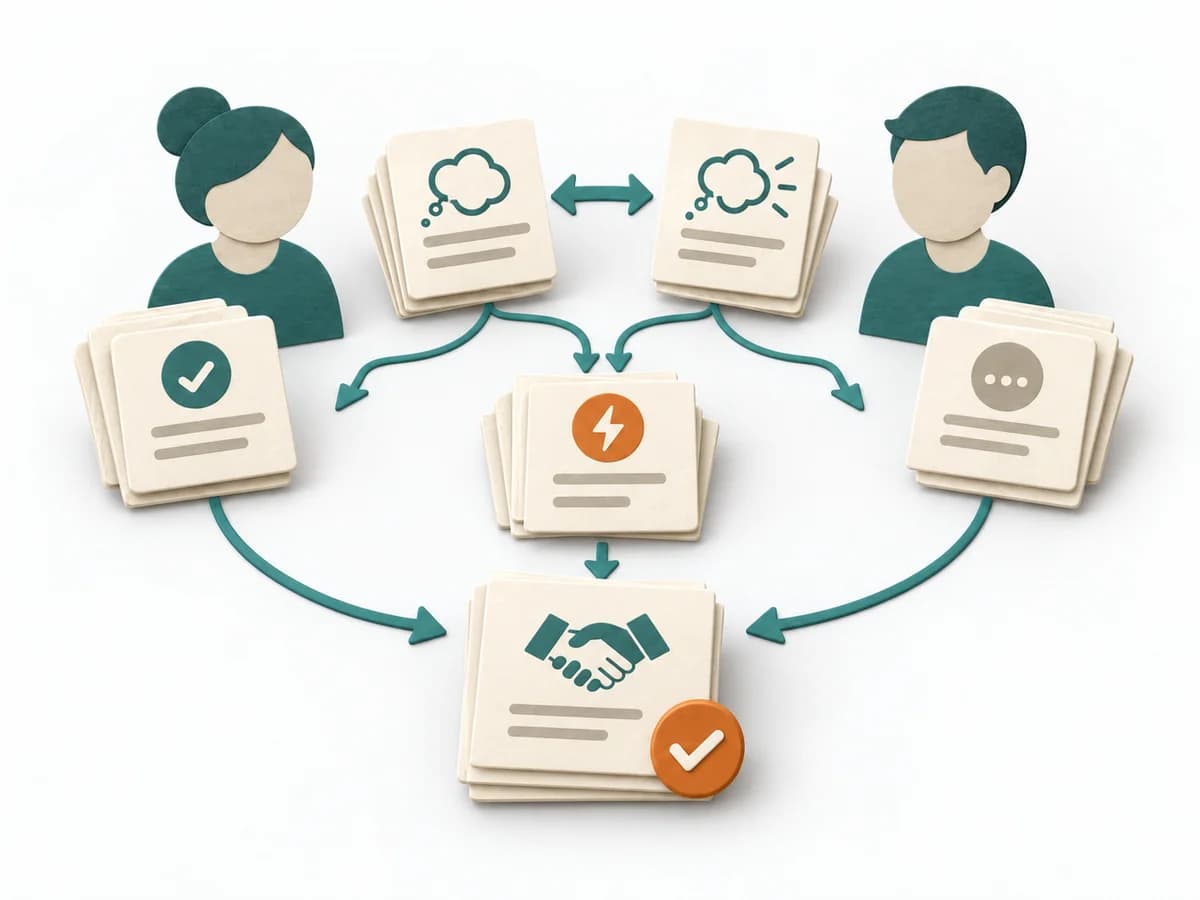 Facilitation Expectation Mapping |  Facilitation Alignment Mapping |
|---|---|---|---|---|
Purposedifferent | When experiences build up over days or weeks and a single session cannot capture them, Diary Study records the course of everyday life. Recurring triggers, moods, and habits become visible this way, beyond the sharpness of memory. | When an initiative depends on many people, interests, and power dynamics, Stakeholder Mapping systematically orders the environment. It shows who influences, who is affected, and where relationship management or safeguarding matters first. | When roles, interfaces, or projects fail because of differing expectations, Expectation Mapping surfaces these differences. It shows what each side takes for granted and where the pictures diverge. | When several people work toward one goal but hold different mental maps, Alignment Mapping makes the discrepancies visible. It arranges goals, assumptions, and priorities so shared direction becomes verifiable. |
Complexitydifferent | Medium | Low | Low | Medium |
Timedifferent | 1-4 Wochen | 60–90 min | 45-90 min | 1-2 h |
Participantsdifferent | 5-20 | 2-8 | 3-12 | 4-12 |
Formatdifferent | Async | Workshop + async | Workshop | Workshop |
Outputdifferent | Diary Entries, Longitudinal Patterns, Experience Timeline | Stakeholder Map, Engagement Plan, Risk Notes | Expectation Map, Alignment Notes, Agreements | Alignment Map, Open Issues, Decision Questions |
Tagsno overlap | UX researchTrackingBehavior | StakeholdersAlignmentFacilitationChange | AlignmentStakeholdersTeam | AlignmentStakeholdersStrategyFacilitation |