View methods side by side.
Choose up to four methods. Add them using the search and share the comparison by copying its link.
| Criterion | 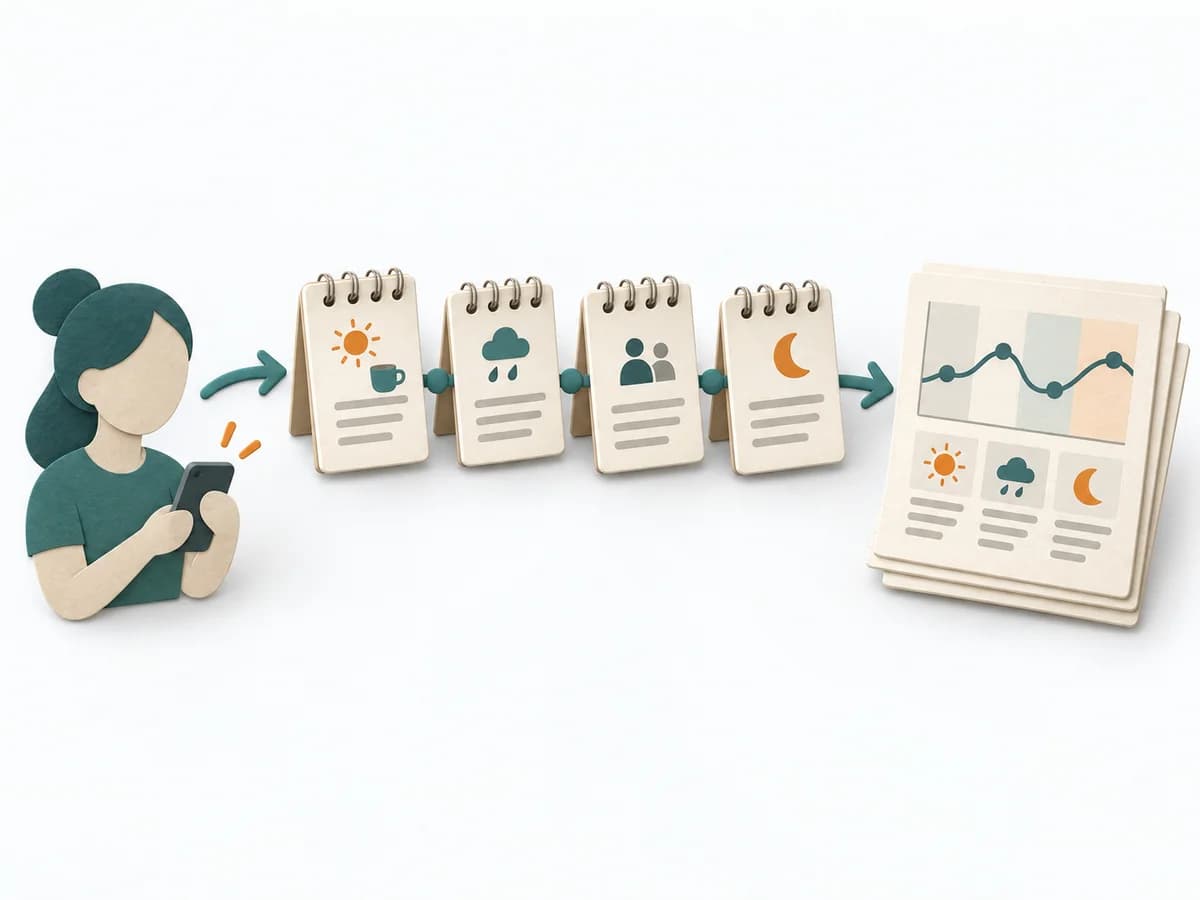 UX Research Diary Study | 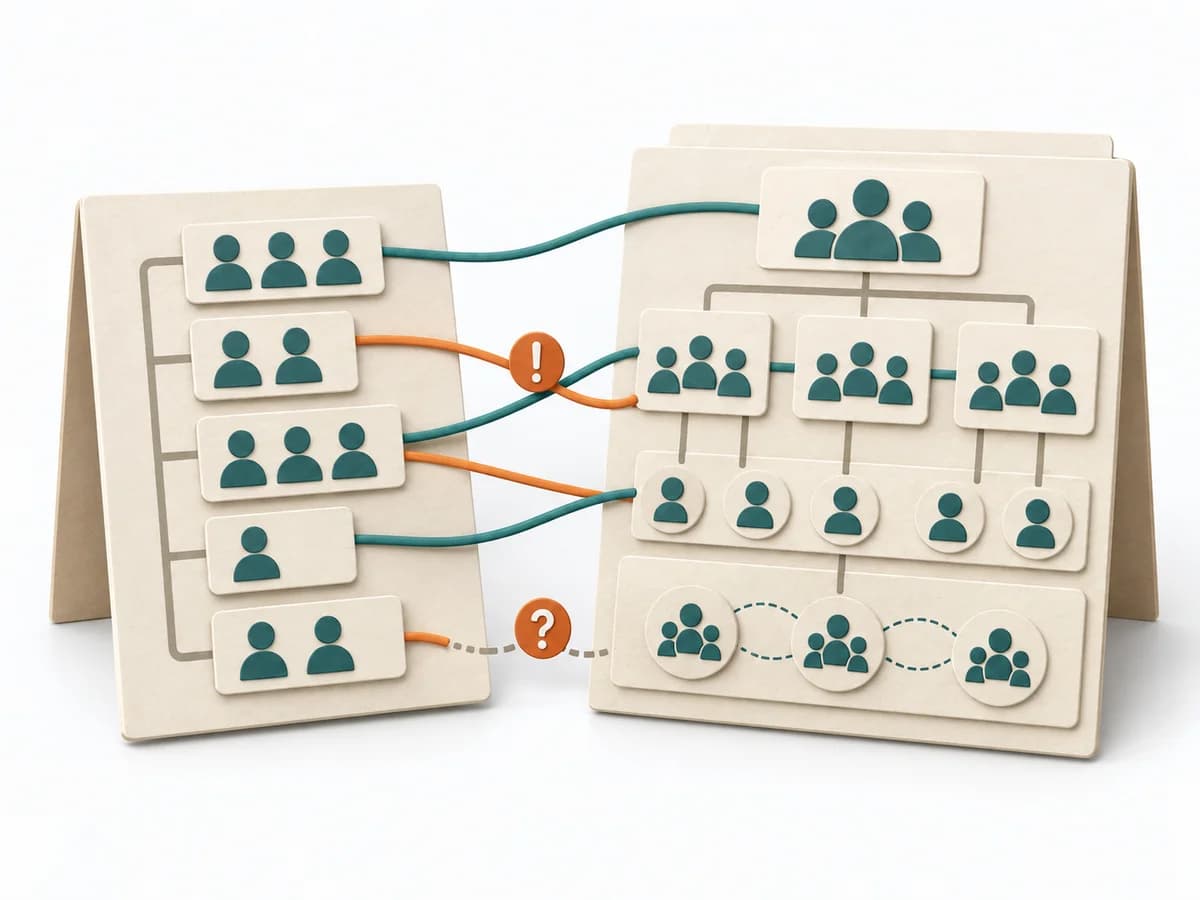 Team Design Spotify Model Mapping | 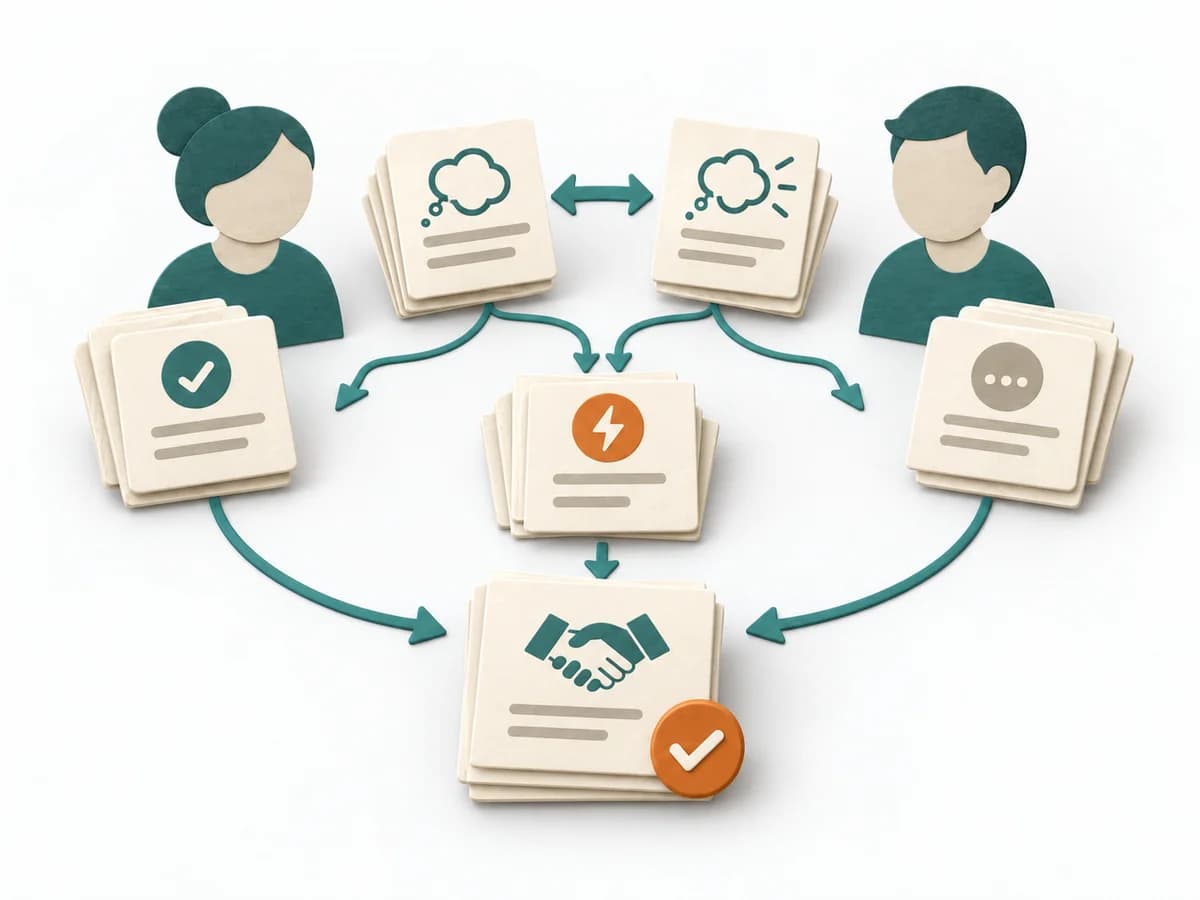 Facilitation Expectation Mapping |  Facilitation Power Interest Grid |
|---|---|---|---|---|
Purposedifferent | When experiences build up over days or weeks and a single session cannot capture them, Diary Study records the course of everyday life. Recurring triggers, moods, and habits become visible this way, beyond the sharpness of memory. | When a team landscape has grown without clear grouping, it maps roles and relationships onto the Spotify model. It clarifies responsibility, interaction, and load between teams. The result is captured as a Spotify model map and action list. | When roles, interfaces, or projects fail because of differing expectations, Expectation Mapping surfaces these differences. It shows what each side takes for granted and where the pictures diverge. | When many stakeholders compete for attention at once, the Power Interest Grid sorts them by influence and stake. It turns individual contributions into a visible selection. The result is captured as a Power Interest Grid and a stakeholder-specific strategy. |
Complexitydifferent | Medium | Medium | Low | Low |
Timedifferent | 1-4 Wochen | 90-180 min | 45-90 min | 30-60 min |
Participantsdifferent | 5-20 | 5-15 | 3-12 | 2-8 |
Formatdifferent | Async | Workshop | Workshop | Workshop |
Outputdifferent | Diary Entries, Longitudinal Patterns, Experience Timeline | Spotify Model Map, Action List | Expectation Map, Alignment Notes, Agreements | Power Interest Grid, Strategy per Stakeholder |
Tagsno overlap | UX researchTrackingBehavior | TeamOrganizationAlignmentDiagnosis | AlignmentStakeholdersTeam | StakeholdersFacilitationAlignmentPlanning |