View methods side by side.
Choose up to four methods. Add them using the search and share the comparison by copying its link.
| Criterion |  UX Research Diary Study | 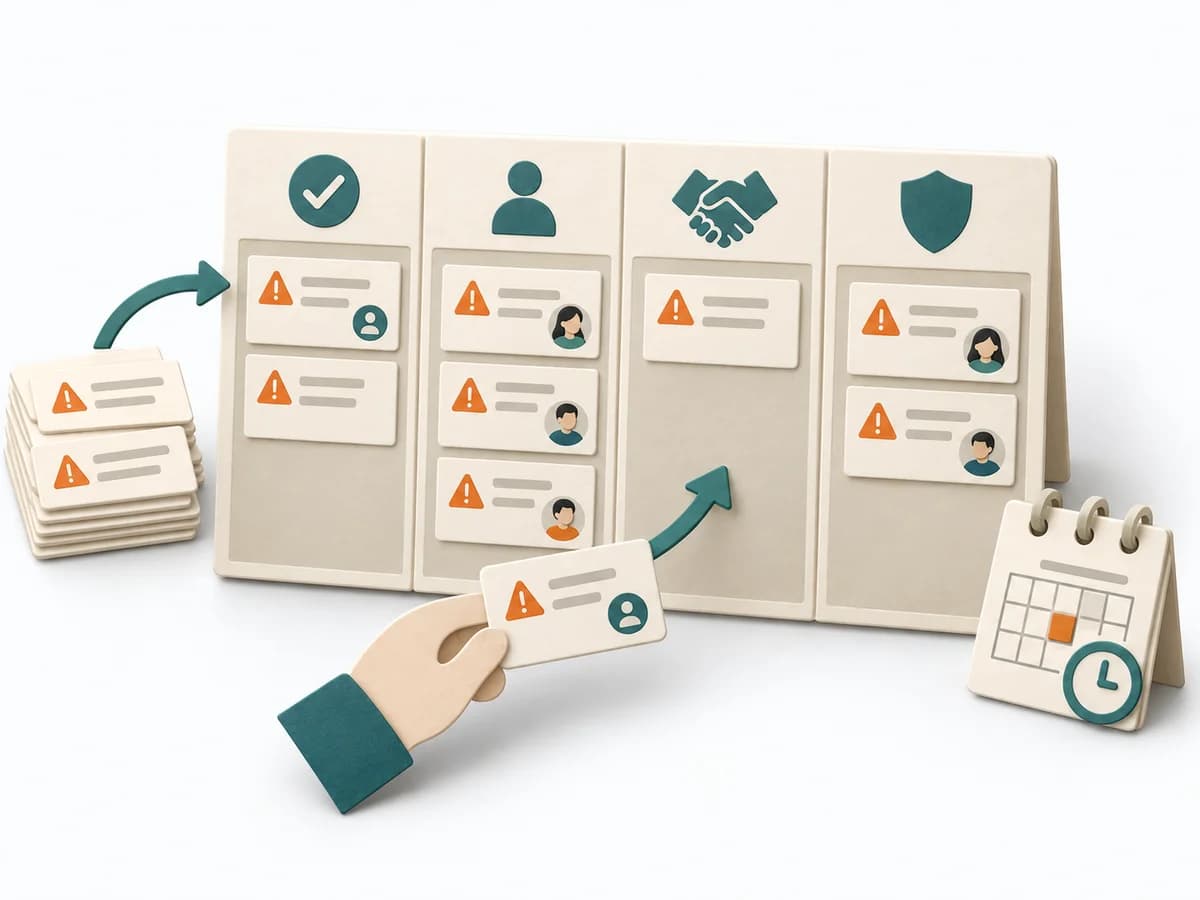 Agile ROAM Board |  Decision Making Pre-Mortem |  Decision Making Decision Rights Mapping |
|---|---|---|---|---|
Purposedifferent | When experiences build up over days or weeks and a single session cannot capture them, Diary Study records the course of everyday life. Recurring triggers, moods, and habits become visible this way, beyond the sharpness of memory. | When work needs to move between different states or columns, it makes that movement and its handoffs legible. It sorts work by value, risk, and delivery ability. The result is captured as a ROAM Board and an Owner List. | In early initiatives with many uncertainties, planning quickly turns too optimistic. A pre-mortem makes the expected failure visible in advance and sharpens the view of causes, gaps, and countermeasures. | In organizations with many stakeholders, it often blurs who actually decides and who is merely consulted. It separates options, evaluation criteria, and open risks. The result is captured as a Decision Rights matrix and an agreement. |
Complexitydifferent | Medium | Low | Low | Medium |
Timedifferent | 1-4 Wochen | 20-40 min initial, dann laufend | 20–45 min | 90-180 min |
Participantsdifferent | 5-20 | 3-15 | Small cross-functional group | 4-12 |
Formatdifferent | Async | Workshop + async | Workshop | Workshop |
Outputdifferent | Diary Entries, Longitudinal Patterns, Experience Timeline | ROAM Board, Owner List | Risk list, Mitigation plan, Assumption log | Decision Rights Matrix, Agreement |
Tagsno overlap | UX researchTrackingBehavior | RiskAgileTrackingAlignment | RiskDecisionFailurePlanning | DecisionGovernanceAlignmentResponsibility |