View methods side by side.
Choose up to four methods. Add them using the search and share the comparison by copying its link.
| Criterion |  UX Research Diary Study | 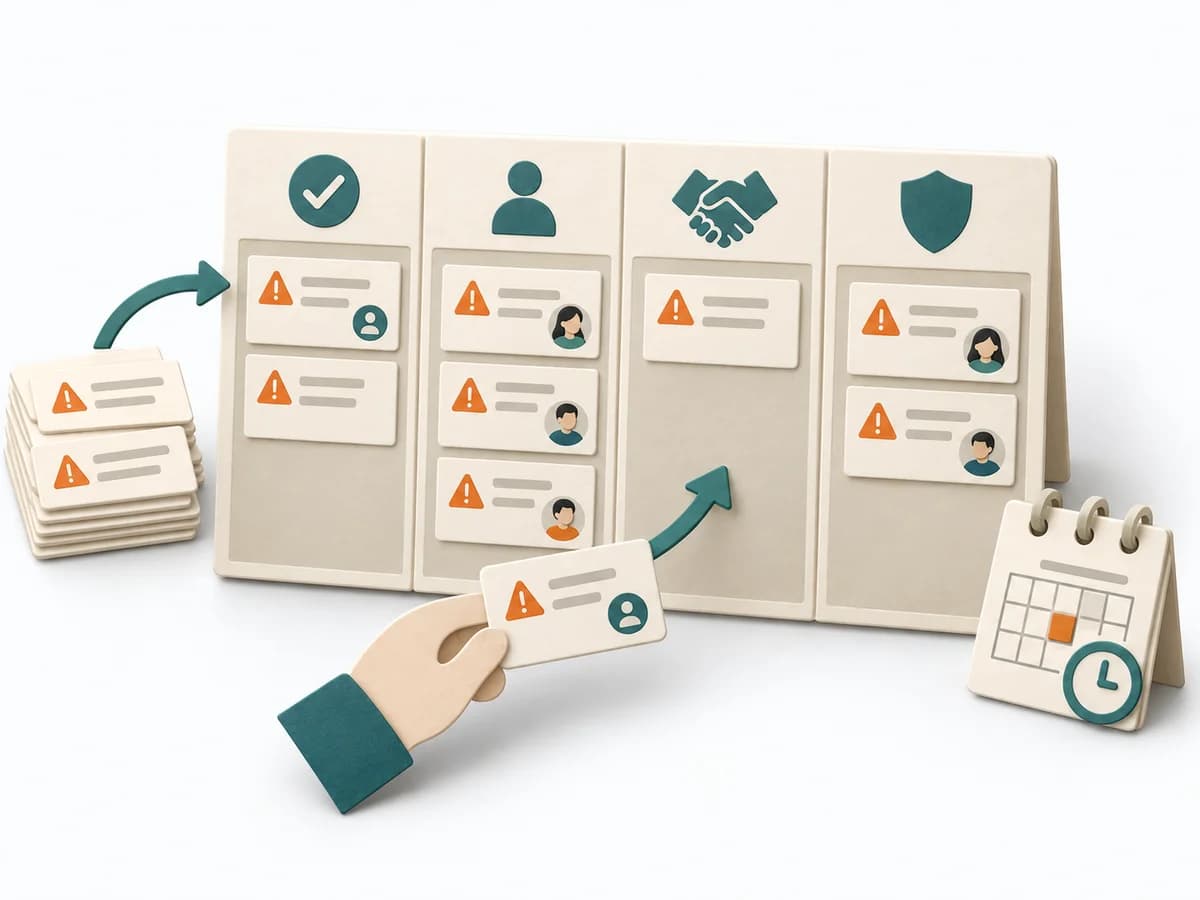 Agile ROAM Board | 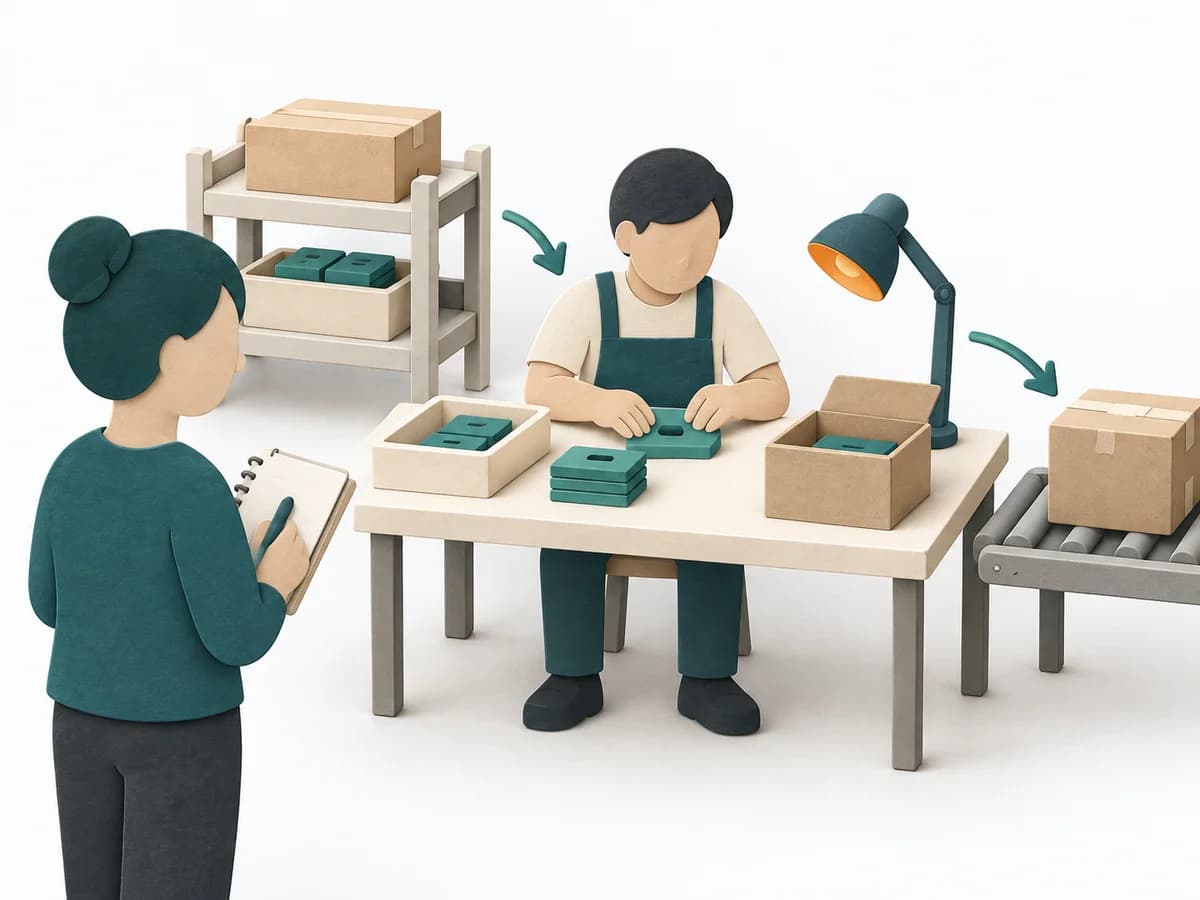 Operations Gemba Walk | 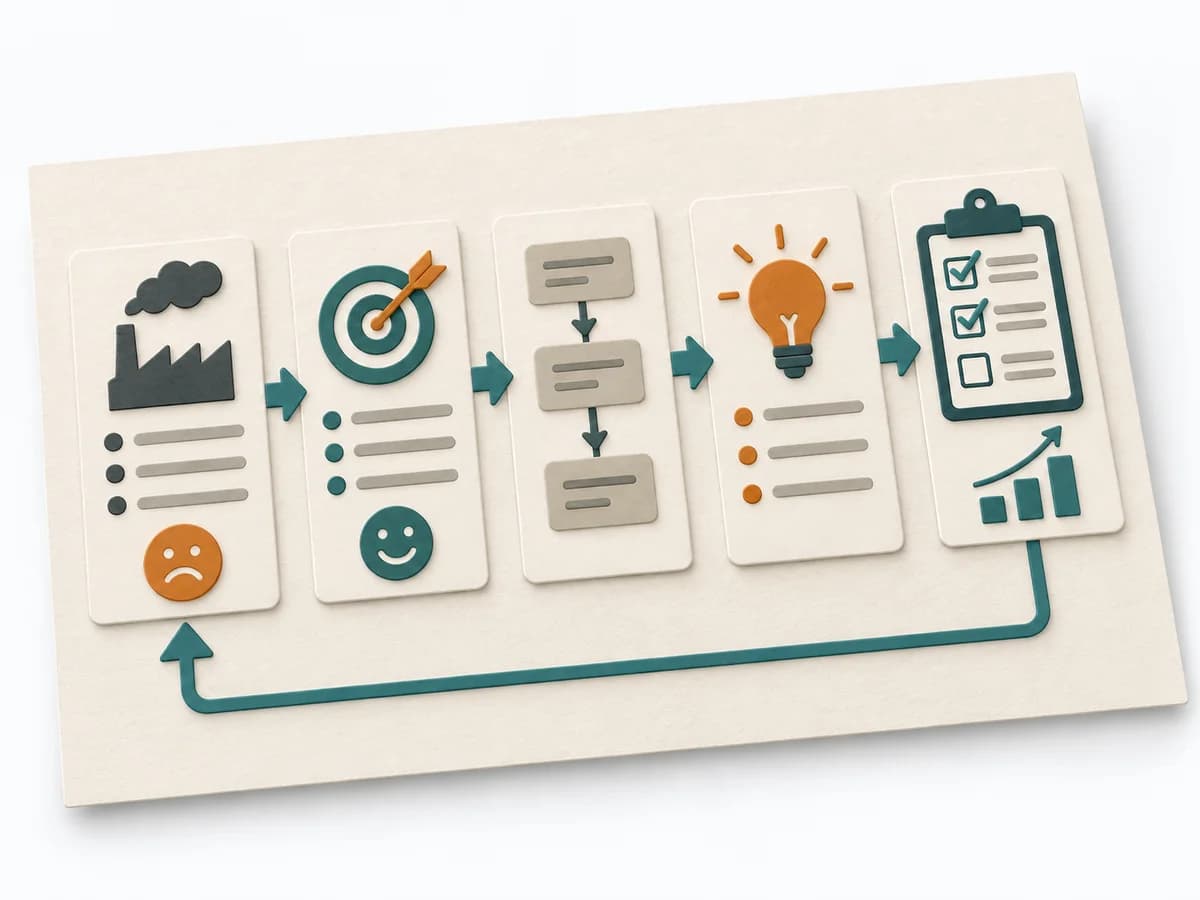 Operations A3 Problem Solving |
|---|---|---|---|---|
Purposedifferent | When experiences build up over days or weeks and a single session cannot capture them, Diary Study records the course of everyday life. Recurring triggers, moods, and habits become visible this way, beyond the sharpness of memory. | When work needs to move between different states or columns, it makes that movement and its handoffs legible. It sorts work by value, risk, and delivery ability. The result is captured as a ROAM Board and an Owner List. | When there is uncertainty about the real course of a process, the method brings observation to the place where work happens. It combines perception, follow-up questions, and process knowledge so decisions rest on actual workflows instead of assumptions. | For a complex deviation with several people involved, the method bundles problem, analysis, and decision onto one page. It creates a shared working space where causes, countermeasures, and follow-up fit together. |
Complexitydifferent | Medium | Low | Low | Medium |
Timedifferent | 1-4 Wochen | 20-40 min initial, dann laufend | 30-120 min | 45-90 min |
Participantsdifferent | 5-20 | 3-15 | 2-6 | 2-5 |
Formatdifferent | Async | Workshop + async | Workshop | Workshop + async |
Outputdifferent | Diary Entries, Longitudinal Patterns, Experience Timeline | ROAM Board, Owner List | Observation Notes, Improvement Ideas | A3 Report, Action Plan, Root Cause Analysis |
Tagsno overlap | UX researchTrackingBehavior | RiskAgileTrackingAlignment | LeanObservationProcessOperations | LeanProblem solvingCoachingOperations |