View methods side by side.
Choose up to four methods. Add them using the search and share the comparison by copying its link.
| Criterion |  UX Research Diary Study |  Operations Process Mapping | 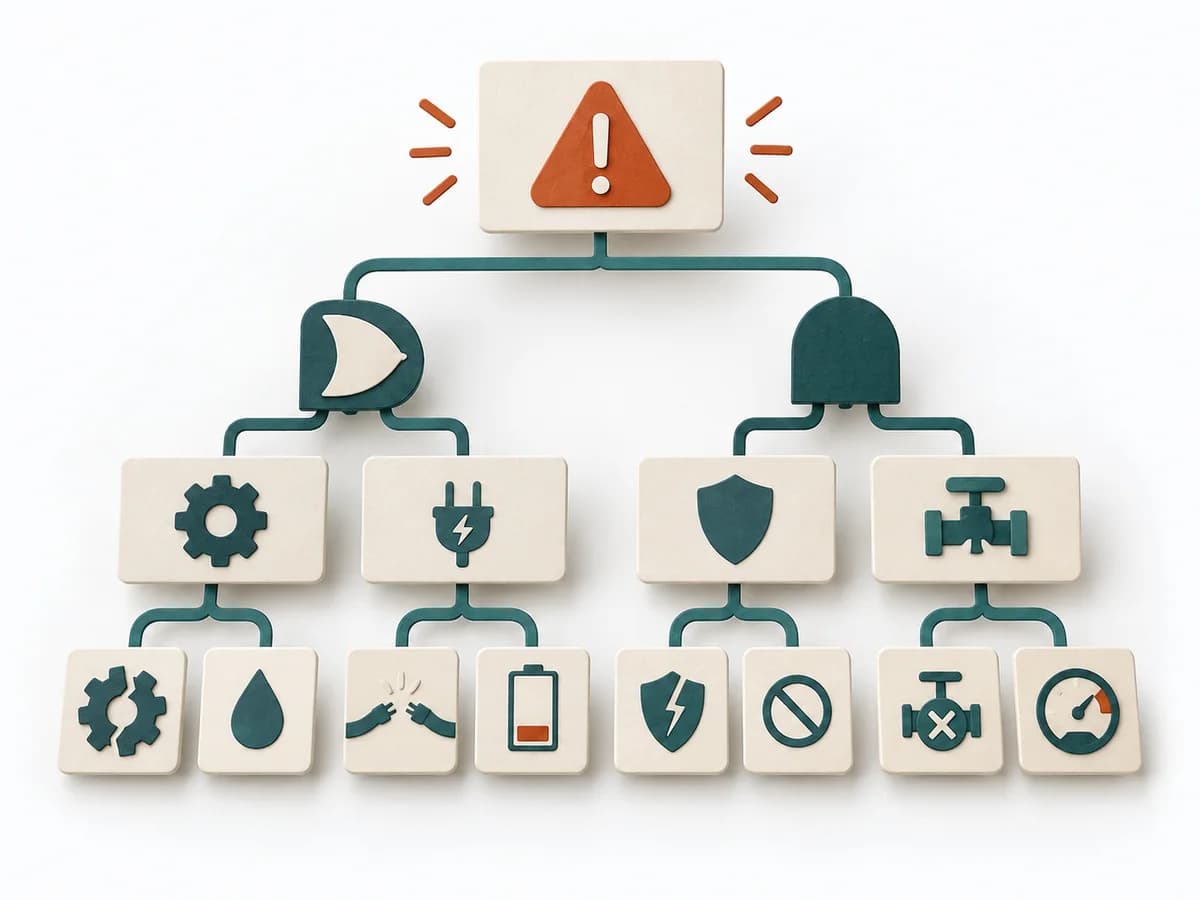 Operations Fault Tree Analysis |  Operations Barrier Analysis |
|---|---|---|---|---|
Purposedifferent | When experiences build up over days or weeks and a single session cannot capture them, Diary Study records the course of everyday life. Recurring triggers, moods, and habits become visible this way, beyond the sharpness of memory. | With a confusing workflow that has many handoffs, the method makes the actual process visible. It shows where work is passed on, delayed, or duplicated, so improvement targets the right spots. | For a critical top event with several possible triggers, the method logically models failure paths. It makes visible which combinations of conditions can lead to damage. | For a risk that can only be managed through multiple layers of protection, the method examines the effectiveness of each barrier. It shows where safeguards are missing, too weak, or fail under real conditions. |
Complexitydifferent | Medium | Medium | High | Medium |
Timedifferent | 1-4 Wochen | 1-3 h | 2-6 h | 2-4 h |
Participantsdifferent | 5-20 | 3-10 | 3-8 | 2-6 |
Formatdifferent | Async | Workshop | Workshop + async | Workshop + async |
Outputdifferent | Diary Entries, Longitudinal Patterns, Experience Timeline | Process Map, Handoff List, Improvement Backlog | Fault Tree, Critical Paths, Cause Hypotheses, Control Actions | Barrier Inventory, Failure Analysis per Barrier, Action Backlog |
Tagsno overlap | UX researchTrackingBehavior | ProcessOperationsImprovement | RiskRoot causeSafety | Root causeSafetyIncident |