View methods side by side.
Choose up to four methods. Add them using the search and share the comparison by copying its link.
| Criterion |  UX Research Diary Study | 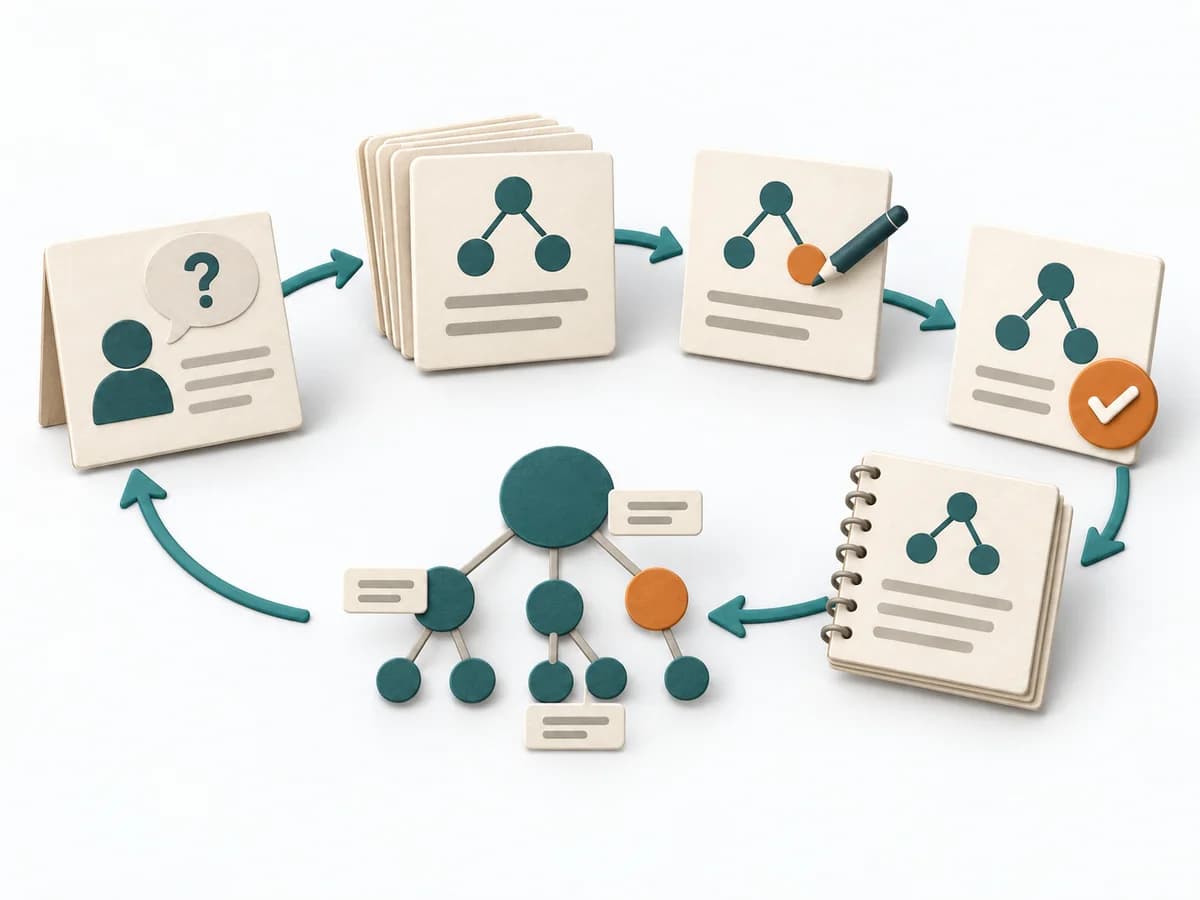 Knowledge Modeling Ontology Design Patterns | 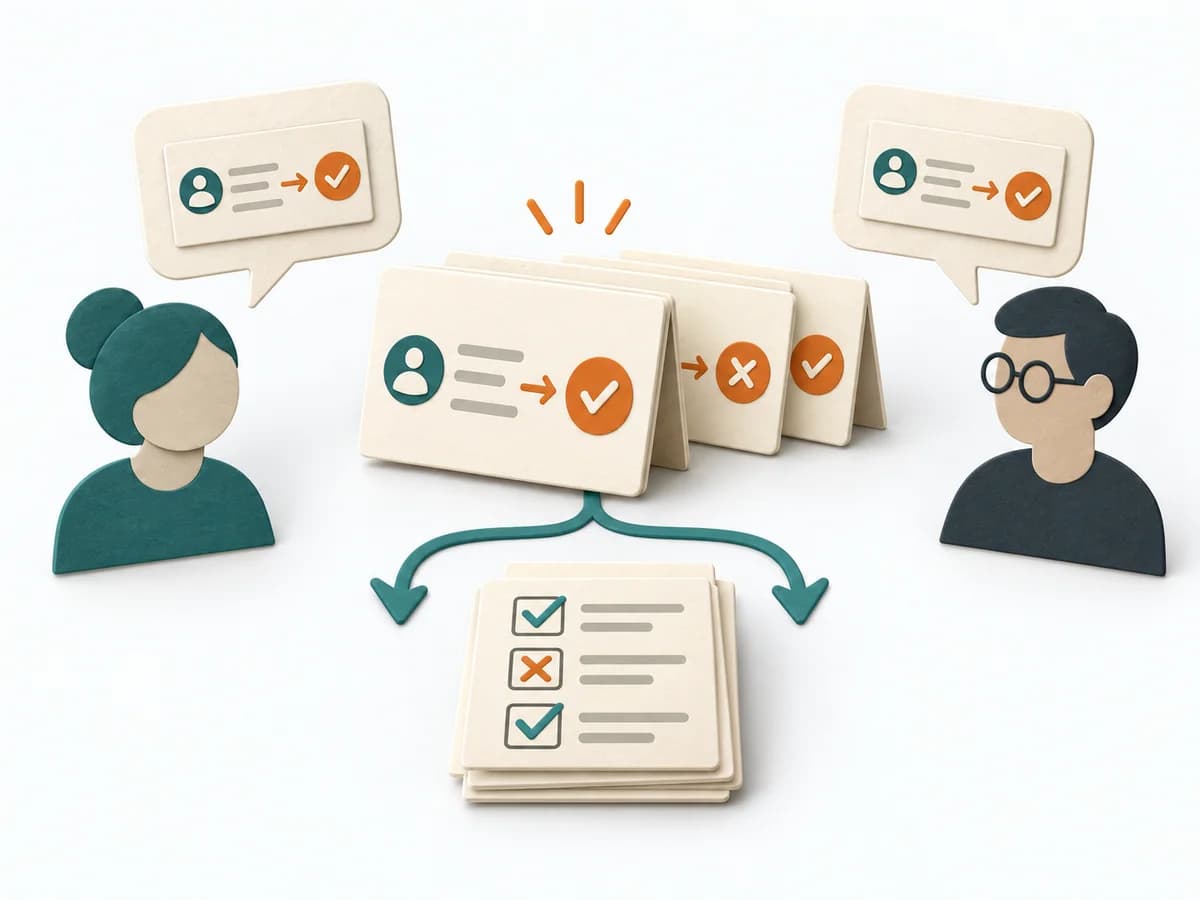 Agile Specification by Example | 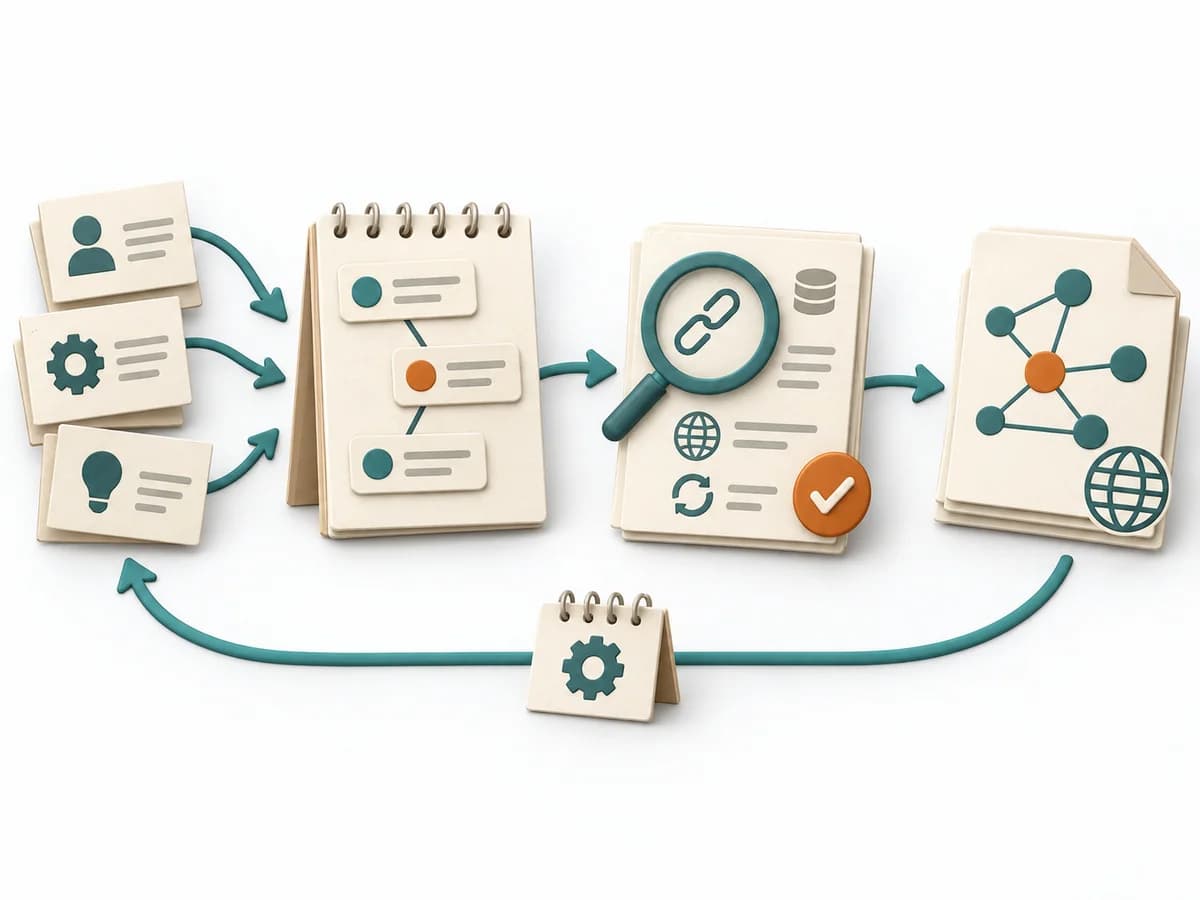 Knowledge Modeling Linked Open Terms |
|---|---|---|---|---|
Purposedifferent | When experiences build up over days or weeks and a single session cannot capture them, Diary Study records the course of everyday life. Recurring triggers, moods, and habits become visible this way, beyond the sharpness of memory. | Ontology Design Patterns provide reusable building blocks for recurring modeling problems. The method brings structure to the search for clean concepts, relationships, and roles. | When business rules need to become precise, it ties language, example, and test together. It sorts work by value, risk, and delivery ability. The result is captured as an Example Table and Acceptance Tests. | Linked Open Terms connects terminology work with linked-data thinking and makes terminology technically connectable. Vocabulary, meanings, and references can thereby be maintained consistently. |
Complexitysame | Medium | Medium | Medium | Medium |
Timedifferent | 1-4 Wochen | 1-3 h pro Pattern | 60-90 min pro Feature | Wochen bis Monate |
Participantsdifferent | 5-20 | 1-6 | 3-6 | 2-8 |
Formatdifferent | Async | Workshop + async | Workshop | Workshop + async |
Outputdifferent | Diary Entries, Longitudinal Patterns, Experience Timeline | Selected Patterns, Adapted Schema Fragments, Pattern Documentation | Example Table, Acceptance Tests | Ontology Requirements, Conceptual Model, Published Ontology, Documentation, Maintenance Plan |
Tagsno overlap | UX researchTrackingBehavior | OntologyPatternsReuseSemanticModeling | AgileRequirementsExamplesBehavior-Driven Development | OntologyMethodologyAgileSemantic |