View methods side by side.
Choose up to four methods. Add them using the search and share the comparison by copying its link.
| Criterion |  UX Research Diary Study |  Innovation Lean Startup |  UX Research First-click Testing | 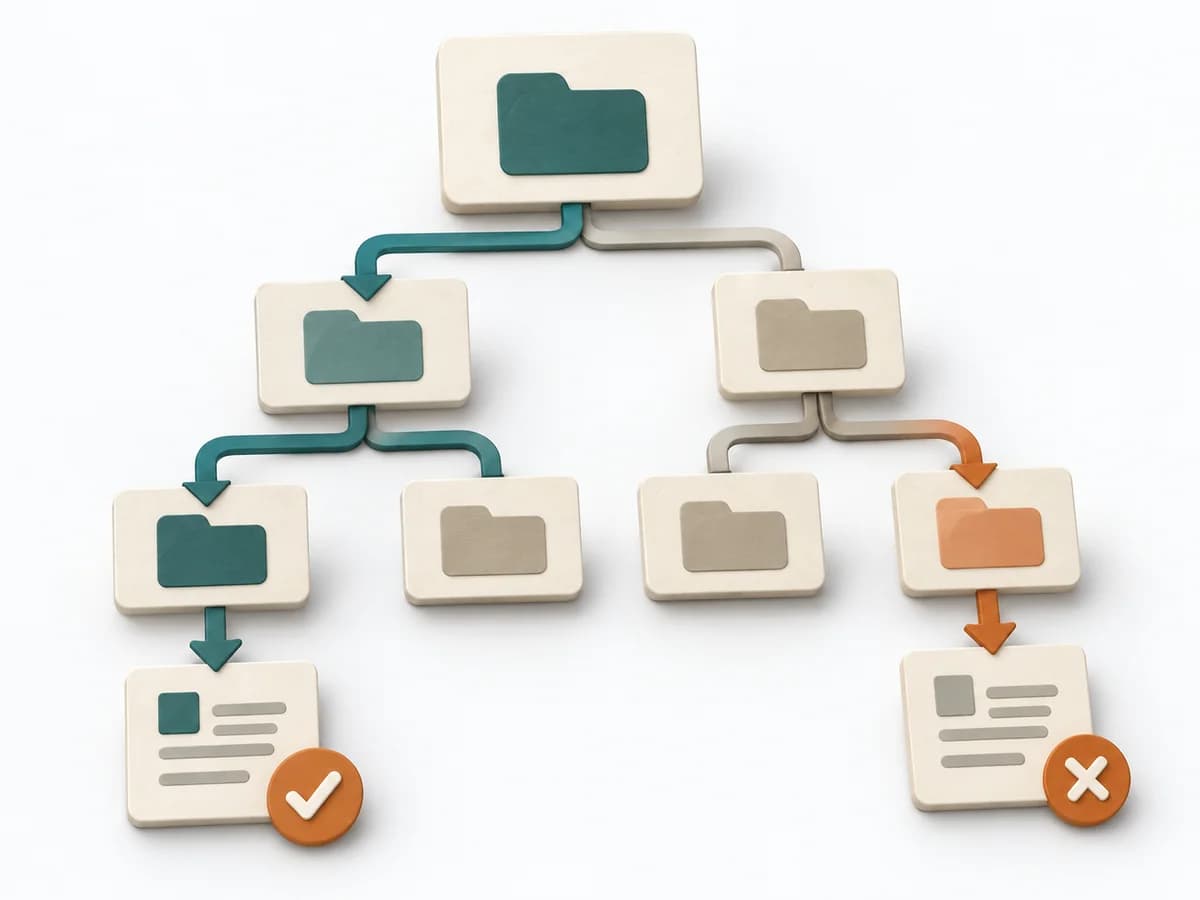 UX Research Tree Testing |
|---|---|---|---|---|
Purposedifferent | When experiences build up over days or weeks and a single session cannot capture them, Diary Study records the course of everyday life. Recurring triggers, moods, and habits become visible this way, beyond the sharpness of memory. | For uncertain business assumptions, the method forces the idea into contact with real market reactions early. It separates wishful picture, assumption, and observable behavior, so that learning becomes faster than planning. This translates uncertainty into measurable insight. | When users immediately turn the wrong way on a screen or wireframe, first click testing checks initial orientation at high speed. The first click shows early whether expectation, labeling, and wayfinding fit together. | When a navigation exists but search paths still fail, tree testing checks findability without visual distraction. The method shows whether labels, levels, and paths really lead to the intended destination. |
Complexitydifferent | Medium | Medium | Low | Medium |
Timedifferent | 1-4 Wochen | Wochen bis Monate je Lernzyklus | 1-2 Tage | 1-2 Tage |
Participantsdifferent | 5-20 | 2-8 | 10-30 | Based on research question |
Formatdifferent | Async | Workshop + async | Async | Async |
Outputdifferent | Diary Entries, Longitudinal Patterns, Experience Timeline | Hypothesis list, MVPs, Learning reports, Pivot or persevere decision | Click Heatmap, Success Rate, Design Recommendations | Findability Metrics, Path Analysis, Revised IA |
Tagsno overlap | UX researchTrackingBehavior | LeanStartupValidationMVP | UXNavigationFindabilityValidation | Information architectureNavigationFindability |