View methods side by side.
Choose up to four methods. Add them using the search and share the comparison by copying its link.
| Criterion |  UX Research Diary Study |  DevOps Incident Command | 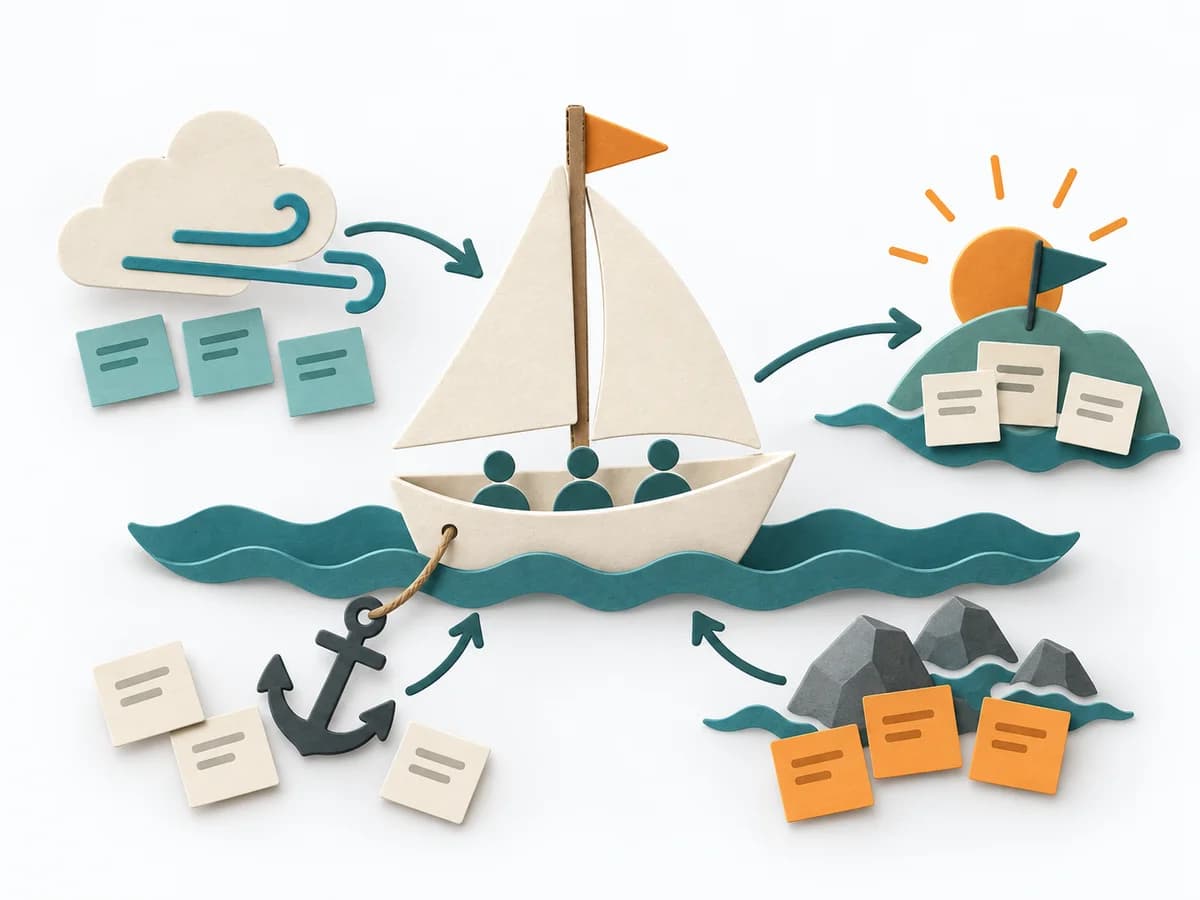 Agile Sailboat Retrospective |  Agile Start Stop Continue |
|---|---|---|---|---|
Purposedifferent | When experiences build up over days or weeks and a single session cannot capture them, Diary Study records the course of everyday life. Recurring triggers, moods, and habits become visible this way, beyond the sharpness of memory. | During an acute incident with several people involved, the method creates a clear leadership and communication structure. It reduces chaos when fast coordination and clean situational awareness are both needed at once. | When a team wants to read momentum, brakes, and risks together, it offers an easily understandable picture of the situation. It makes drive, obstacles, and headwind visible in the same picture. | When a team wants to deliberately adjust its working behavior, it makes habits visible and assessable. It focuses on concrete changes instead of diffuse mood. |
Complexitydifferent | Medium | Medium | Low | Low |
Timedifferent | 1-4 Wochen | As needed | 45-90 min | 30-60 min |
Participantsdifferent | 5-20 | 4-15 | 4-12 | 3-12 |
Formatdifferent | Async | Workshop + async | Workshop | Workshop |
Outputdifferent | Diary Entries, Longitudinal Patterns, Experience Timeline | Incident Log, Action Tracker, Stakeholder Updates | Sailboat Board, Risks, Improvement Actions | Start Stop Continue Board, Improvement Actions |
Tagsno overlap | UX researchTrackingBehavior | IncidentOperationsReliability | RetrospectiveTeamImprovement | RetrospectiveImprovementTeamReflection |