View methods side by side.
Choose up to four methods. Add them using the search and share the comparison by copying its link.
| Criterion |  UX Research Diary Study |  DevOps Incident Command | 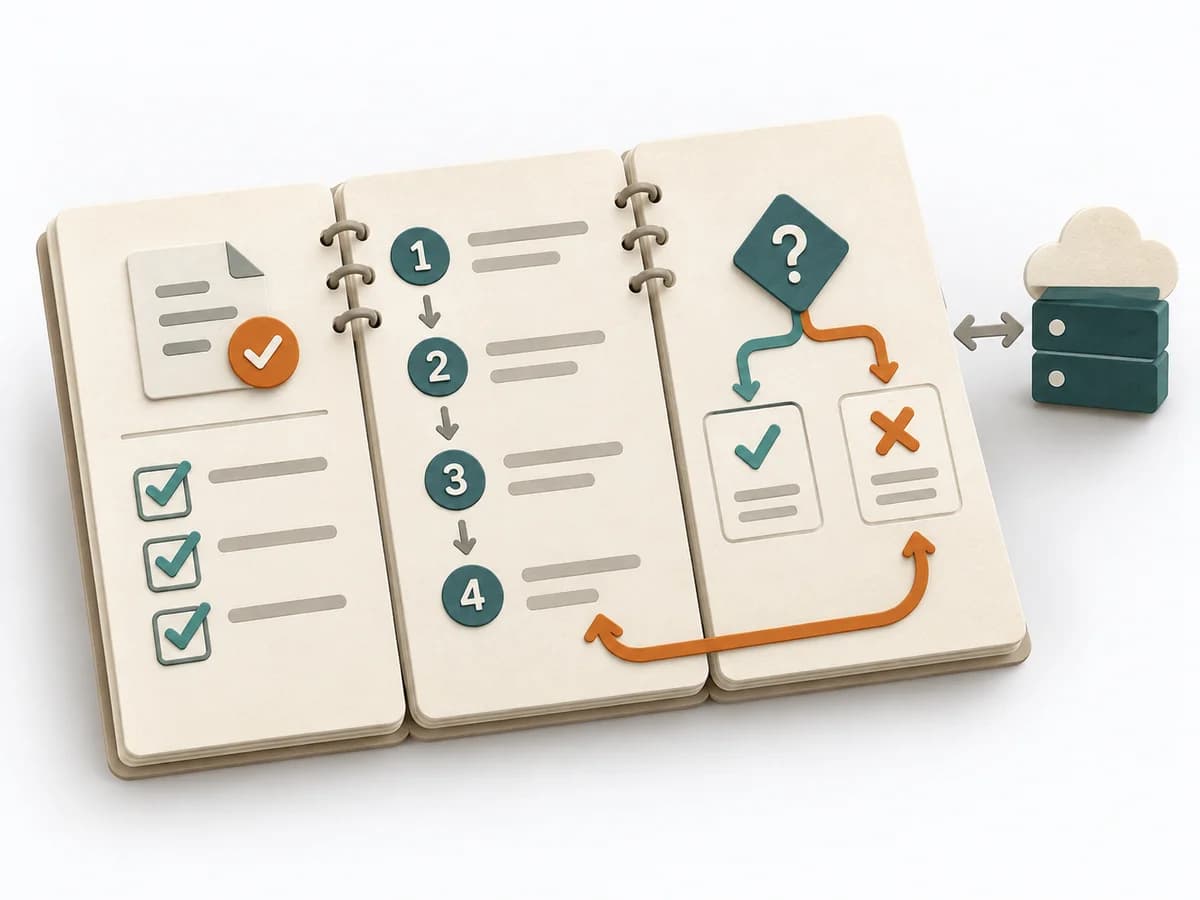 Operations Runbook |  Operations 5 Whys |
|---|---|---|---|---|
Purposedifferent | When experiences build up over days or weeks and a single session cannot capture them, Diary Study records the course of everyday life. Recurring triggers, moods, and habits become visible this way, beyond the sharpness of memory. | During an acute incident with several people involved, the method creates a clear leadership and communication structure. It reduces chaos when fast coordination and clean situational awareness are both needed at once. | For recurring operational tasks or incidents, the method keeps solid action logic ready. It reduces uncertainty when time pressure, role changes, or rare situations demand fast access. | For a single, hard-to-explain deviation, the method exposes the causal chain behind the visible symptom. It keeps the cause open until a controllable condition emerges instead of a mere description. |
Complexitydifferent | Medium | Medium | Low | Low |
Timedifferent | 1-4 Wochen | As needed | 20-60 min | 15-30 min |
Participantsdifferent | 5-20 | 4-15 | 1-4 | 2-6 |
Formatdifferent | Async | Workshop + async | Async | Workshop |
Outputdifferent | Diary Entries, Longitudinal Patterns, Experience Timeline | Incident Log, Action Tracker, Stakeholder Updates | Runbook, Checklist, Escalation Path | Root cause notes, Countermeasures |
Tagsno overlap | UX researchTrackingBehavior | IncidentOperationsReliability | OperationsReliabilityDocumentation | Root causeIncidentLeanProblem solving |