View methods side by side.
Choose up to four methods. Add them using the search and share the comparison by copying its link.
| Criterion |  UX Research Diary Study | 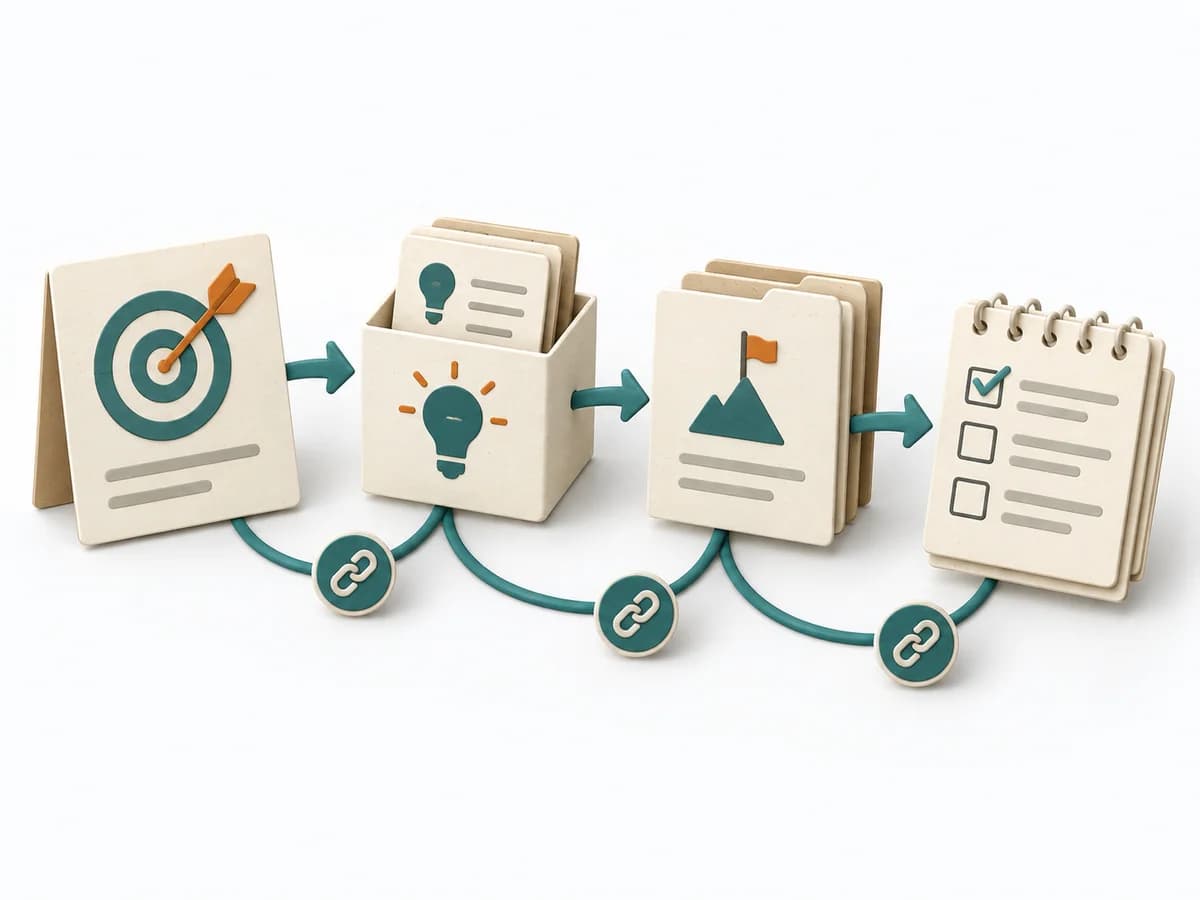 Product Strategy GIST Planning | 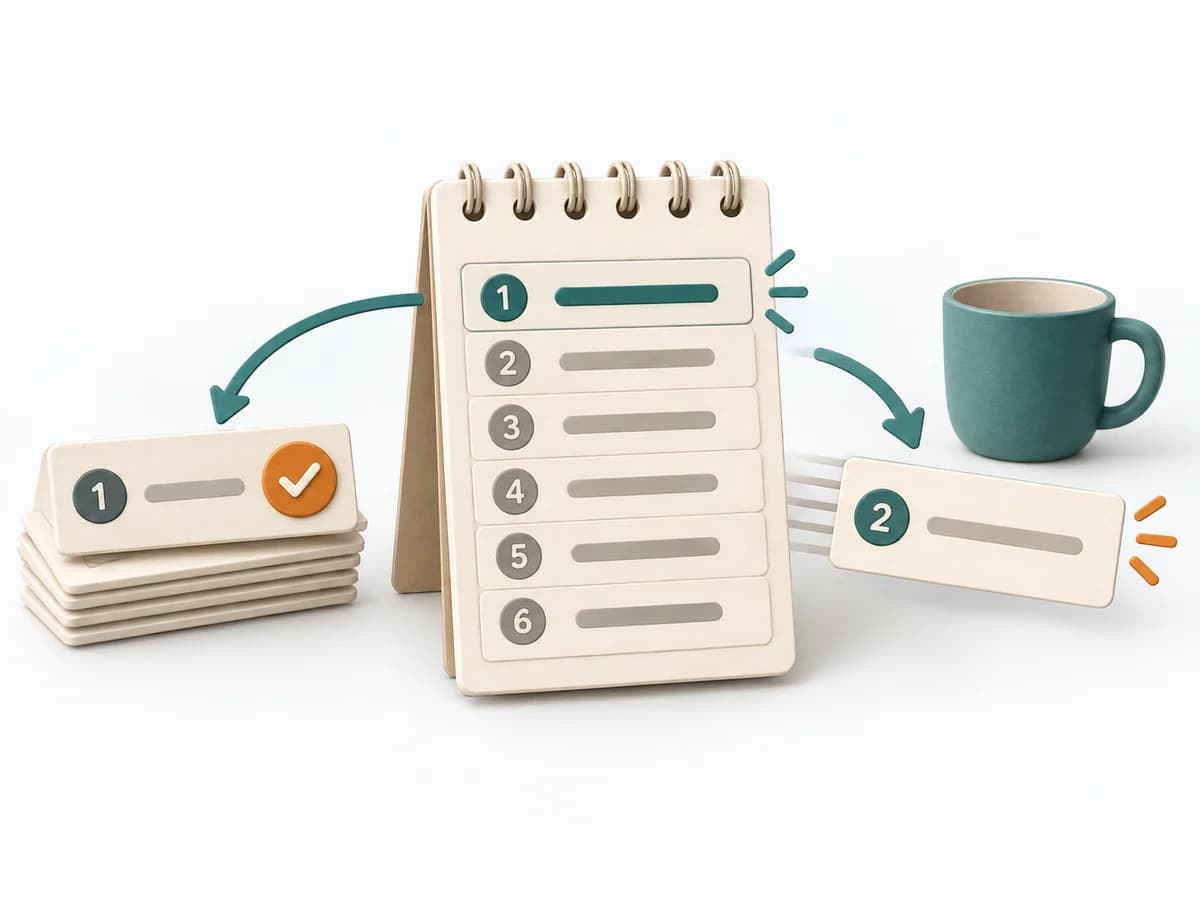 Operations Ivy Lee Method | 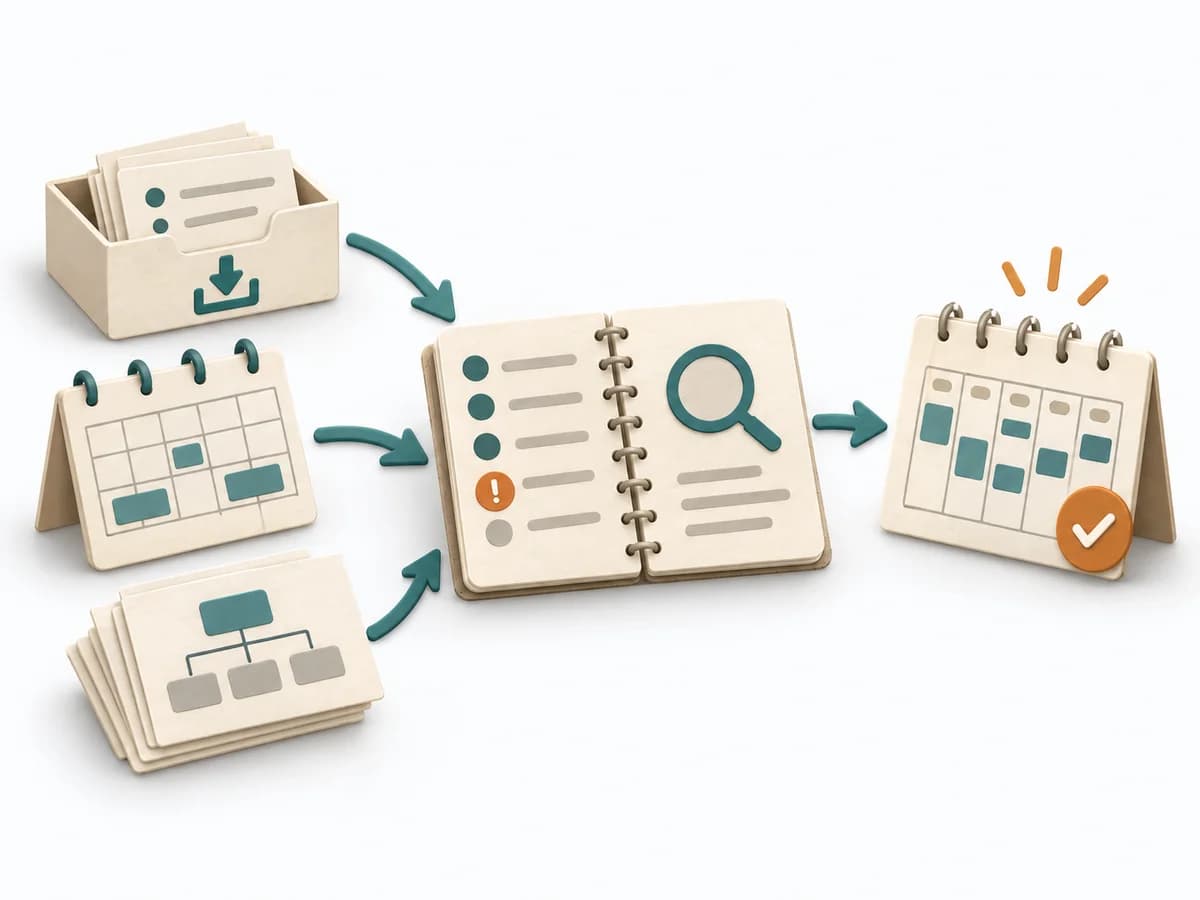 Operations Weekly Review |
|---|---|---|---|---|
Purposedifferent | When experiences build up over days or weeks and a single session cannot capture them, Diary Study records the course of everyday life. Recurring triggers, moods, and habits become visible this way, beyond the sharpness of memory. | GIST Planning helps clarify target groups, value, goals, and priorities. It links customer value, product logic, and decision priorities, and captures the result as goals, an idea bank, and a step-project list. | With a restless workday full of too many open items, the method creates radical simplicity. It directs attention to a short sequence instead of a broad, still-open field. | In a week with many open loops, the method creates distance from operational noise. It organizes commitments, calendar, and projects so the next week becomes workable. |
Complexitydifferent | Medium | Medium | Low | Low |
Timedifferent | 1-4 Wochen | Wochen bis Monate je Goal | 5-10 min daily | 30-60 min |
Participantsdifferent | 5-20 | 3-10 | 1 | 1 |
Formatdifferent | Async | Workshop + async | Async | Async |
Outputdifferent | Diary Entries, Longitudinal Patterns, Experience Timeline | Goals, Idea bank, Step-project list, Tasks, Learning reports | Daily Priority List, Completion Notes | Updated Task System, Weekly Focus, Next Actions |
Tagsno overlap | UX researchTrackingBehavior | RoadmapOutcomesPlanningExperiments | PrioritizationProductivityExecution | ProductivityExecutionPlanning |