View methods side by side.
Choose up to four methods. Add them using the search and share the comparison by copying its link.
| Criterion |  UX Research Diary Study | 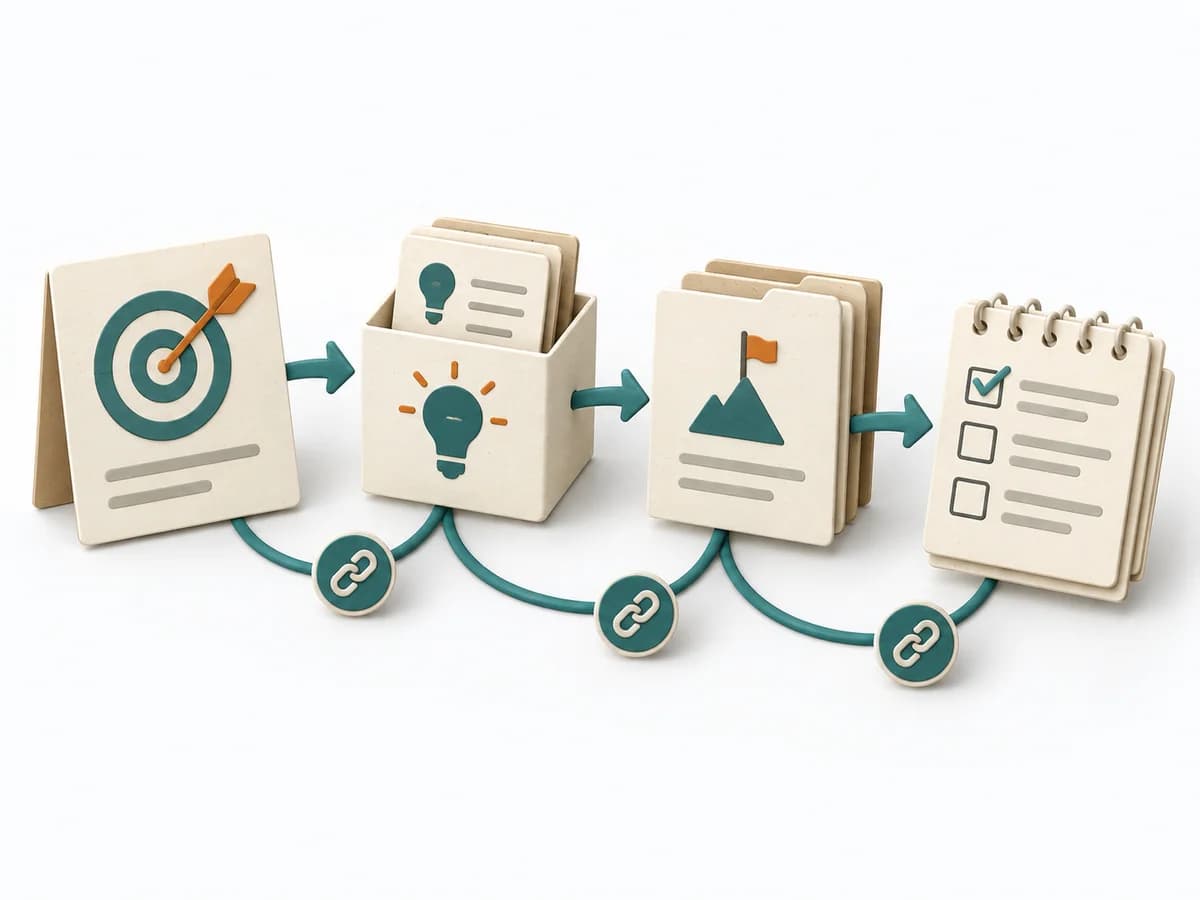 Product Strategy GIST Planning |  Decision Making Force Field Analysis |  Decision Making Constraint Analysis |
|---|---|---|---|---|
Purposedifferent | When experiences build up over days or weeks and a single session cannot capture them, Diary Study records the course of everyday life. Recurring triggers, moods, and habits become visible this way, beyond the sharpness of memory. | GIST Planning helps clarify target groups, value, goals, and priorities. It links customer value, product logic, and decision priorities, and captures the result as goals, an idea bank, and a step-project list. | In change initiatives, supporting and restraining forces sit at the table at the same time. Force Field Analysis makes these tensions explicit and shows where change can be pushed forward by strengthening or relieving. | When an initiative stalls, the limit often lies not in the idea but in hard or soft boundary conditions. Constraint Analysis separates these limits and shows which of them can actually be shaped. |
Complexitydifferent | Medium | Medium | Low | Low |
Timedifferent | 1-4 Wochen | Wochen bis Monate je Goal | 45-90 min | 30-90 min |
Participantsdifferent | 5-20 | 3-10 | 3-12 | 2-8 |
Formatdifferent | Async | Workshop + async | Workshop | Workshop + async |
Outputdifferent | Diary Entries, Longitudinal Patterns, Experience Timeline | Goals, Idea bank, Step-project list, Tasks, Learning reports | Force Field Map, Change Levers, Risk Notes | Constraint List, Hard/Soft Classification, Option Impact Notes, Decision Boundaries |
Tagsno overlap | UX researchTrackingBehavior | RoadmapOutcomesPlanningExperiments | ChangeDecisionStrategy | ConstraintsDecisionPlanningOptions |