View methods side by side.
Choose up to four methods. Add them using the search and share the comparison by copying its link.
| Criterion |  UX Research Diary Study |  UX Research First-click Testing |  UX Research Surveys | 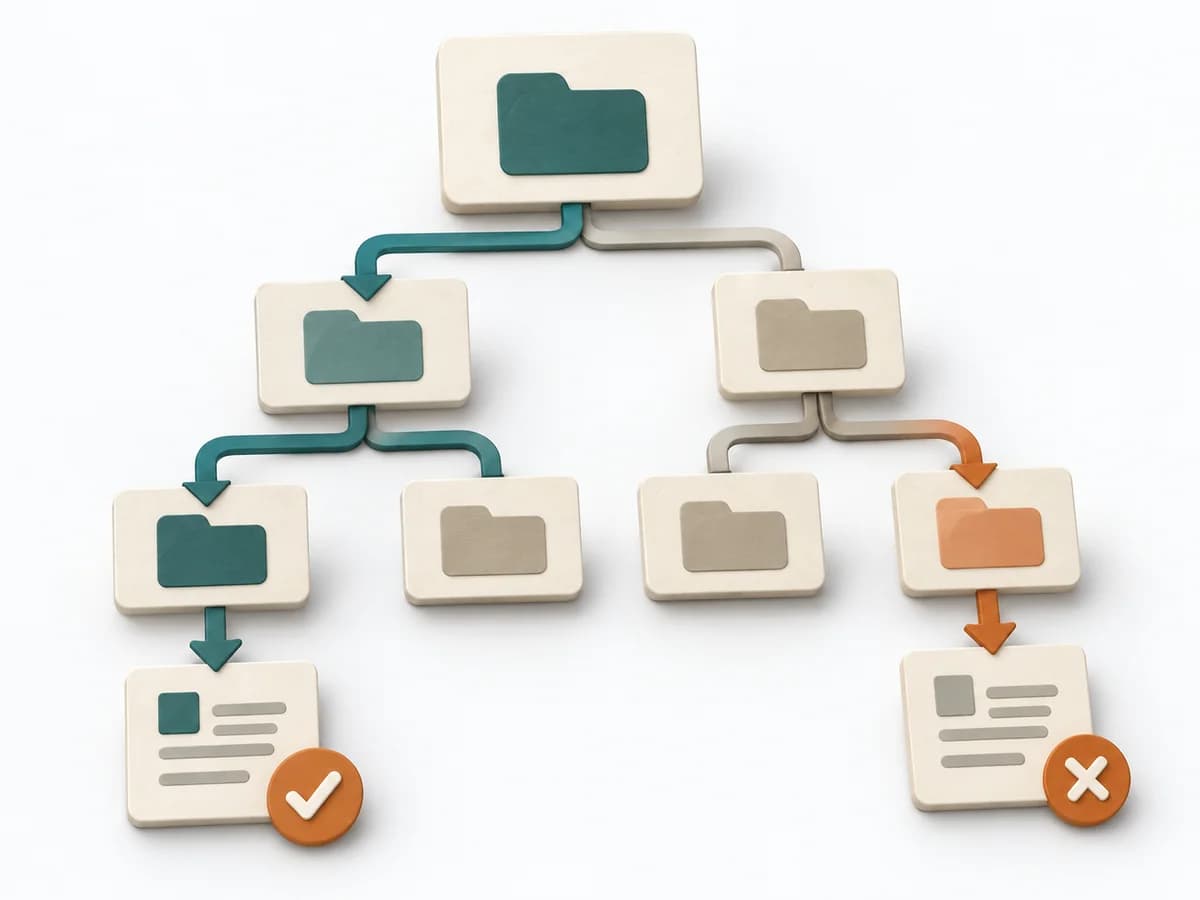 UX Research Tree Testing |
|---|---|---|---|---|
Purposedifferent | When experiences build up over days or weeks and a single session cannot capture them, Diary Study records the course of everyday life. Recurring triggers, moods, and habits become visible this way, beyond the sharpness of memory. | When users immediately turn the wrong way on a screen or wireframe, first click testing checks initial orientation at high speed. The first click shows early whether expectation, labeling, and wayfinding fit together. | When a topic needs to be validated broadly and many people can answer the same question, surveys gather structured feedback in a scalable form. Answers become comparable and segmentable instead of remaining merely anecdotal. | When a navigation exists but search paths still fail, tree testing checks findability without visual distraction. The method shows whether labels, levels, and paths really lead to the intended destination. |
Complexitydifferent | Medium | Low | Medium | Medium |
Timedifferent | 1-4 Wochen | 1-2 Tage | 3-14 Tage | 1-2 Tage |
Participantsdifferent | 5-20 | 10-30 | 50+ | Based on research question |
Formatsame | Async | Async | Async | Async |
Outputdifferent | Diary Entries, Longitudinal Patterns, Experience Timeline | Click Heatmap, Success Rate, Design Recommendations | Survey Results, Charts, Segment Insights | Findability Metrics, Path Analysis, Revised IA |
Tagsno overlap | UX researchTrackingBehavior | UXNavigationFindabilityValidation | QuantitativeResearchValidation | Information architectureNavigationFindability |