View methods side by side.
Choose up to four methods. Add them using the search and share the comparison by copying its link.
| Criterion |  UX Research Diary Study | 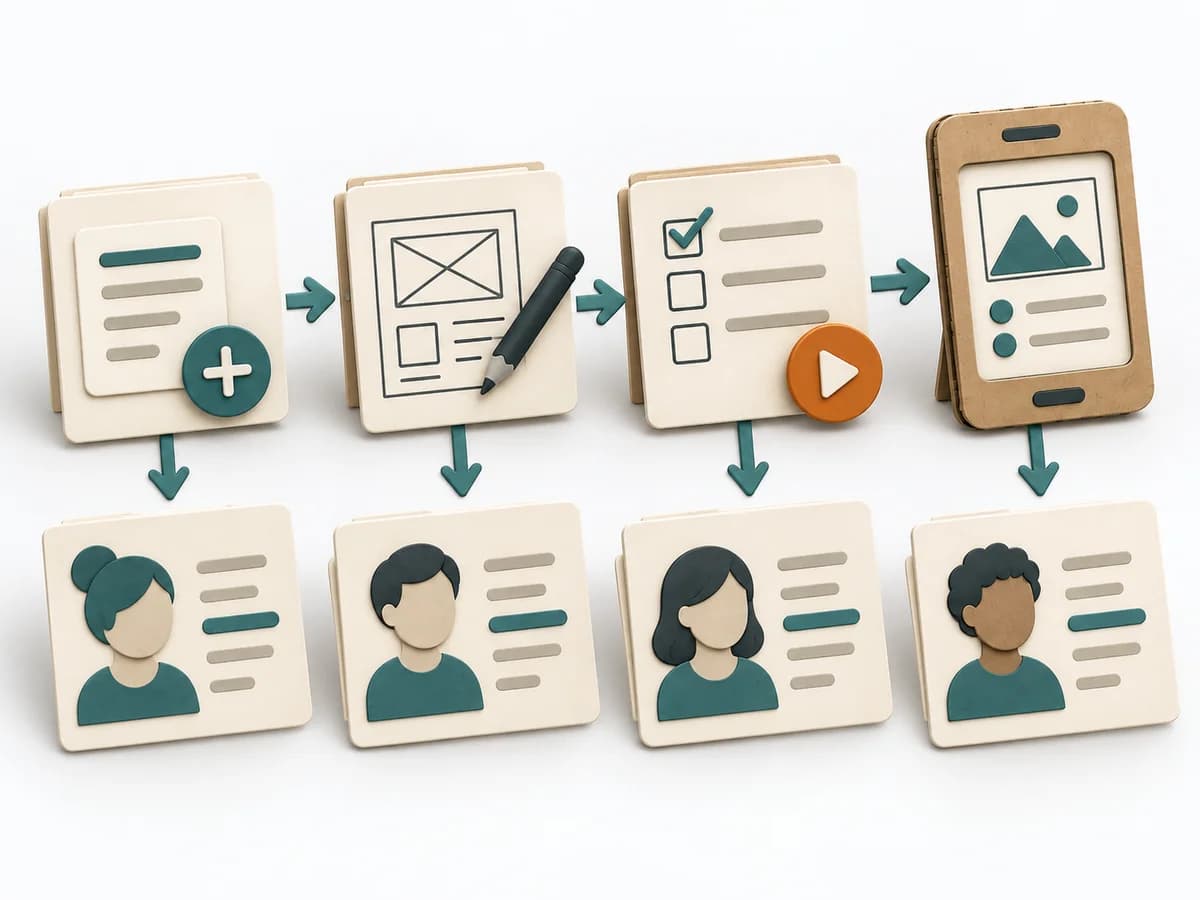 Knowledge Modeling Event Modeling | 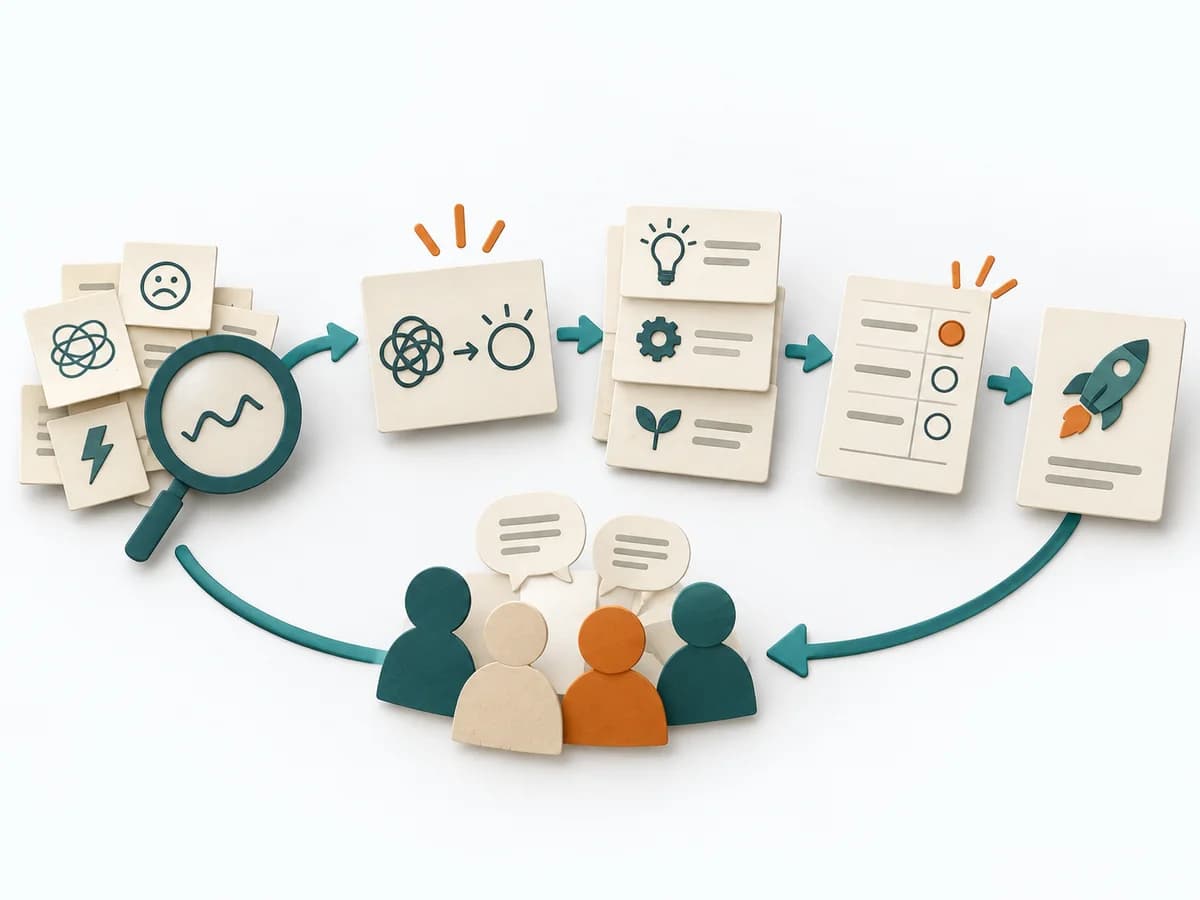 Facilitation Decision Jam | 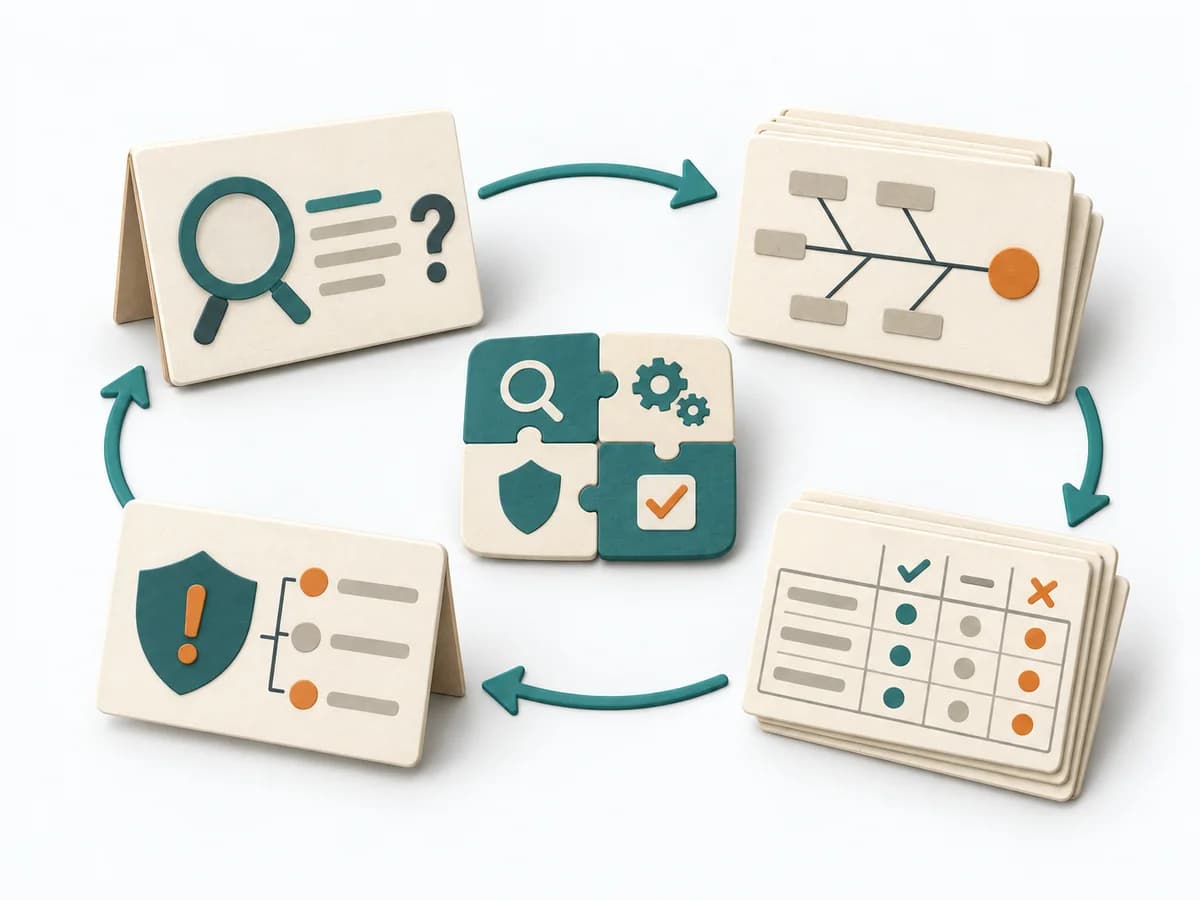 Operations Kepner-Tregoe |
|---|---|---|---|---|
Purposedifferent | When experiences build up over days or weeks and a single session cannot capture them, Diary Study records the course of everyday life. Recurring triggers, moods, and habits become visible this way, beyond the sharpness of memory. | Event Modeling connects business workflows with commands, events, and views into one coherent mental model. It helps design behavior, UI, and technical slices from the same underlying logic. | When a decision is stuck, Decision Jam loosens the knot through structured separation of problem, idea, and selection. The format creates movement without jumping prematurely at the first seemingly elegant answer. | For a disturbance that's hard to pin down, the method cleanly separates problem, cause, and decision. It reduces mixing when symptoms allow several interpretations. |
Complexitydifferent | Medium | Medium | Low | High |
Timedifferent | 1-4 Wochen | 2-6 h | 60-90 min | 2-8 h |
Participantsdifferent | 5-20 | 2-8 | 4-10 | 2-8 |
Formatdifferent | Async | Workshop + async | Workshop | Workshop + async |
Outputdifferent | Diary Entries, Longitudinal Patterns, Experience Timeline | Event Model, UI Flow, Commands, Read Models | Problem Cluster, Prioritized Challenge, Experiment | Problem Analysis, Decision Analysis, Risk Plan |
Tagsno overlap | UX researchTrackingBehavior | EventsBlueprintDomain-Driven DesignBehavior | FacilitationDecisionProblem solvingWorkshop | Problem solvingRoot causeDecisionOperations |