View methods side by side.
Choose up to four methods. Add them using the search and share the comparison by copying its link.
| Criterion |  UX Research Diary Study | 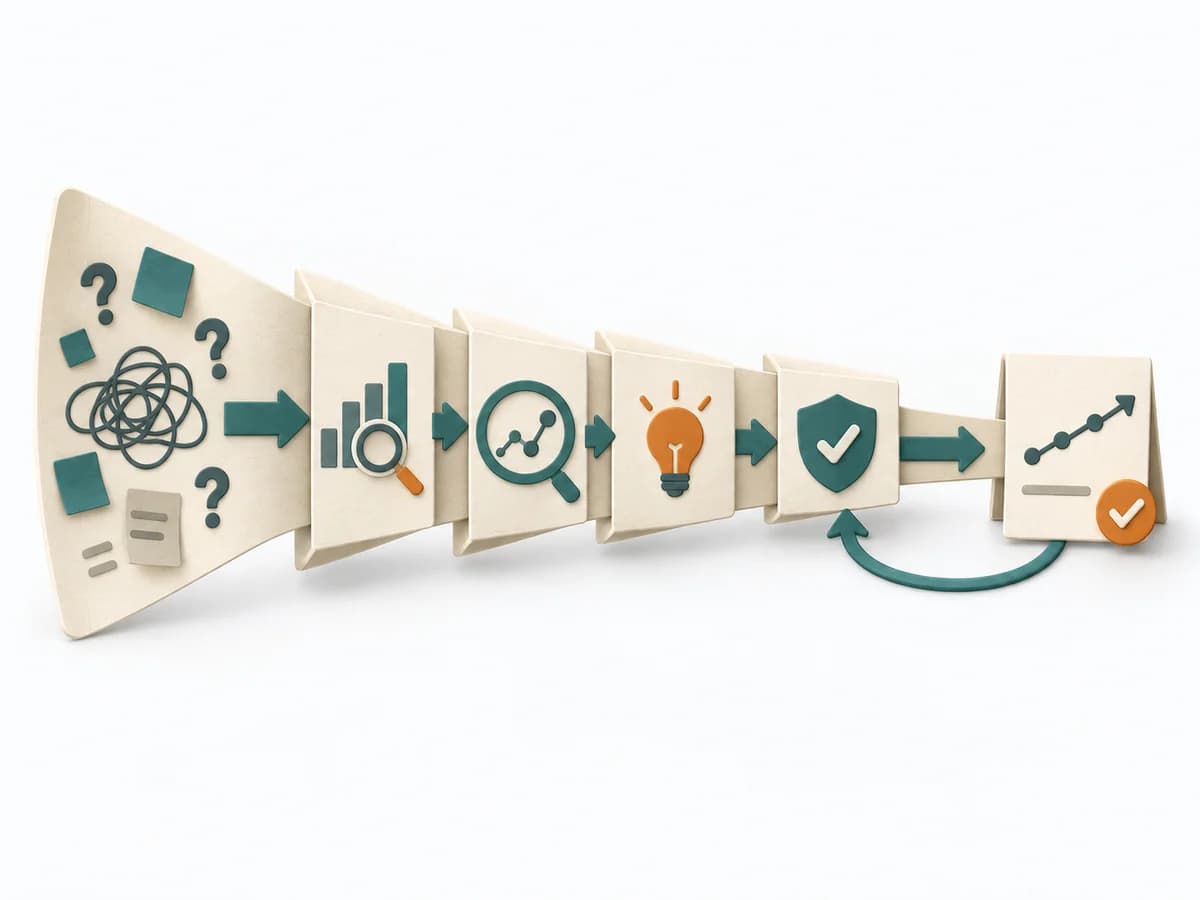 Operations DMAIC |  Operations Kaizen Event |  Operations Failure Mode and Effects Analysis |
|---|---|---|---|---|
Purposedifferent | When experiences build up over days or weeks and a single session cannot capture them, Diary Study records the course of everyday life. Recurring triggers, moods, and habits become visible this way, beyond the sharpness of memory. | For a process problem with fluctuating performance, the method brings analysis and improvement into a disciplined sequence. It creates a framework in which numbers, causes, and control come together. | For a tightly scoped process segment with noticeable waste, the method bundles shared energy for change. It suits situations that call for fast learning loops and visible adjustments. | For a process, product, or service with noticeable failure risks, the method assesses possible failure modes in advance. It directs attention to combinations of occurrence, effect, and detectability. |
Complexitydifferent | Medium | High | Medium | High |
Timedifferent | 1-4 Wochen | 2-12 Wochen | 0.5-5 Tage | 2-6 h |
Participantsdifferent | 5-20 | 3-10 | 4-10 | 3-10 |
Formatdifferent | Async | Workshop + async | Workshop | Workshop |
Outputdifferent | Diary Entries, Longitudinal Patterns, Experience Timeline | Project Charter, Measurement Plan, Cause Analysis, Control Plan | Kaizen Charter, Waste List, Improvement Experiments, Standard Work Update | FMEA Table, Risk Priority, Mitigation Actions |
Tagsno overlap | UX researchTrackingBehavior | Continuous improvementQualityProcess improvement | LeanContinuous improvementOperations | RiskQualityOperationsRoot cause |