View methods side by side.
Choose up to four methods. Add them using the search and share the comparison by copying its link.
| Criterion |  UX Research Diary Study | 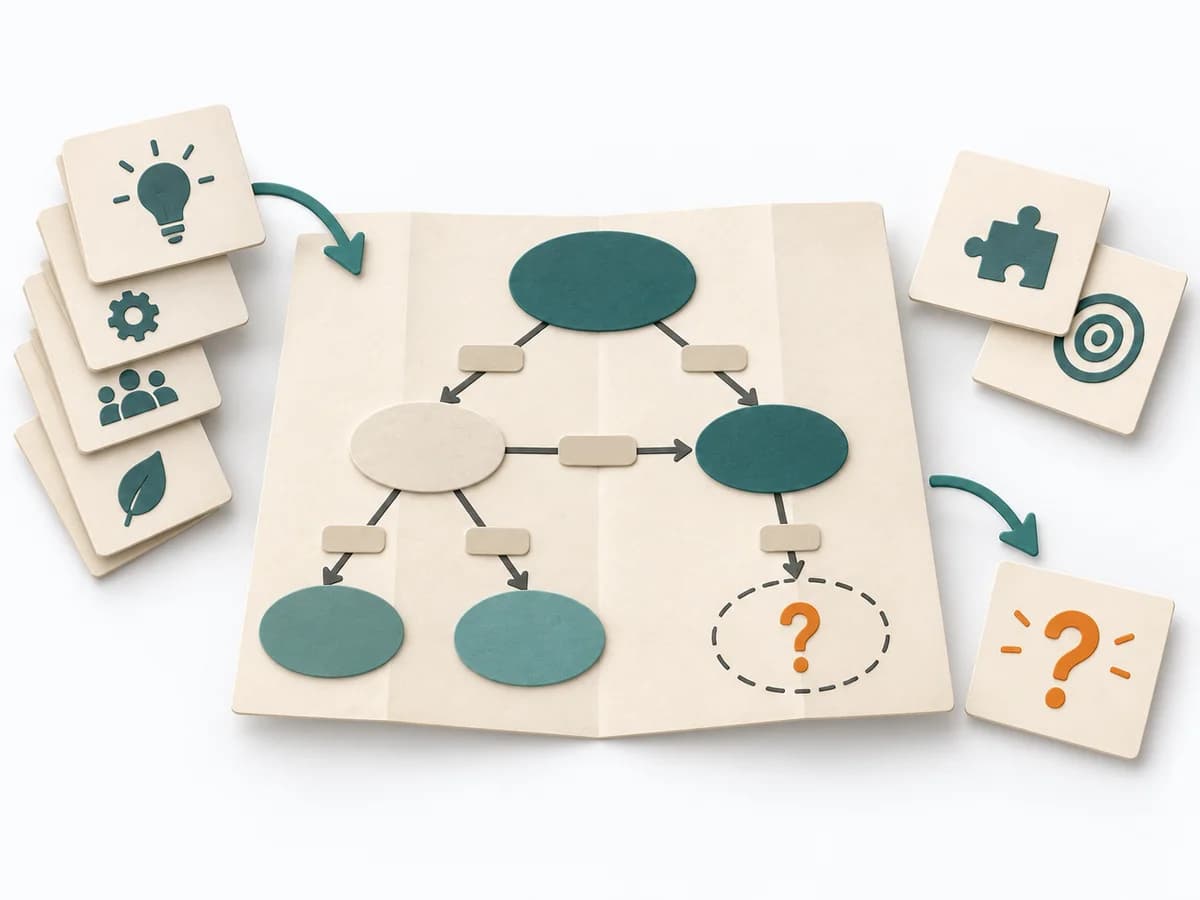 Knowledge Modeling Concept Mapping |  Decision Making Force Field Analysis |  Decision Making Argument Mapping |
|---|---|---|---|---|
Purposedifferent | When experiences build up over days or weeks and a single session cannot capture them, Diary Study records the course of everyday life. Recurring triggers, moods, and habits become visible this way, beyond the sharpness of memory. | Concept Mapping arranges terms and relationships in a network that makes subject-matter connections tangible. It fits when a topic needs to be understood structurally rather than linearly. | In change initiatives, supporting and restraining forces sit at the table at the same time. Force Field Analysis makes these tensions explicit and shows where change can be pushed forward by strengthening or relieving. | When statements, evidence, and counterarguments get mixed up, a debate quickly loses its structure. Argument Mapping breaks a thesis down into its reasoning and makes visible what it really rests on. |
Complexitydifferent | Medium | Medium | Low | Medium |
Timedifferent | 1-4 Wochen | 1-2 h | 45-90 min | 1-3 h |
Participantsdifferent | 5-20 | 1-8 | 3-12 | 1-8 |
Formatdifferent | Async | Workshop + async | Workshop | Workshop + async |
Outputdifferent | Diary Entries, Longitudinal Patterns, Experience Timeline | Concept Map, Relationship Labels, Knowledge Gaps | Force Field Map, Change Levers, Risk Notes | Argument Map, Evidence Gaps, Decision Rationale |
Tagsno overlap | UX researchTrackingBehavior | KnowledgeConceptsMappingSensemaking | ChangeDecisionStrategy | SensemakingDecisionRationale |