View methods side by side.
Choose up to four methods. Add them using the search and share the comparison by copying its link.
| Criterion |  UX Research Diary Study | 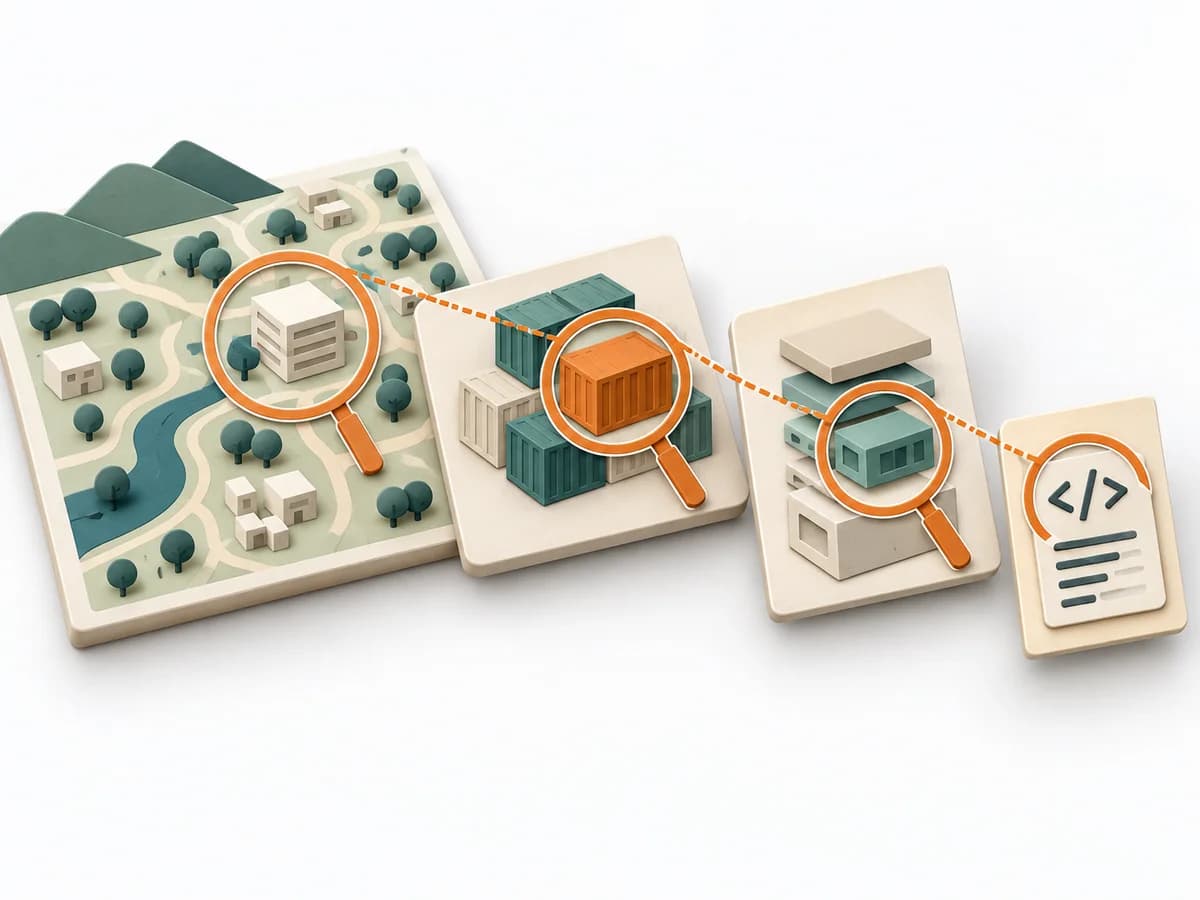 Architecture C4 Model |  Operations Root Cause Analysis | 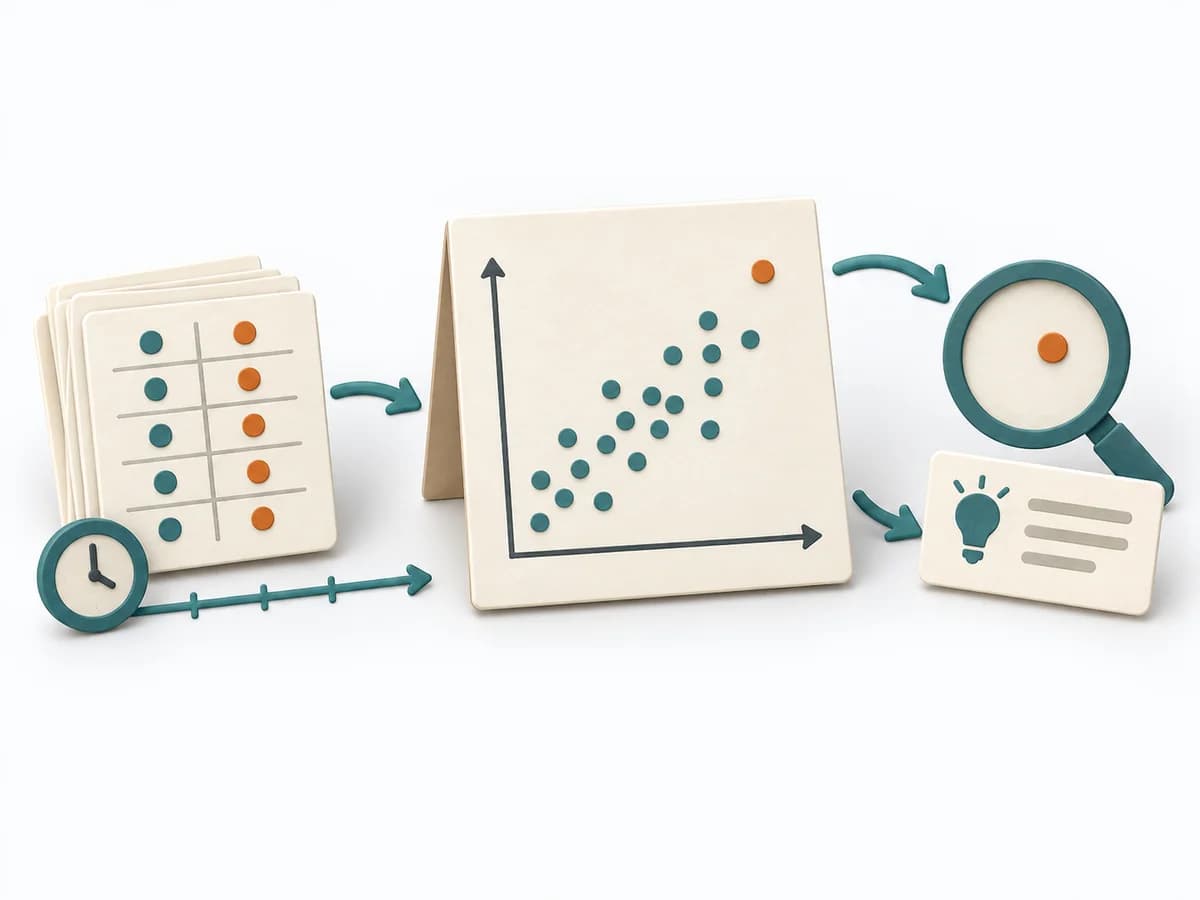 Operations Scatter Diagram |
|---|---|---|---|---|
Purposedifferent | When experiences build up over days or weeks and a single session cannot capture them, Diary Study records the course of everyday life. Recurring triggers, moods, and habits become visible this way, beyond the sharpness of memory. | The C4 Model makes a system legible across several resolution levels, from context down to code. It suits situations where different audiences need to understand the same architecture from different altitudes. | When a problem keeps recurring and the cause stays unclear, the method exposes the underlying mechanism. It separates symptom, guess, and robust explanation from one another. | When the question is whether two measures are related, the method makes patterns in the data picture visible. It separates felt correlations from relationships that actually show up in the data. |
Complexitydifferent | Medium | Low | Medium | Low |
Timedifferent | 1-4 Wochen | 1-4 h | 1-4 h | 30-90 min |
Participantsdifferent | 5-20 | 1-5 | 3-8 | 1-4 |
Formatdifferent | Async | Workshop + async | Workshop + async | Workshop + async |
Outputdifferent | Diary Entries, Longitudinal Patterns, Experience Timeline | Context Diagram, Container Diagram, Component Diagram | Problem Statement, Cause Hypotheses, Confirmed Causes, Action Plan | Scatter Plot, Korrelationsnotiz, Hypothesenliste |
Tagsno overlap | UX researchTrackingBehavior | ArchitectureCommunicationVisualization | Root causeProblem solvingQualityIncident | Root causeQualityVisualization |