View methods side by side.
Choose up to four methods. Add them using the search and share the comparison by copying its link.
| Criterion |  UX Research Diary Study | 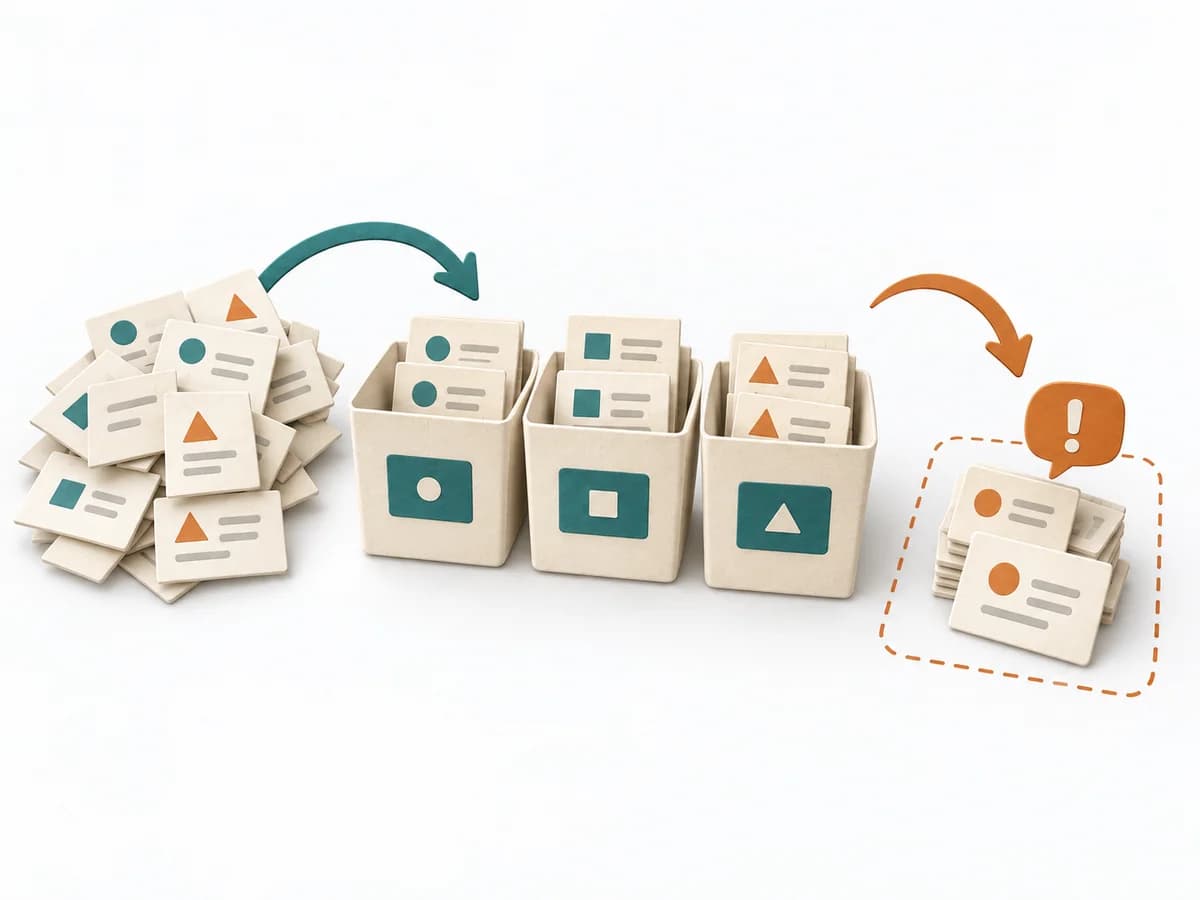 Agile Bucket System | 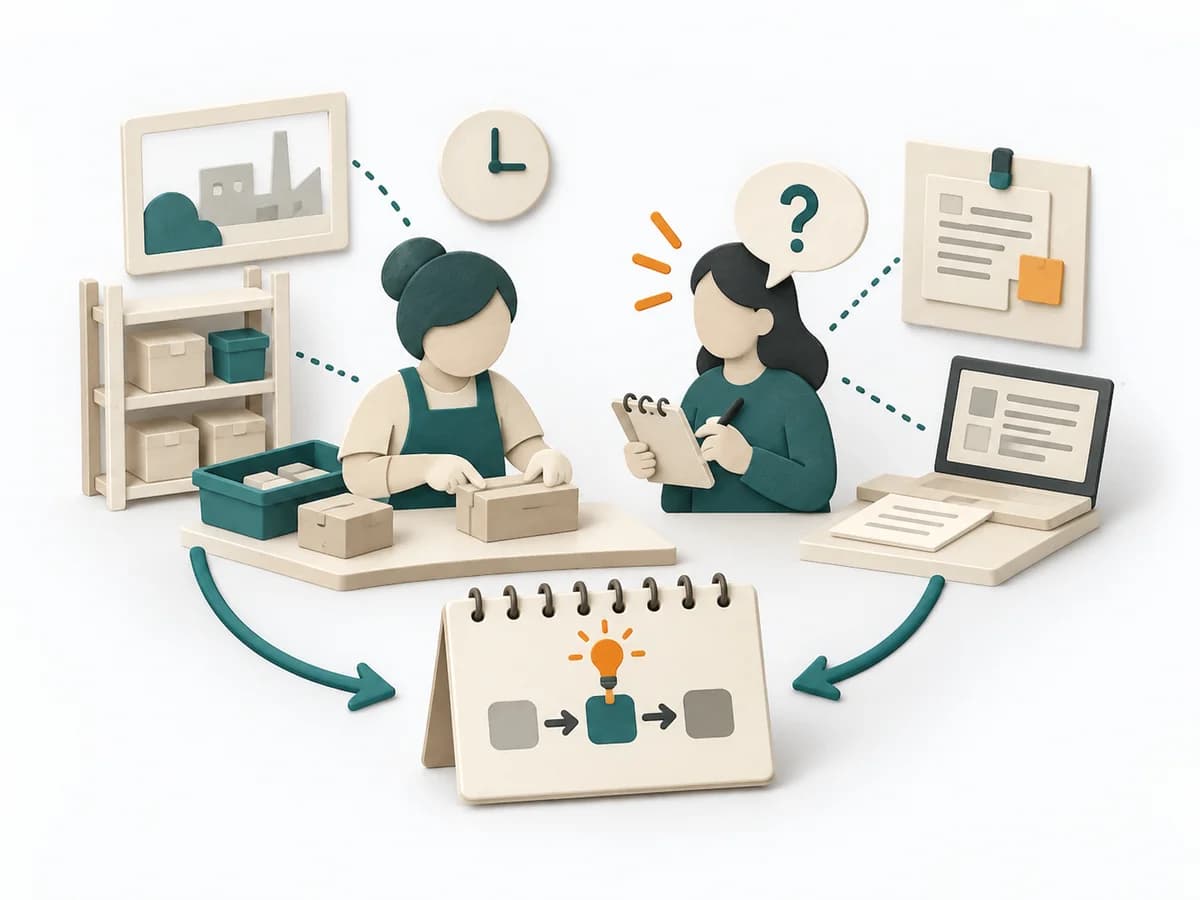 UX Research Contextual Inquiry |  Agile Planning Poker |
|---|---|---|---|---|
Purposedifferent | When experiences build up over days or weeks and a single session cannot capture them, Diary Study records the course of everyday life. Recurring triggers, moods, and habits become visible this way, beyond the sharpness of memory. | When a large batch of work needs a fast, rough estimate, it sorts items into predefined size buckets. It sorts work by value, risk, and delivery ability. The result is captured as a Bucketed Backlog, Relative Estimates, and Split Candidates. | When work processes are known only from accounts and the real context stays hidden, Contextual Inquiry makes behavior at the workplace visible. Observation and follow-up questions together show how people actually work, get interrupted, and improvise. | When estimates within the team diverge too much, it puts differing expectations on a common test bench. It separates rough complexity from unspoken assumptions. |
Complexitydifferent | Medium | Medium | Medium | Low |
Timedifferent | 1-4 Wochen | 30-90 min | 1-3 Wochen | 2-5 min je Item |
Participantsdifferent | 5-20 | 3-12 | 4-12 Beobachtungen | 3-9 |
Formatdifferent | Async | Workshop | Workshop + async | Workshop + async |
Outputdifferent | Diary Entries, Longitudinal Patterns, Experience Timeline | Bucketed Backlog, Relative Estimates, Split Candidates | Field Notes, Workflow Insights, Pain Points | Relative Estimates, Assumption Notes, Split Candidates |
Tagsno overlap | UX researchTrackingBehavior | EstimationBacklogRelative sizing | UX researchObservationContext | EstimationAgileRelative sizingTeam |