View methods side by side.
Choose up to four methods. Add them using the search and share the comparison by copying its link.
| Criterion |  UX Research Diary Study | 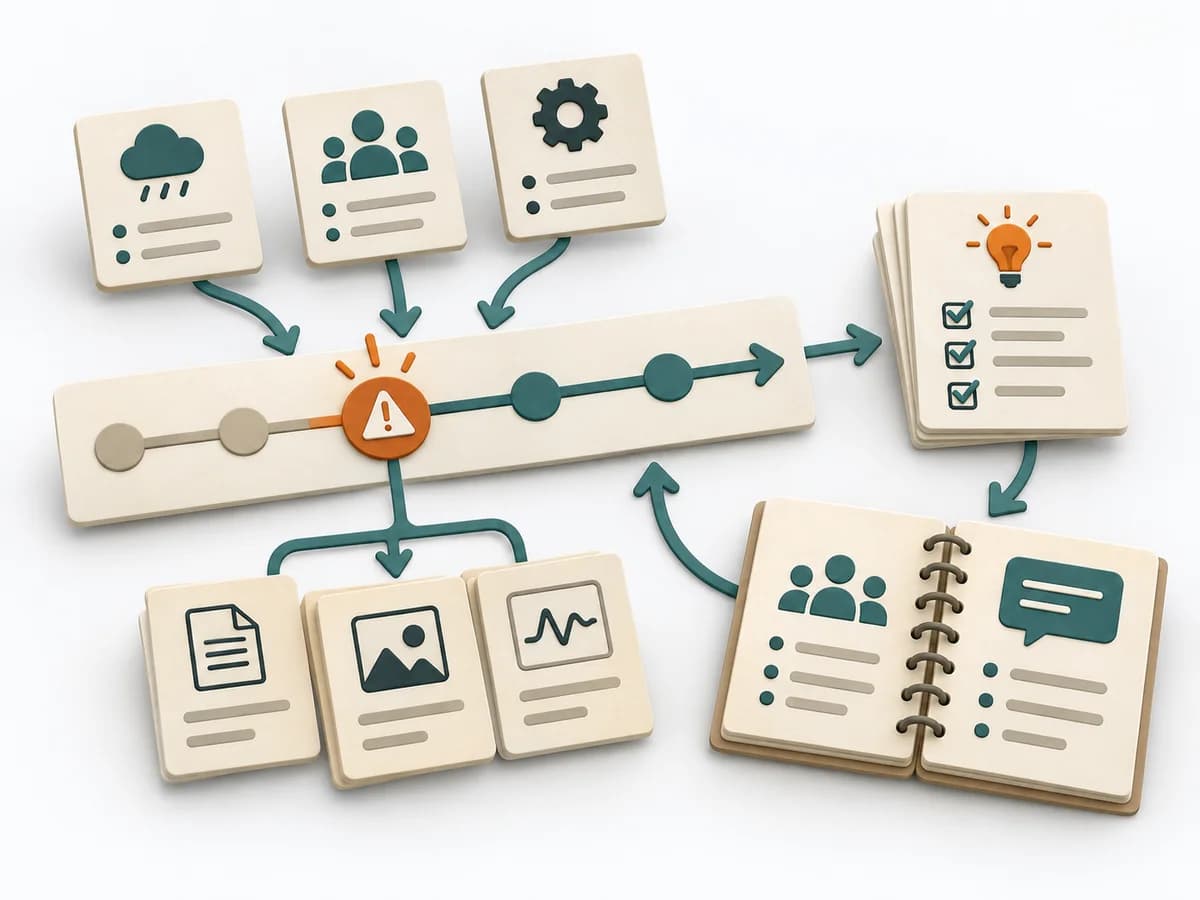 DevOps Blameless Postmortem |  Operations After-Action Review |  DevOps Incident Command |
|---|---|---|---|---|
Purposedifferent | When experiences build up over days or weeks and a single session cannot capture them, Diary Study records the course of everyday life. Recurring triggers, moods, and habits become visible this way, beyond the sharpness of memory. | After an incident with damage or a near miss, the method creates a sober field for learning without assigning blame. It directs attention to the course of events, conditions, and effective countermeasures. | After missions or project phases with unclear outcomes, the method makes visible what actually happened and what can be learned from it. It separates course, effect, and causes so experience turns into solid improvement. | During an acute incident with several people involved, the method creates a clear leadership and communication structure. It reduces chaos when fast coordination and clean situational awareness are both needed at once. |
Complexitydifferent | Medium | Medium | Low | Medium |
Timedifferent | 1-4 Wochen | 30-90 min | 20-45 min | As needed |
Participantsdifferent | 5-20 | 3-12 | 3-12 | 4-15 |
Formatdifferent | Async | Workshop + async | Workshop + async | Workshop + async |
Outputdifferent | Diary Entries, Longitudinal Patterns, Experience Timeline | Postmortem Doc, Action Items, Timeline | Lessons learned, Action items, Event summary | Incident Log, Action Tracker, Stakeholder Updates |
Tagsno overlap | UX researchTrackingBehavior | Site Reliability EngineeringIncidentLearningReliability | LearningOperationsImprovement | IncidentOperationsReliability |