View methods side by side.
Choose up to four methods. Add them using the search and share the comparison by copying its link.
| Criterion | 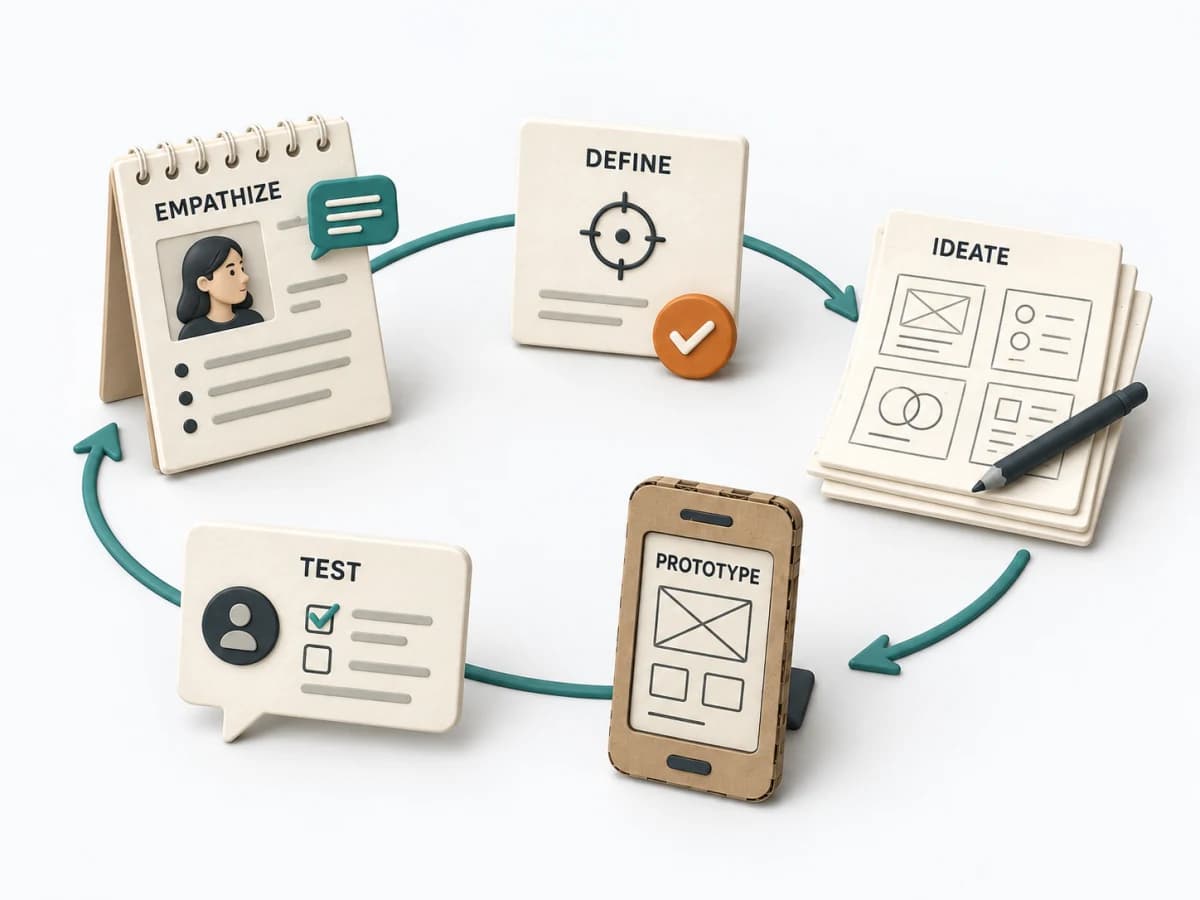 Innovation Design Thinking | 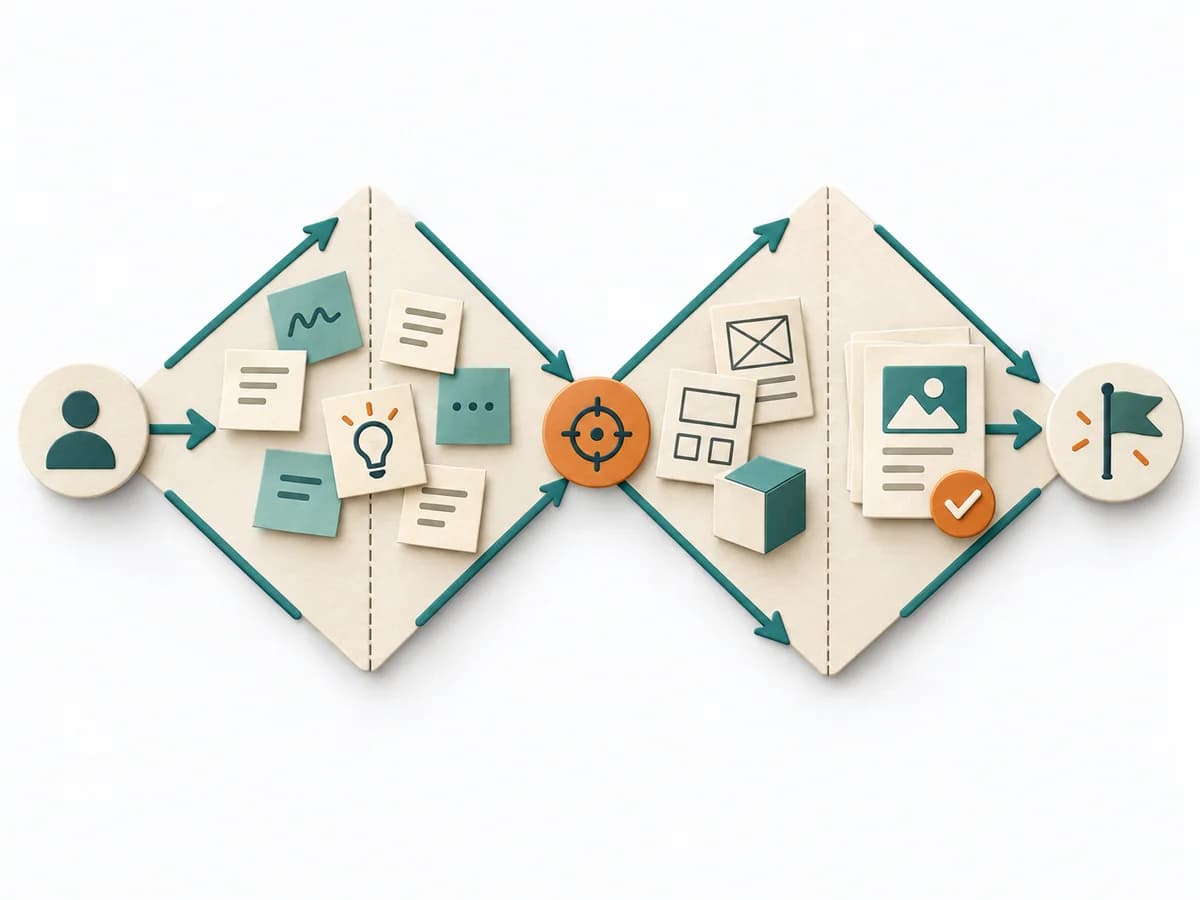 Innovation Double Diamond | 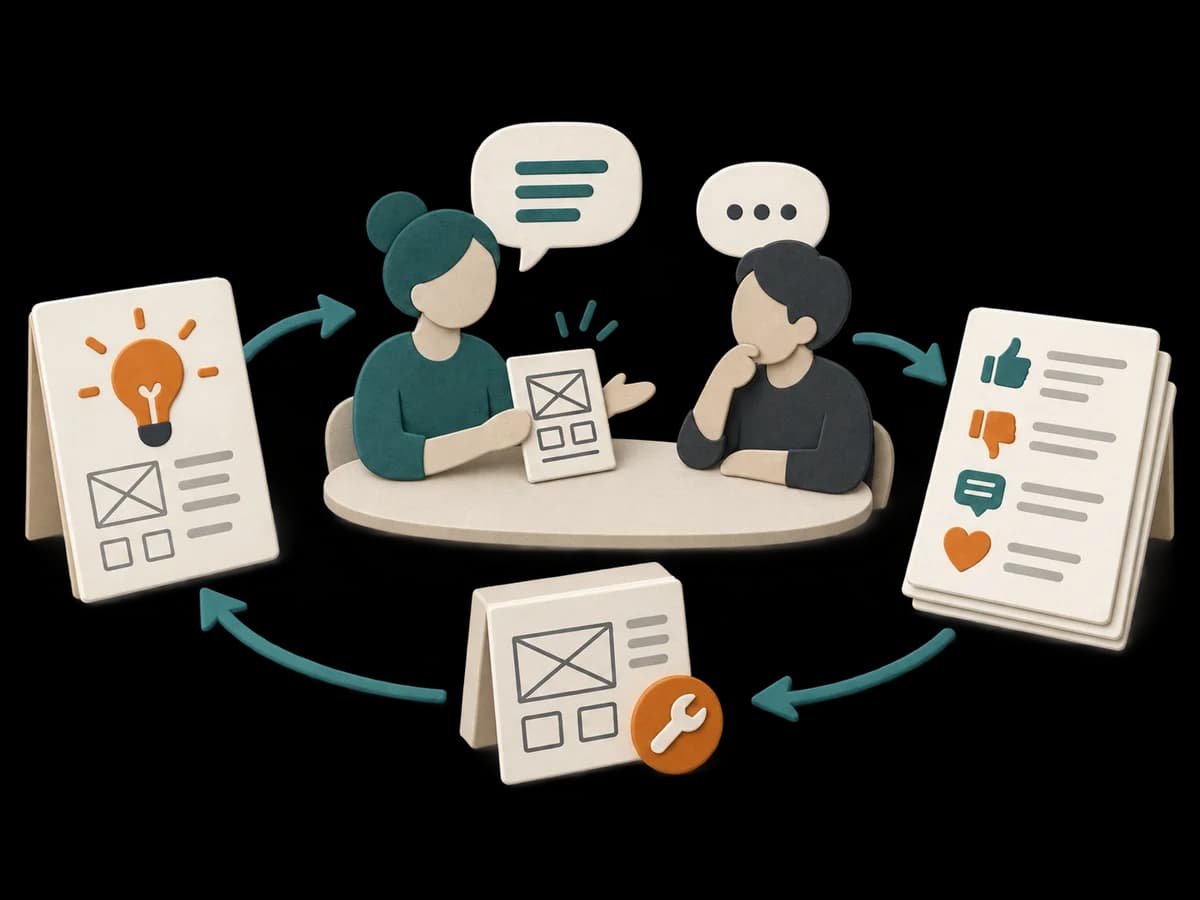 Product Discovery Solution Interview | 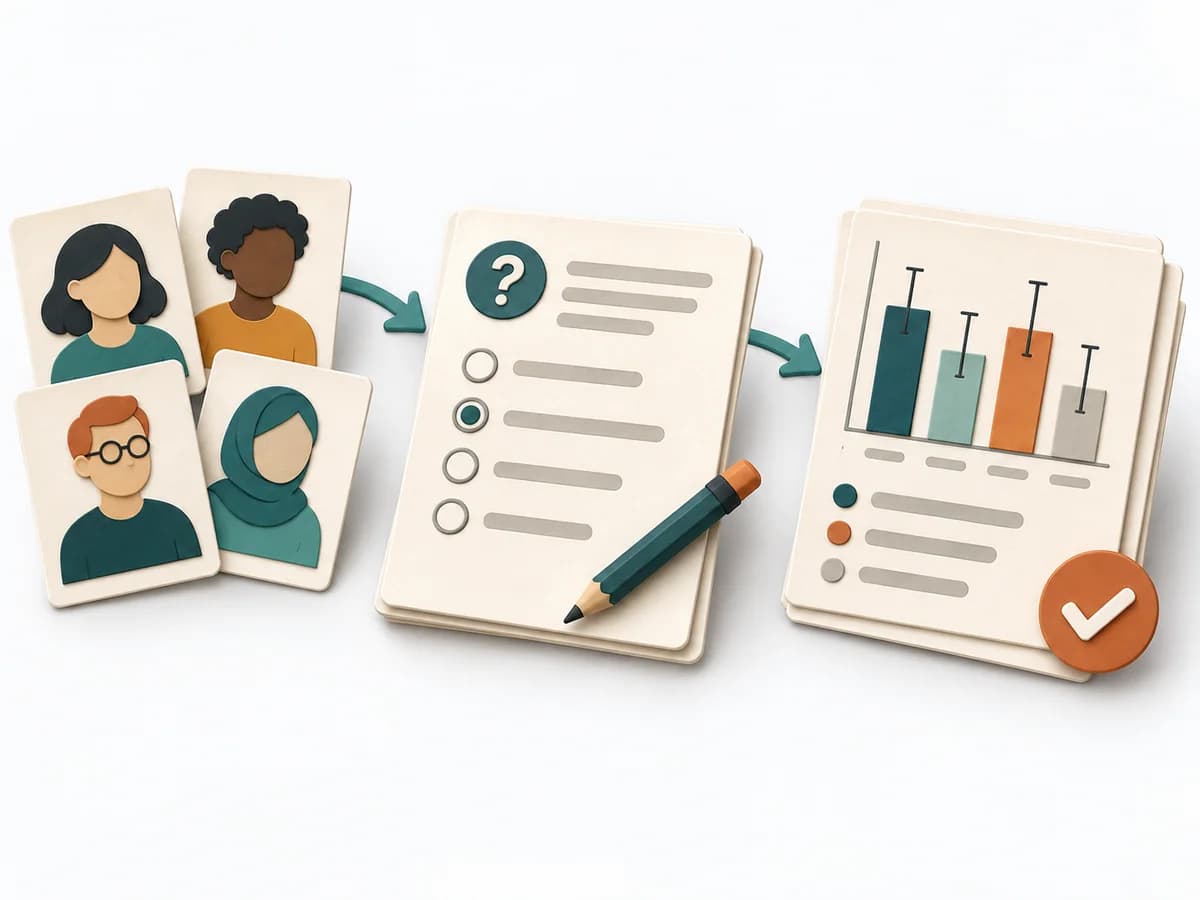 UX Research Surveys |
|---|---|---|---|---|
Purposedifferent | For complex user problems with an uncertain cause, the method connects observation, interpretation, and experiment into a learning cycle. It keeps the focus on real needs and avoids premature solution language. This produces robust decisions for product and service. | For complex problems with a fuzzy situation, the method cleanly separates search space and decision. It first creates breadth in understanding and then focus in elaboration. This brings open questions, problem definition, and solution path into a traceable movement. | When a solution idea is already on the table, it checks how it is understood and evaluated. It looks for resonance, objections, and missing fit early in the conversation. | When a topic needs to be validated broadly and many people can answer the same question, surveys gather structured feedback in a scalable form. Answers become comparable and segmentable instead of remaining merely anecdotal. |
Complexitydifferent | High | Medium | Medium | Medium |
Timedifferent | 1 Tag bis mehrere Wochen | Wochen bis Monate | 30-60 min je Interview | 3-14 Tage |
Participantsdifferent | 4-10 | 3-12 | 5-10 Interviews | 50+ |
Formatdifferent | Workshop | Workshop + async | Workshop + async | Async |
Outputdifferent | Problem Statement, Prototype, Test Learnings | Problem Statement, Solution Options, Prototypes, Deliverables per Phase | Solution Feedback, Objection List, Validation Notes | Survey Results, Charts, Segment Insights |
Tagsno overlap | InnovationPrototypeResearch | ProcessDivergenceInnovation | ValidationInterviewsPrototype | QuantitativeResearchValidation |