View methods side by side.
Choose up to four methods. Add them using the search and share the comparison by copying its link.
| Criterion | 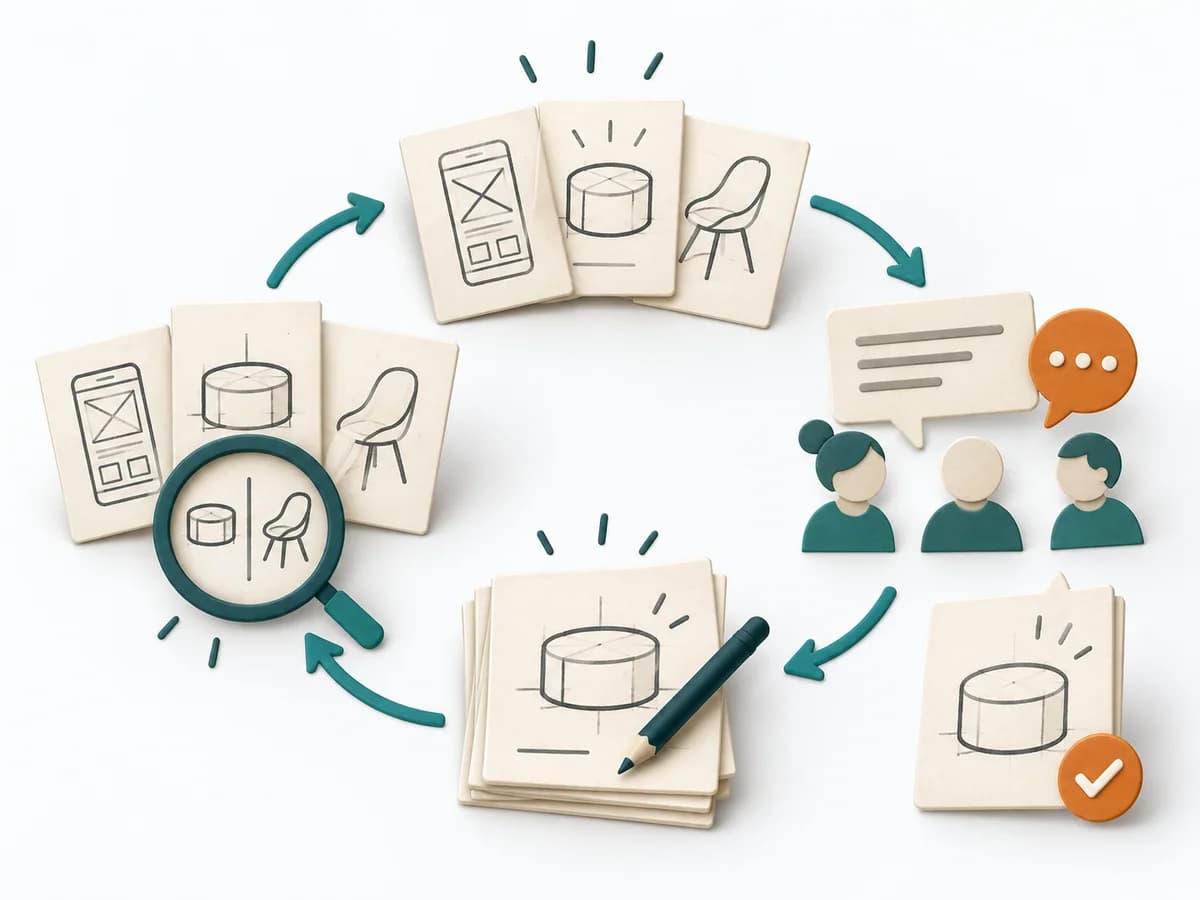 UX Design Design Studio | 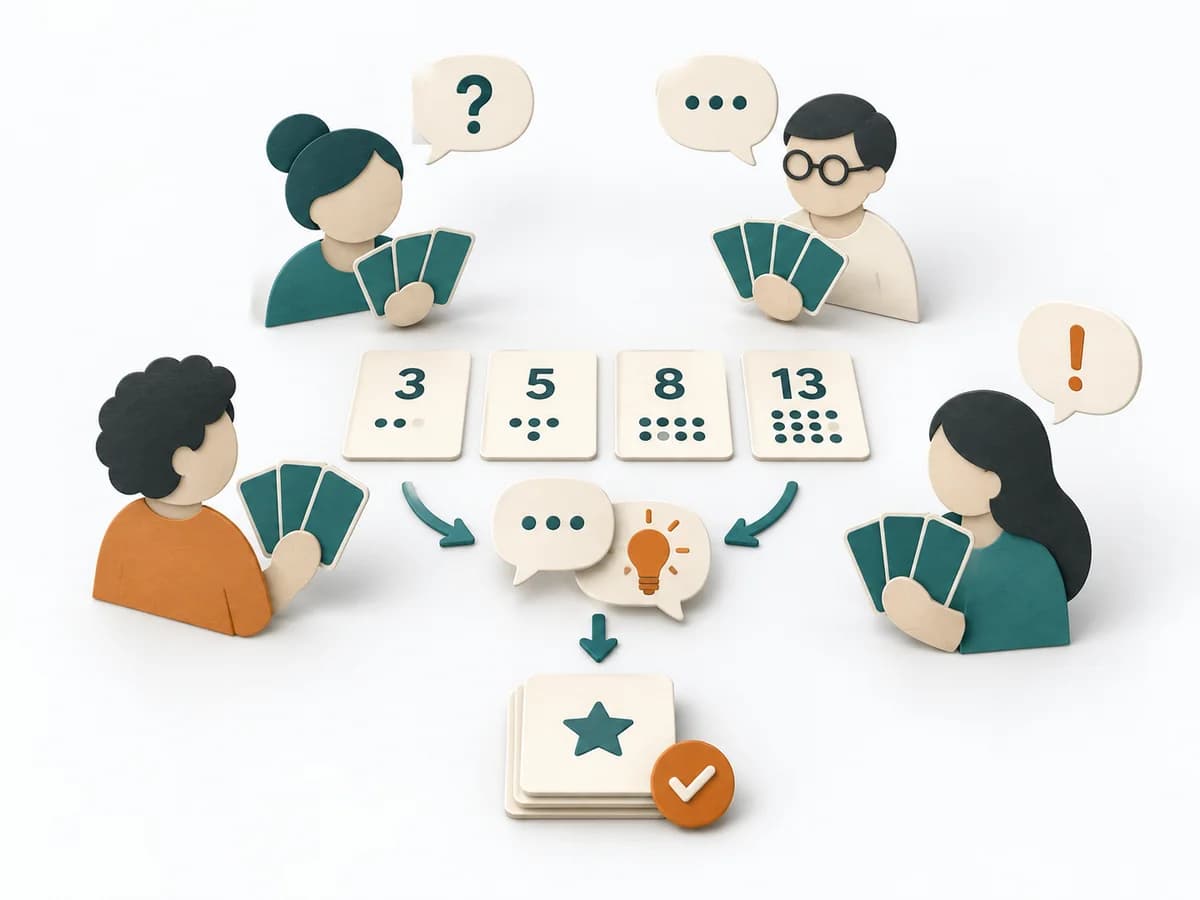 Agile Planning Poker |  Innovation Design Charrette |  Innovation Lotus Blossom |
|---|---|---|---|---|
Purposedifferent | When several designs need to be quickly put in relation to each other, it makes ideas visible and comparable. It encourages early variants instead of long upfront debates. | When estimates within the team diverge too much, it puts differing expectations on a common test bench. It separates rough complexity from unspoken assumptions. | In a tightly timed design process with many participants, the method pools several lines of thinking in a short time. It brings parallel design energy without letting the discussion tip into endless coordination. This quickly produces solid directions for architecture or space. | When a central question feels too large, the method breaks it into neighboring topic fields with their own depth of ideation. It holds structure and openness at the same time, so adjacent perspectives don't get lost. This grows an idea space out of a core problem. |
Complexitydifferent | Medium | Low | Medium | Low |
Timedifferent | 1-3 h | 2-5 min je Item | Halber Tag bis mehrere Tage | 45-90 min |
Participantsdifferent | 3-8 | 3-9 | 10-50 | 3-10 |
Formatdifferent | Workshop | Workshop + async | Workshop | Workshop |
Outputdifferent | Sketches, Concept Directions, Design Decisions | Relative Estimates, Assumption Notes, Split Candidates | Sketches and Concepts, Consolidated Solution Sketch, Prioritized Direction | Lotus Diagram, Idea Themes, Shortlist |
Tagsno overlap | SketchingCollaborationIdeation | EstimationAgileRelative sizingTeam | BrainstormingWorkshopCollaborationIdeation | BrainstormingIdeationCreativityDivergenceWorkshop |