View methods side by side.
Choose up to four methods. Add them using the search and share the comparison by copying its link.
| Criterion | 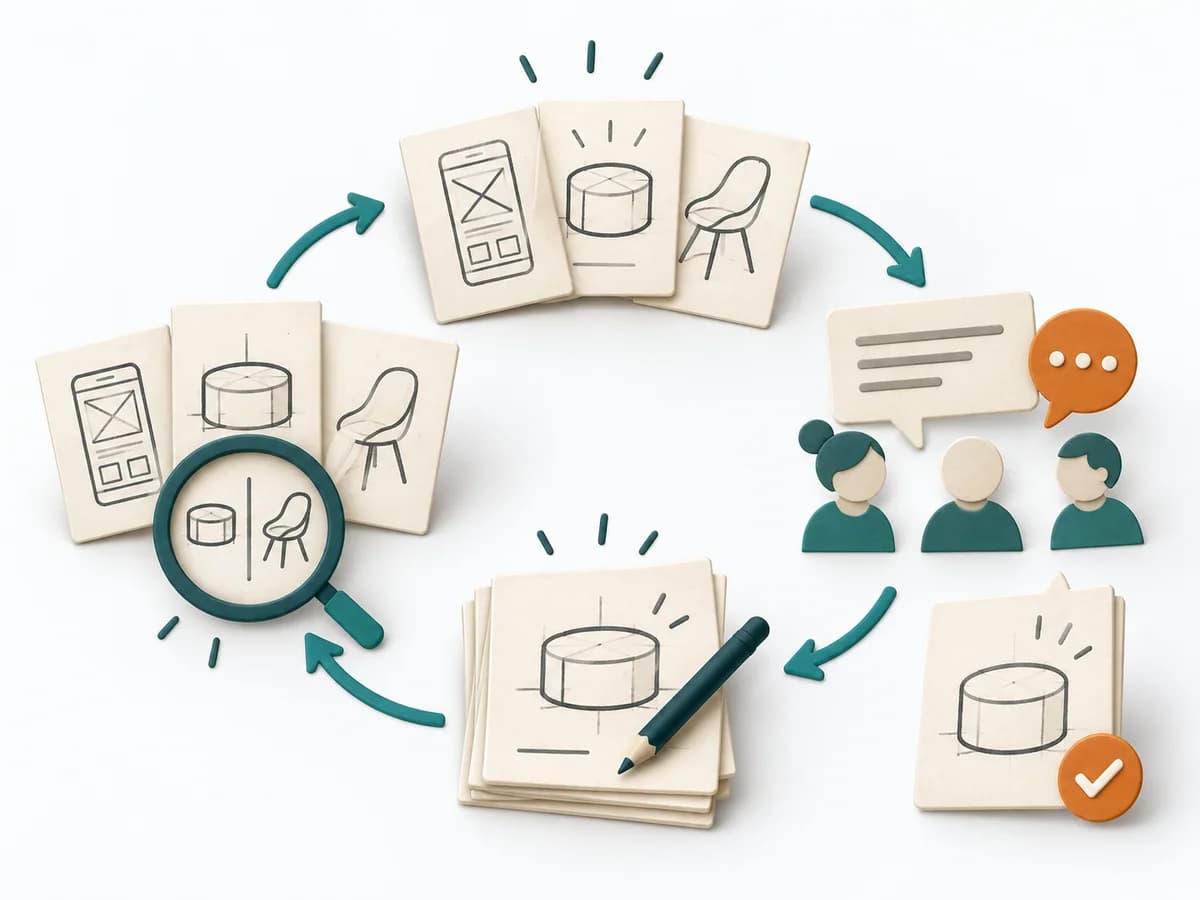 UX Design Design Studio |  Systems Thinking Leverage Points | 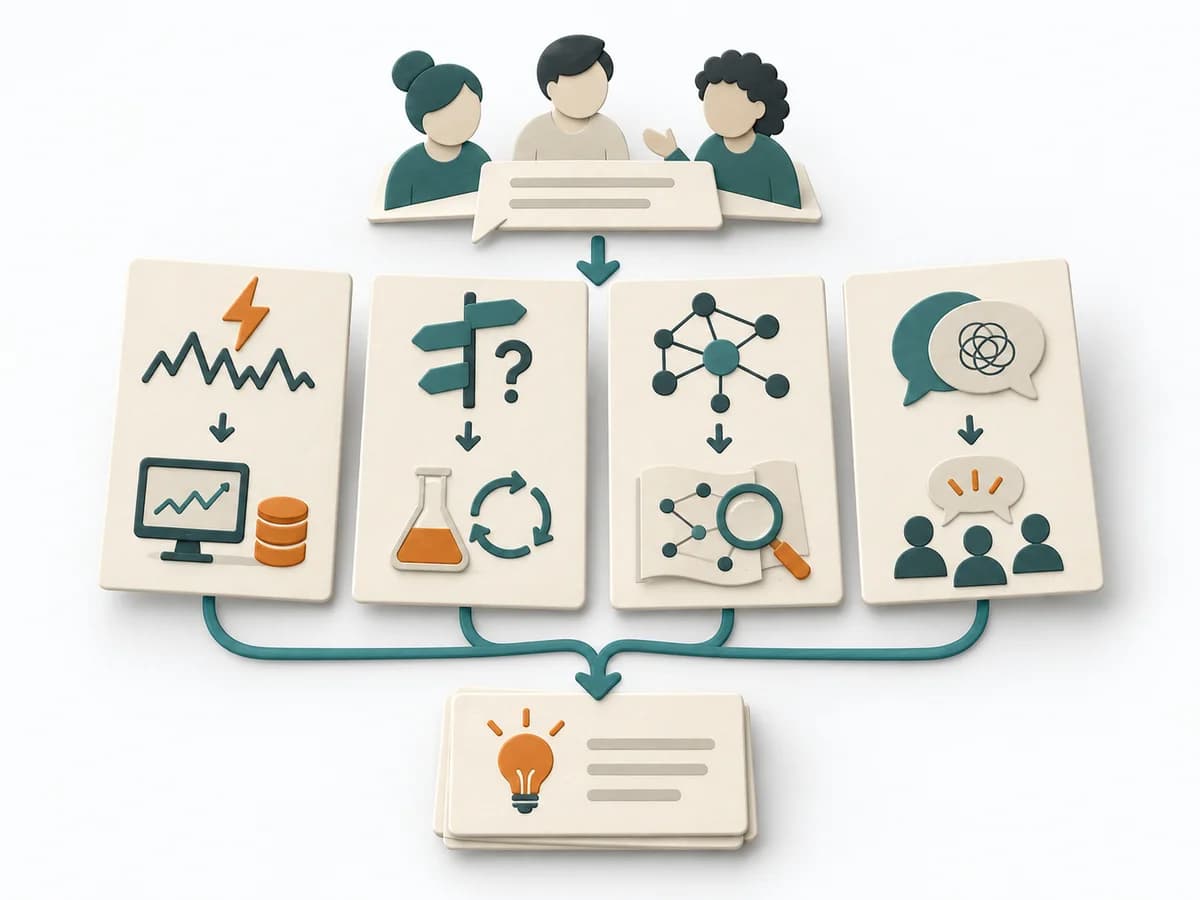 Systems Thinking VUCA Scan |  Decision Making Force Field Analysis |
|---|---|---|---|---|
Purposedifferent | When several designs need to be quickly put in relation to each other, it makes ideas visible and comparable. It encourages early variants instead of long upfront debates. | Leverage Points show exactly where interventions in a system produce a disproportionate effect. It draws relationships, patterns, and feedback loops. The result is captured as a leverage map and action strategy. | The VUCA Scan helps read difficult situations more precisely. Instead of treating unclarity as generally complicated, the method separates fast change, missing knowledge, systemic entanglement, and ambiguous interpretation. | In change initiatives, supporting and restraining forces sit at the table at the same time. Force Field Analysis makes these tensions explicit and shows where change can be pushed forward by strengthening or relieving. |
Complexitydifferent | Medium | High | Low | Low |
Timedifferent | 1-3 h | Half day | 30-90 min | 45-90 min |
Participantsdifferent | 3-8 | 3-12 | 1-10 | 3-12 |
Formatdifferent | Workshop | Workshop | Workshop + async | Workshop |
Outputdifferent | Sketches, Concept Directions, Design Decisions | Leverage Map, Action Strategy | VUCA Map, Response Options, Signal and Learning Plan | Force Field Map, Change Levers, Risk Notes |
Tagsno overlap | SketchingCollaborationIdeation | Systems thinkingChangeStrategy | SensemakingUncertaintyComplexityStrategyForesight | ChangeDecisionStrategy |