View methods side by side.
Choose up to four methods. Add them using the search and share the comparison by copying its link.
| Criterion | 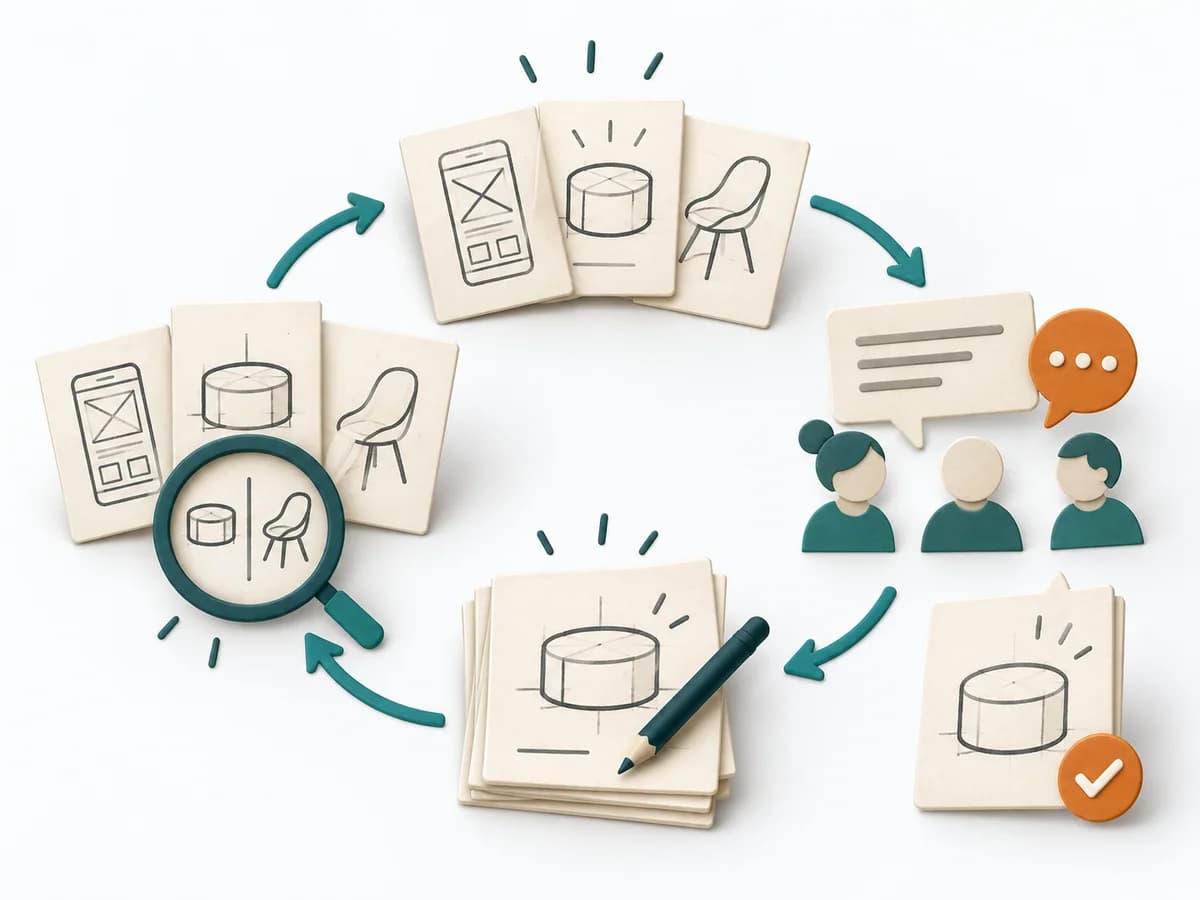 UX Design Design Studio |  Knowledge Modeling Knowledge Mapping | 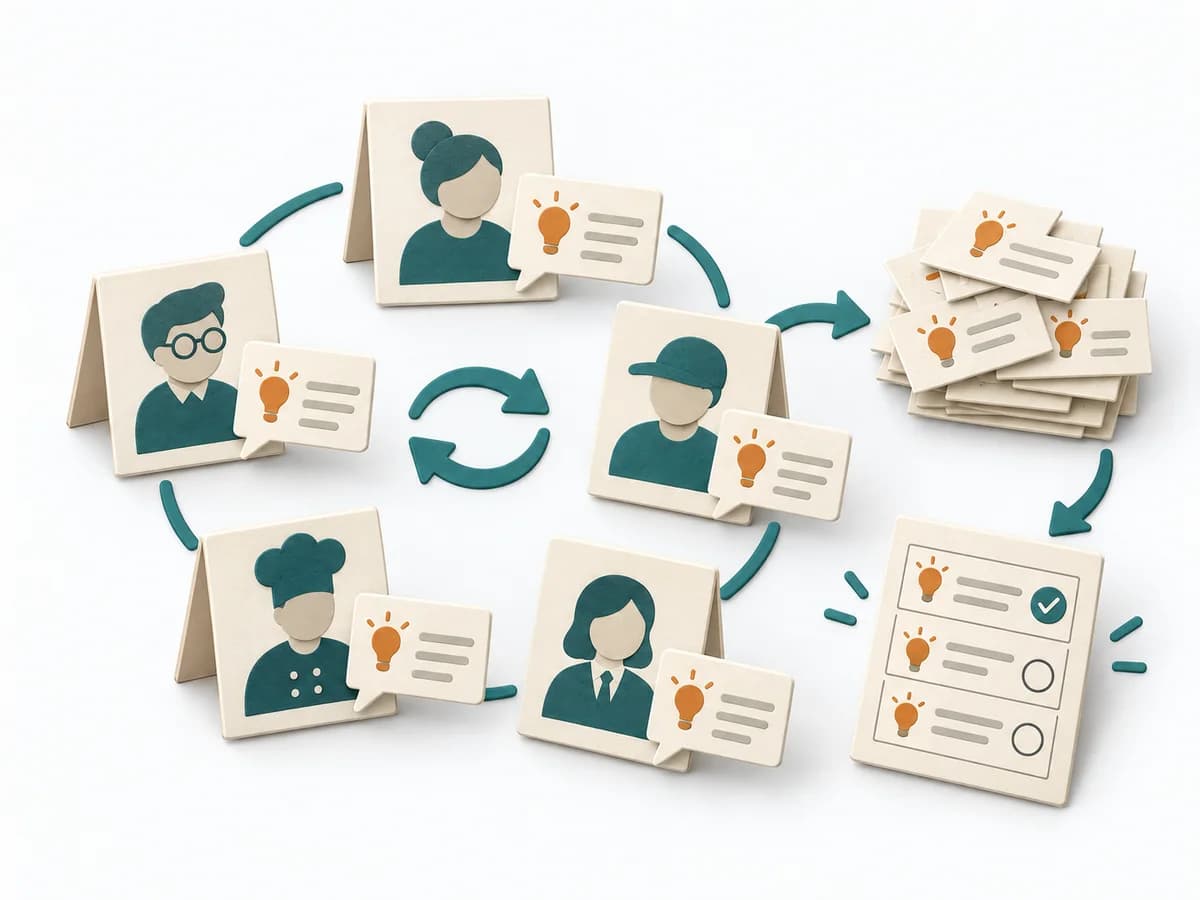 Innovation Rolestorming | 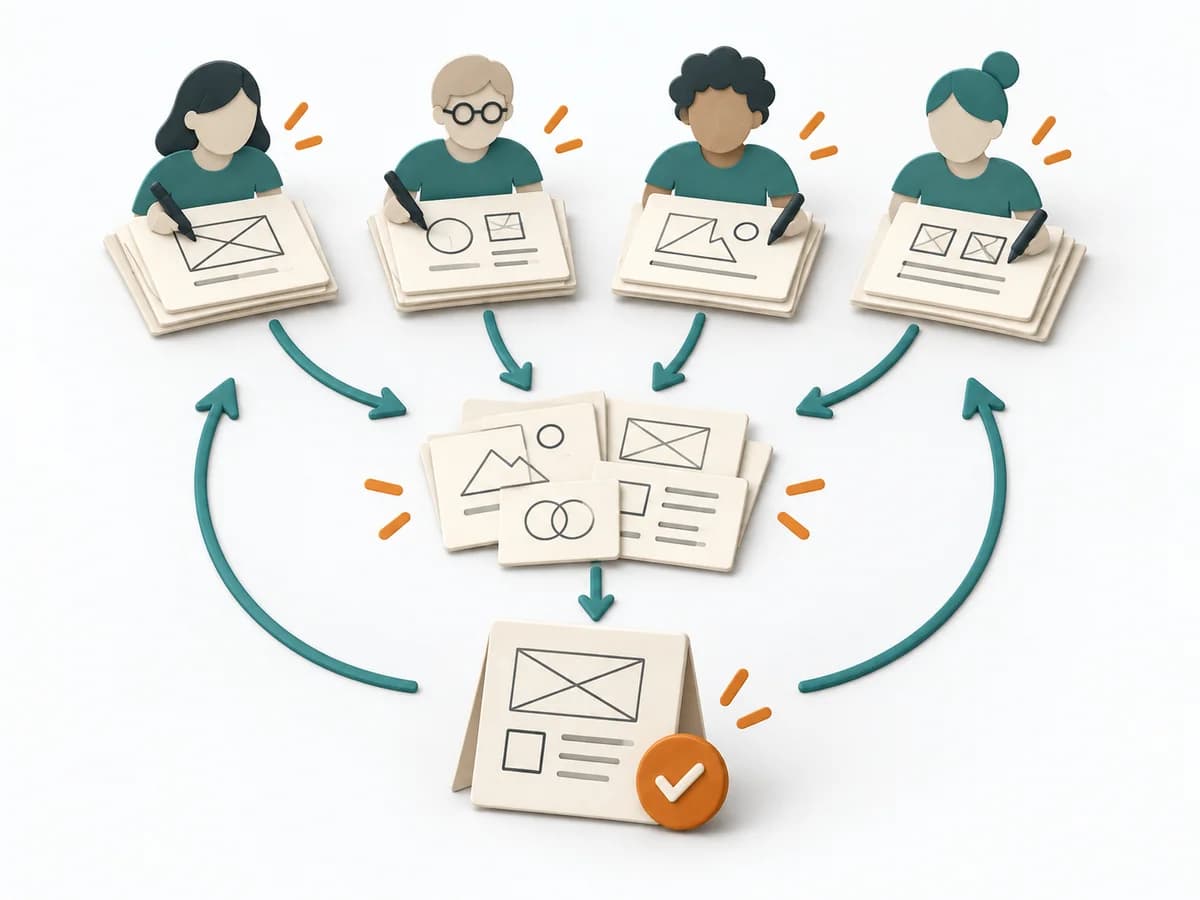 Innovation Design Charrette |
|---|---|---|---|---|
Purposedifferent | When several designs need to be quickly put in relation to each other, it makes ideas visible and comparable. It encourages early variants instead of long upfront debates. | Knowledge Mapping makes knowledge, gaps, and transfer paths visible across a field. It fits when expertise should not just exist but also be findable and transferable. | When a search for ideas stalls, switching roles helps people step outside their own perspective and activate new logics of action. The method reduces habit because contributions arise from a different stance. This brings unfamiliar, often fitting solution approaches into play. | In a tightly timed design process with many participants, the method pools several lines of thinking in a short time. It brings parallel design energy without letting the discussion tip into endless coordination. This quickly produces solid directions for architecture or space. |
Complexitydifferent | Medium | Medium | Low | Medium |
Timedifferent | 1-3 h | 1-3 h | 30-60 min | Halber Tag bis mehrere Tage |
Participantsdifferent | 3-8 | 3-12 | 3-12 | 10-50 |
Formatsame | Workshop | Workshop | Workshop | Workshop |
Outputdifferent | Sketches, Concept Directions, Design Decisions | Knowledge Map, Critical Knowledge Areas, Transfer Plan | Rollenkarten, Ideenpool pro Rolle, Konsolidierte Shortlist | Sketches and Concepts, Consolidated Solution Sketch, Prioritized Direction |
Tagsno overlap | SketchingCollaborationIdeation | KnowledgeMappingRisk | BrainstormingIdeationCreativity | BrainstormingWorkshopCollaborationIdeation |