View methods side by side.
Choose up to four methods. Add them using the search and share the comparison by copying its link.
| Criterion | 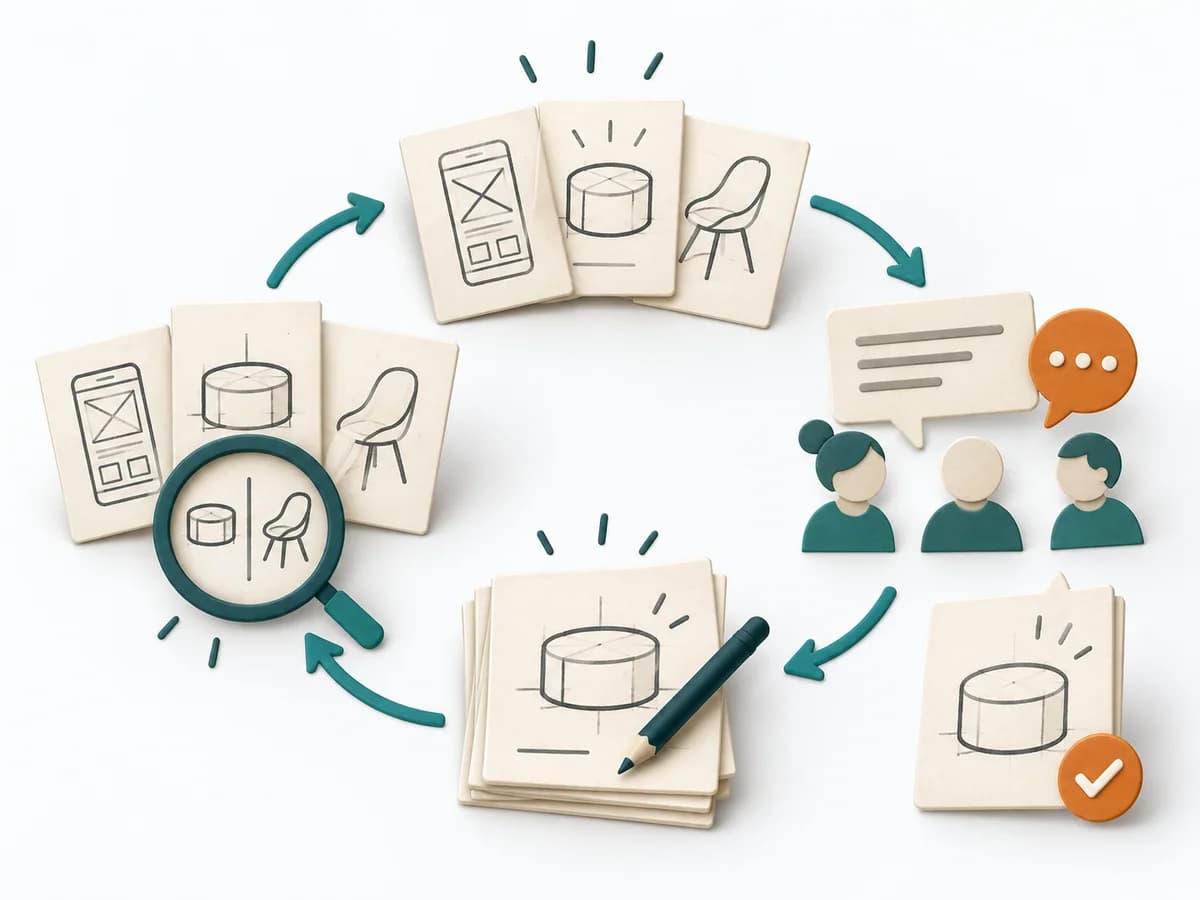 UX Design Design Studio |  DevOps Incident Command |  Innovation Design Charrette |  DevOps Blameless Postmortem |
|---|---|---|---|---|
Purposedifferent | When several designs need to be quickly put in relation to each other, it makes ideas visible and comparable. It encourages early variants instead of long upfront debates. | During an acute incident with several people involved, the method creates a clear leadership and communication structure. It reduces chaos when fast coordination and clean situational awareness are both needed at once. | In a tightly timed design process with many participants, the method pools several lines of thinking in a short time. It brings parallel design energy without letting the discussion tip into endless coordination. This quickly produces solid directions for architecture or space. | After an incident with damage or a near miss, the method creates a sober field for learning without assigning blame. It directs attention to the course of events, conditions, and effective countermeasures. |
Complexitysame | Medium | Medium | Medium | Medium |
Timedifferent | 1-3 h | As needed | Halber Tag bis mehrere Tage | 30-90 min |
Participantsdifferent | 3-8 | 4-15 | 10-50 | 3-12 |
Formatdifferent | Workshop | Workshop + async | Workshop | Workshop + async |
Outputdifferent | Sketches, Concept Directions, Design Decisions | Incident Log, Action Tracker, Stakeholder Updates | Sketches and Concepts, Consolidated Solution Sketch, Prioritized Direction | Postmortem Doc, Action Items, Timeline |
Tagsno overlap | SketchingCollaborationIdeation | IncidentOperationsReliability | BrainstormingWorkshopCollaborationIdeation | Site Reliability EngineeringIncidentLearningReliability |