View methods side by side.
Choose up to four methods. Add them using the search and share the comparison by copying its link.
| Criterion | 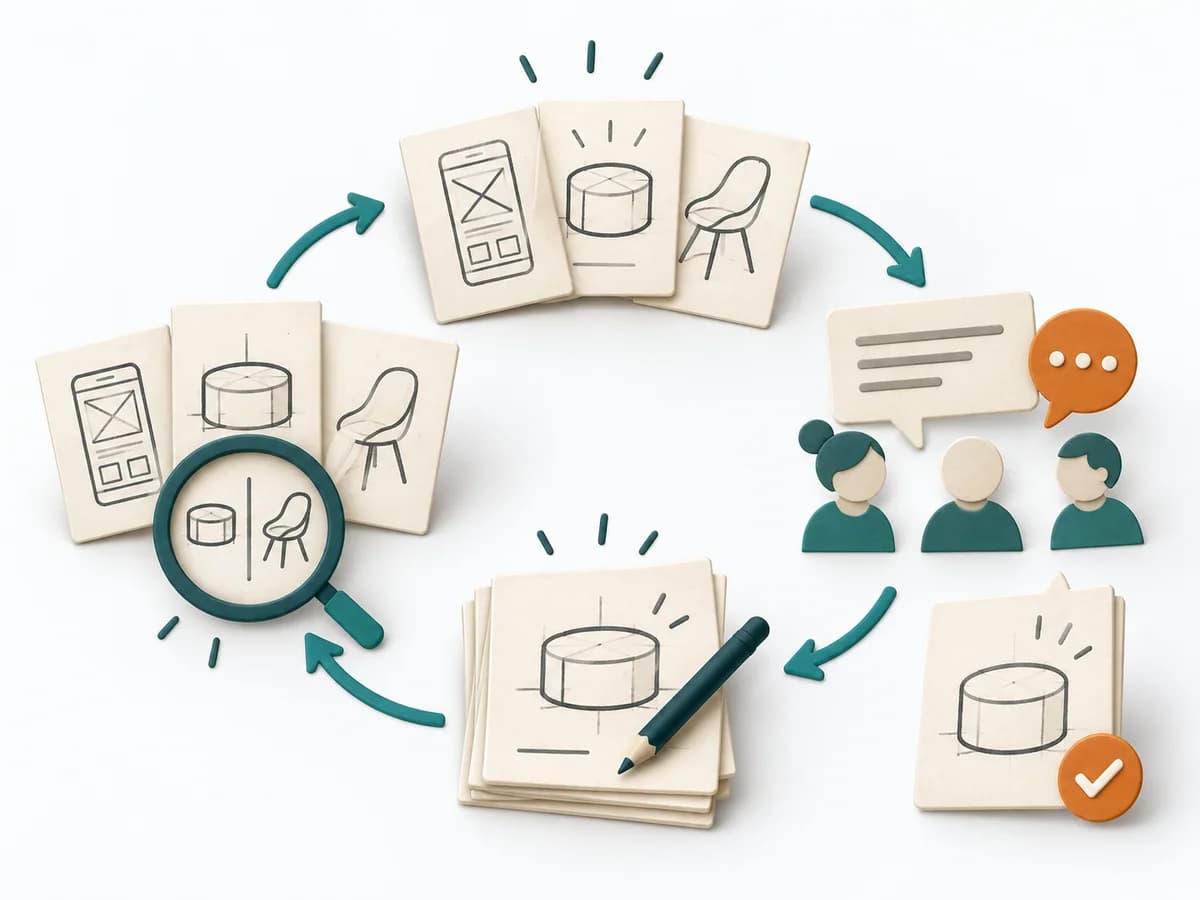 UX Design Design Studio |  Knowledge Modeling Concept Mapping |  Innovation Reverse Brainstorming |  Knowledge Modeling Knowledge Mapping |
|---|---|---|---|---|
Purposedifferent | When several designs need to be quickly put in relation to each other, it makes ideas visible and comparable. It encourages early variants instead of long upfront debates. | Concept Mapping arranges terms and relationships in a network that makes subject-matter connections tangible. It fits when a topic needs to be understood structurally rather than linearly. | For persistent errors or blockages, the method shifts the view to the opposite of the desired effect. It exposes the mechanics of failure and makes hidden causes easier to grasp. This makes improvement more concrete and the problem clearer. | Knowledge Mapping makes knowledge, gaps, and transfer paths visible across a field. It fits when expertise should not just exist but also be findable and transferable. |
Complexitydifferent | Medium | Medium | Low | Medium |
Timedifferent | 1-3 h | 1-2 h | 30-60 min | 1-3 h |
Participantsdifferent | 3-8 | 1-8 | 3-12 | 3-12 |
Formatdifferent | Workshop | Workshop + async | Workshop | Workshop |
Outputdifferent | Sketches, Concept Directions, Design Decisions | Concept Map, Relationship Labels, Knowledge Gaps | Reverse Ideas, Risk Themes, Solution Ideas | Knowledge Map, Critical Knowledge Areas, Transfer Plan |
Tagsno overlap | SketchingCollaborationIdeation | KnowledgeConceptsMappingSensemaking | BrainstormingIdeationCreativityRisk | KnowledgeMappingRisk |