View methods side by side.
Choose up to four methods. Add them using the search and share the comparison by copying its link.
| Criterion |  Innovation Design Sprint | 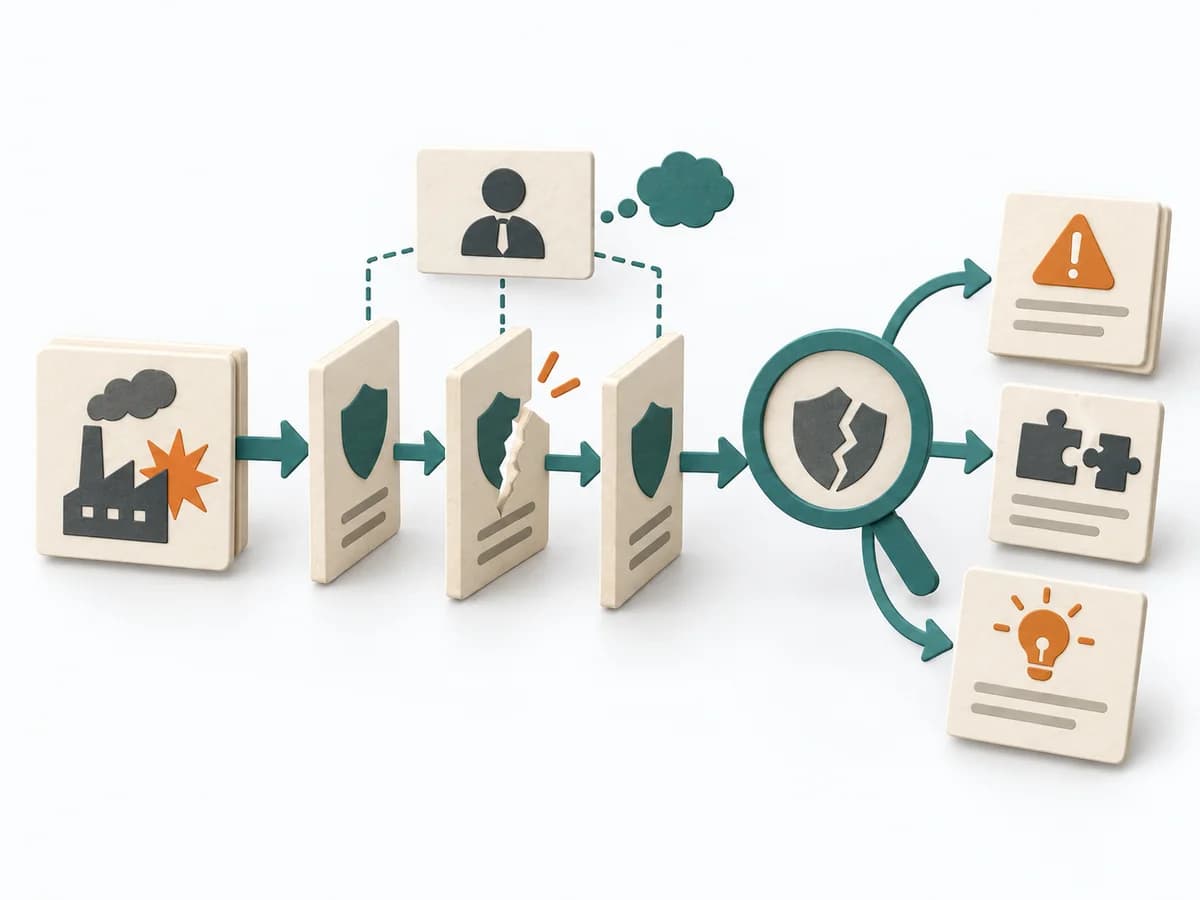 Operations MORT Analysis |  Operations Fault Tree Analysis |  Product Discovery Assumption Mapping |
|---|---|---|---|---|
Purposedifferent | When the product question is unclear and time pressure is high, the method takes a team from an open idea to a testable solution. It connects problem understanding, decision, and learning in one compact format, lowering the risk of spending a lot of energy on a mere guess. | For a safety-relevant event or a system with high protection requirements, the method examines where controls failed. It exposes both technical and organizational gaps. | For a critical top event with several possible triggers, the method logically models failure paths. It makes visible which combinations of conditions can lead to damage. | When assumptions still sit unordered in the room, it weighs uncertainty against leverage. It makes visible which hypotheses should be checked first. |
Complexitydifferent | High | High | High | Medium |
Timedifferent | 4-5 Tage | Mehrere Tage bis Wochen | 2-6 h | 45-60 min |
Participantsdifferent | 5-8 | 2-6 | 3-8 | 2-8 |
Formatdifferent | Workshop | Workshop + async | Workshop + async | Workshop + async |
Outputdifferent | Prototype, Test Findings, Decision Rationale | MORT Worksheets, Findings per Branch, Corrective Actions, Systemic Recommendations | Fault Tree, Critical Paths, Cause Hypotheses, Control Actions | Assumption map, Test backlog, Risk ranking |
Tagsno overlap | Design sprintPrototypeValidationInnovation | Root causeSafetySystemicIncident | RiskRoot causeSafety | AssumptionsRiskExperimentsValidation |