View methods side by side.
Choose up to four methods. Add them using the search and share the comparison by copying its link.
| Criterion |  Innovation Design Sprint |  Systems Thinking Leverage Points |  Decision Making Force Field Analysis | 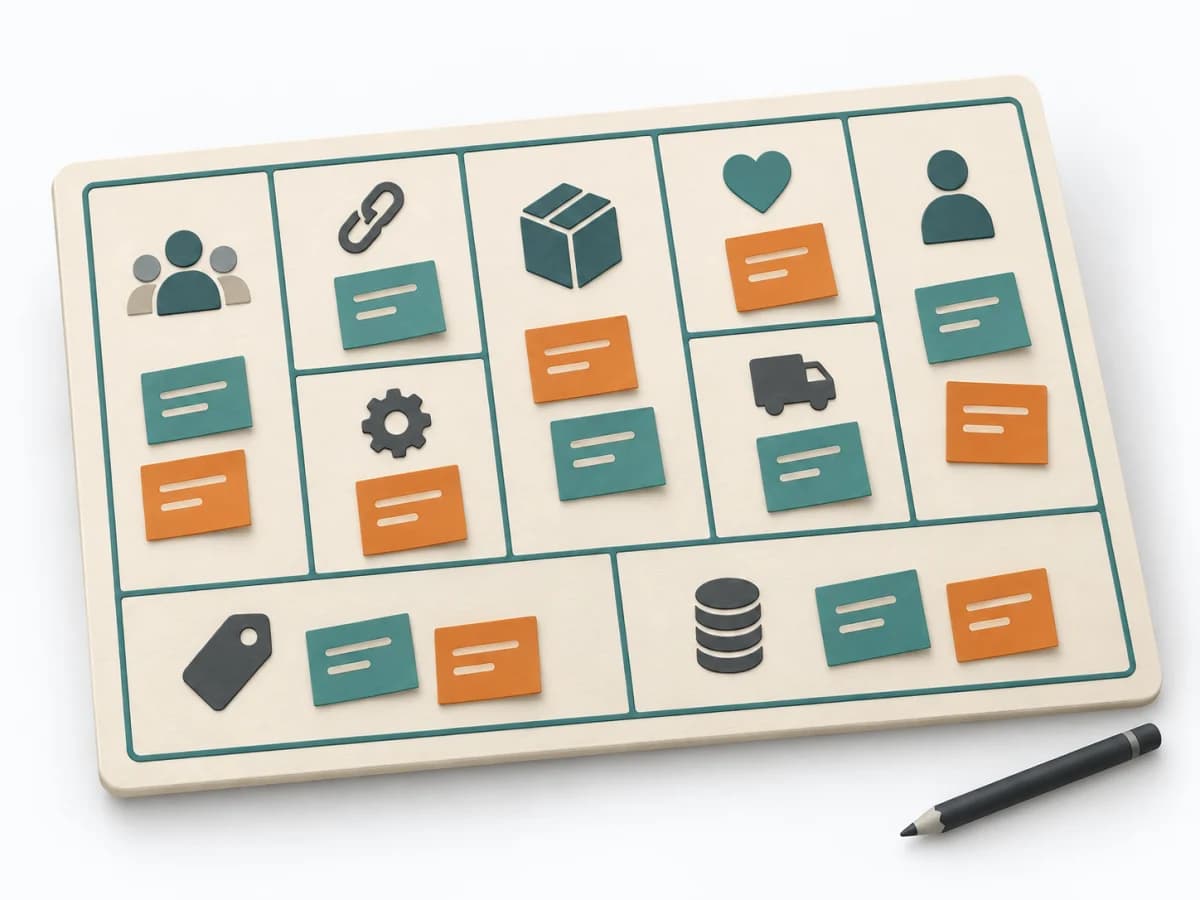 Business Strategy Business Model Canvas |
|---|---|---|---|---|
Purposedifferent | When the product question is unclear and time pressure is high, the method takes a team from an open idea to a testable solution. It connects problem understanding, decision, and learning in one compact format, lowering the risk of spending a lot of energy on a mere guess. | Leverage Points show exactly where interventions in a system produce a disproportionate effect. It draws relationships, patterns, and feedback loops. The result is captured as a leverage map and action strategy. | In change initiatives, supporting and restraining forces sit at the table at the same time. Force Field Analysis makes these tensions explicit and shows where change can be pushed forward by strengthening or relieving. | The Business Model Canvas condenses a business model to its key building blocks and assumptions. It makes variants quickly comparable and reveals gaps before validation or implementation begins. |
Complexitydifferent | High | High | Low | Medium |
Timedifferent | 4-5 Tage | Half day | 45-90 min | 1-2 h |
Participantsdifferent | 5-8 | 3-12 | 3-12 | 2-8 |
Formatdifferent | Workshop | Workshop | Workshop | Workshop + async |
Outputdifferent | Prototype, Test Findings, Decision Rationale | Leverage Map, Action Strategy | Force Field Map, Change Levers, Risk Notes | Business Model Canvas, Assumption List, Business Hypotheses |
Tagsno overlap | Design sprintPrototypeValidationInnovation | Systems thinkingChangeStrategy | ChangeDecisionStrategy | Business modelStrategyValueInnovation |