View methods side by side.
Choose up to four methods. Add them using the search and share the comparison by copying its link.
| Criterion |  Innovation Design Sprint |  Product Strategy DIBB |  Decision Making Force Field Analysis | 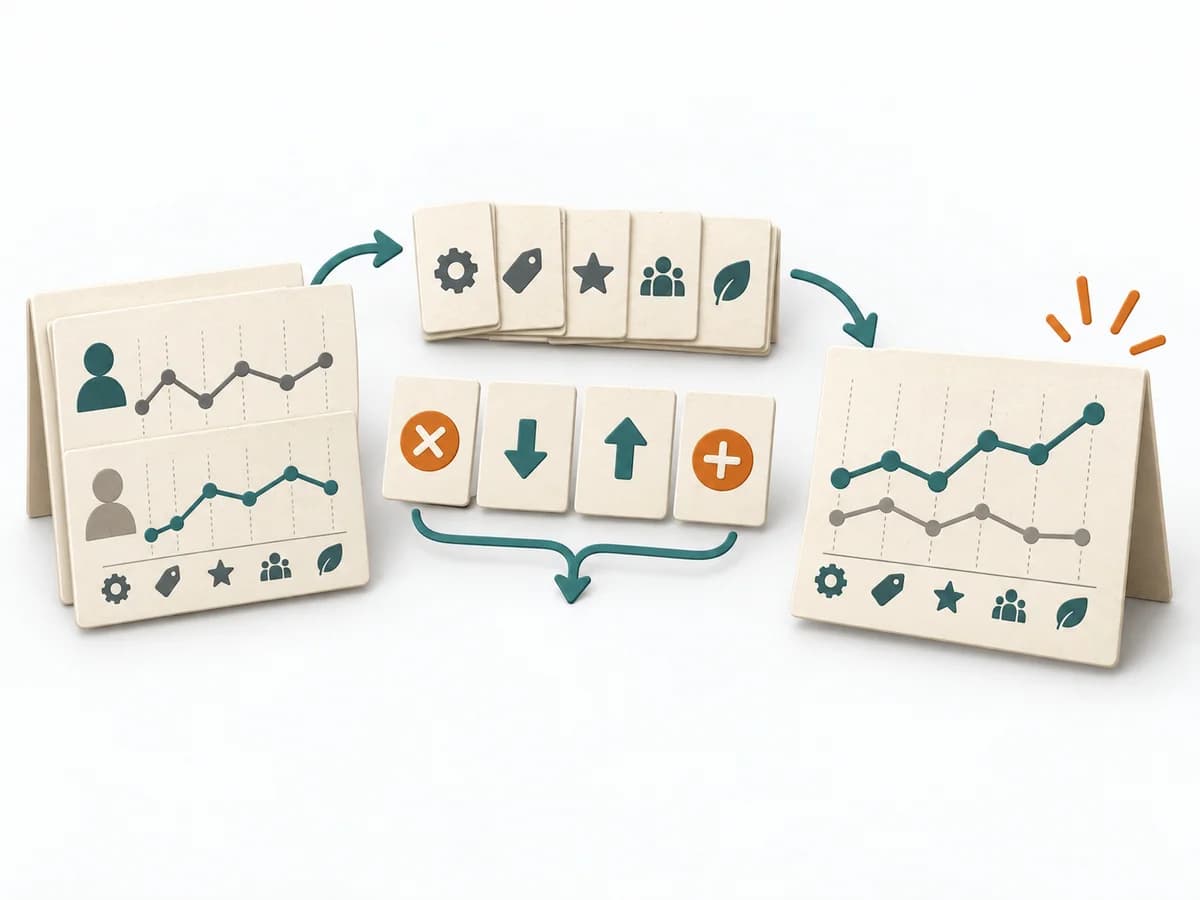 Business Strategy Blue Ocean Strategy Canvas |
|---|---|---|---|---|
Purposedifferent | When the product question is unclear and time pressure is high, the method takes a team from an open idea to a testable solution. It connects problem understanding, decision, and learning in one compact format, lowering the risk of spending a lot of energy on a mere guess. | DIBB helps clarify target groups, value, goals, and priorities by making the logic behind a decision explicit. It captures results as a DIBB document, belief list, bet list, and learning report. | In change initiatives, supporting and restraining forces sit at the table at the same time. Force Field Analysis makes these tensions explicit and shows where change can be pushed forward by strengthening or relieving. | The Blue Ocean Strategy Canvas shows how an offering is positioned relative to the market. Differentiation thereby becomes tangible in value factors instead of merely being claimed. |
Complexitydifferent | High | Low | Low | Medium |
Timedifferent | 4-5 Tage | 1-2 h | 45-90 min | 2-4 h |
Participantsdifferent | 5-8 | 2-8 | 3-12 | 3-10 |
Formatdifferent | Workshop | Workshop + async | Workshop | Workshop |
Outputdifferent | Prototype, Test Findings, Decision Rationale | DIBB document, Belief list, Bet list, Learning report | Force Field Map, Change Levers, Risk Notes | Strategy Canvas, Value Curve, ERRC Actions |
Tagsno overlap | Design sprintPrototypeValidationInnovation | StrategyDecisionAssumptionsHypothesis | ChangeDecisionStrategy | StrategyPositioningInnovationValue |