View methods side by side.
Choose up to four methods. Add them using the search and share the comparison by copying its link.
| Criterion |  Innovation Design Sprint | 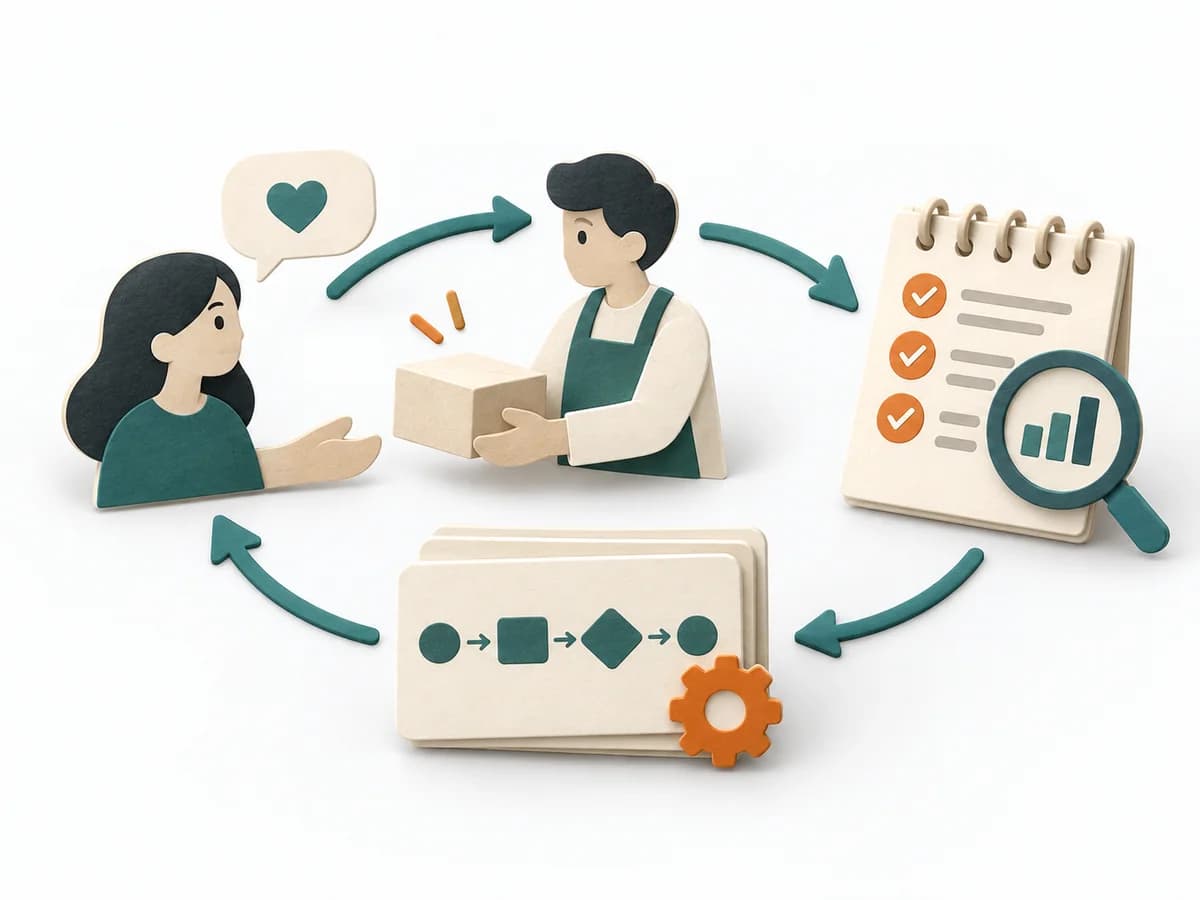 Product Discovery Concierge MVP | 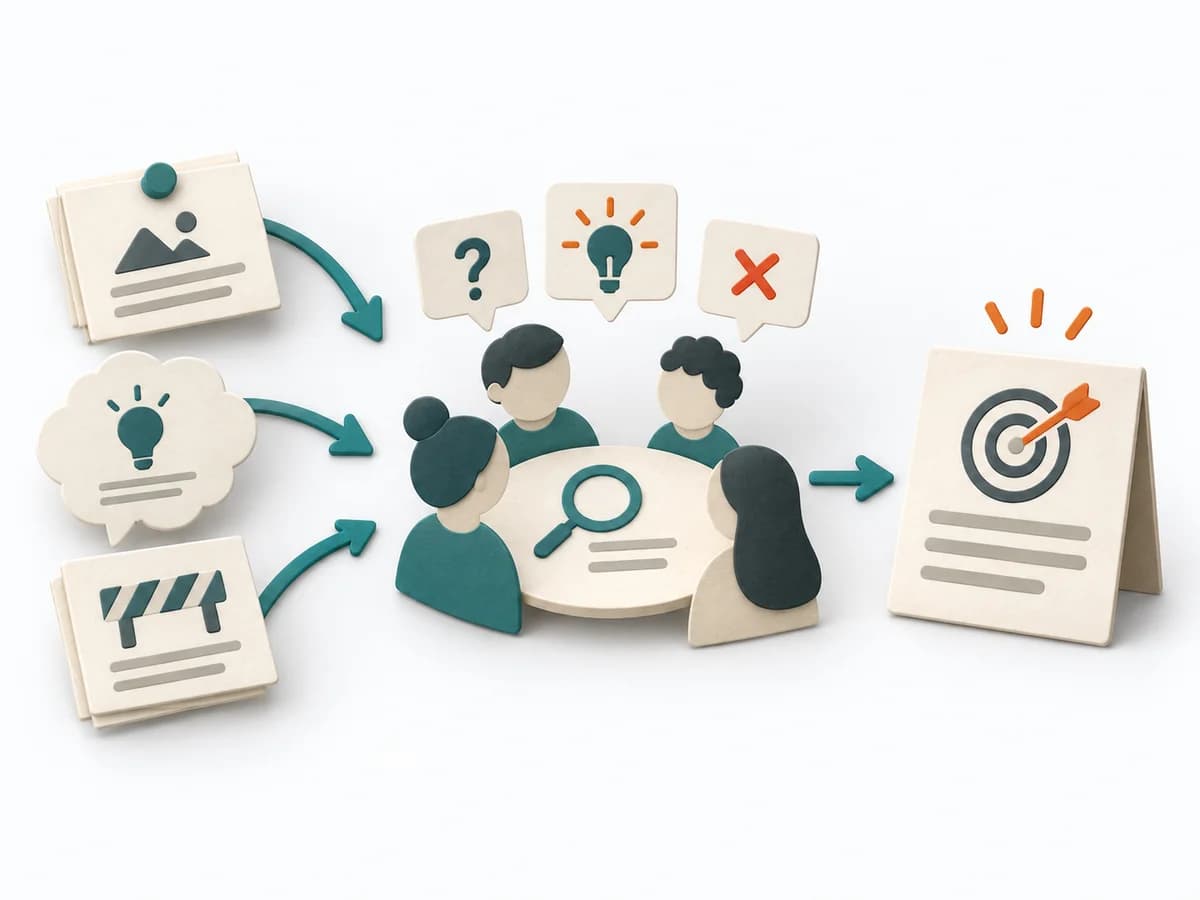 Facilitation Problem Framing Workshop |  Facilitation Alignment Mapping |
|---|---|---|---|---|
Purposedifferent | When the product question is unclear and time pressure is high, the method takes a team from an open idea to a testable solution. It connects problem understanding, decision, and learning in one compact format, lowering the risk of spending a lot of energy on a mere guess. | When an idea can first fail or grow through genuine hands-on support, it relies on manual work instead of automation. It shows whether user value holds up even under manual execution. | When a team works on symptoms but the real question stays fuzzy, a Problem Framing Workshop sharpens the view of the right problem. It separates observation, interpretation, and target picture from each other. | When several people work toward one goal but hold different mental maps, Alignment Mapping makes the discrepancies visible. It arranges goals, assumptions, and priorities so shared direction becomes verifiable. |
Complexitydifferent | High | Medium | Low | Medium |
Timedifferent | 4-5 Tage | 1-4 Wochen | 60-120 min | 1-2 h |
Participantsdifferent | 5-8 | 3-10 Kunden | 4-10 | 4-12 |
Formatdifferent | Workshop | Workshop + async | Workshop | Workshop |
Outputdifferent | Prototype, Test Findings, Decision Rationale | Concierge Learnings, Service Blueprint, MVP Risks | Problem Statement, Scope Boundaries, Assumption List, Next Analysis Questions | Alignment Map, Open Issues, Decision Questions |
Tagsno overlap | Design sprintPrototypeValidationInnovation | MVPValidationServiceDiscovery | FacilitationAlignmentDiscovery | AlignmentStakeholdersStrategyFacilitation |