View methods side by side.
Choose up to four methods. Add them using the search and share the comparison by copying its link.
| Criterion |  Decision Making Decision Tree | 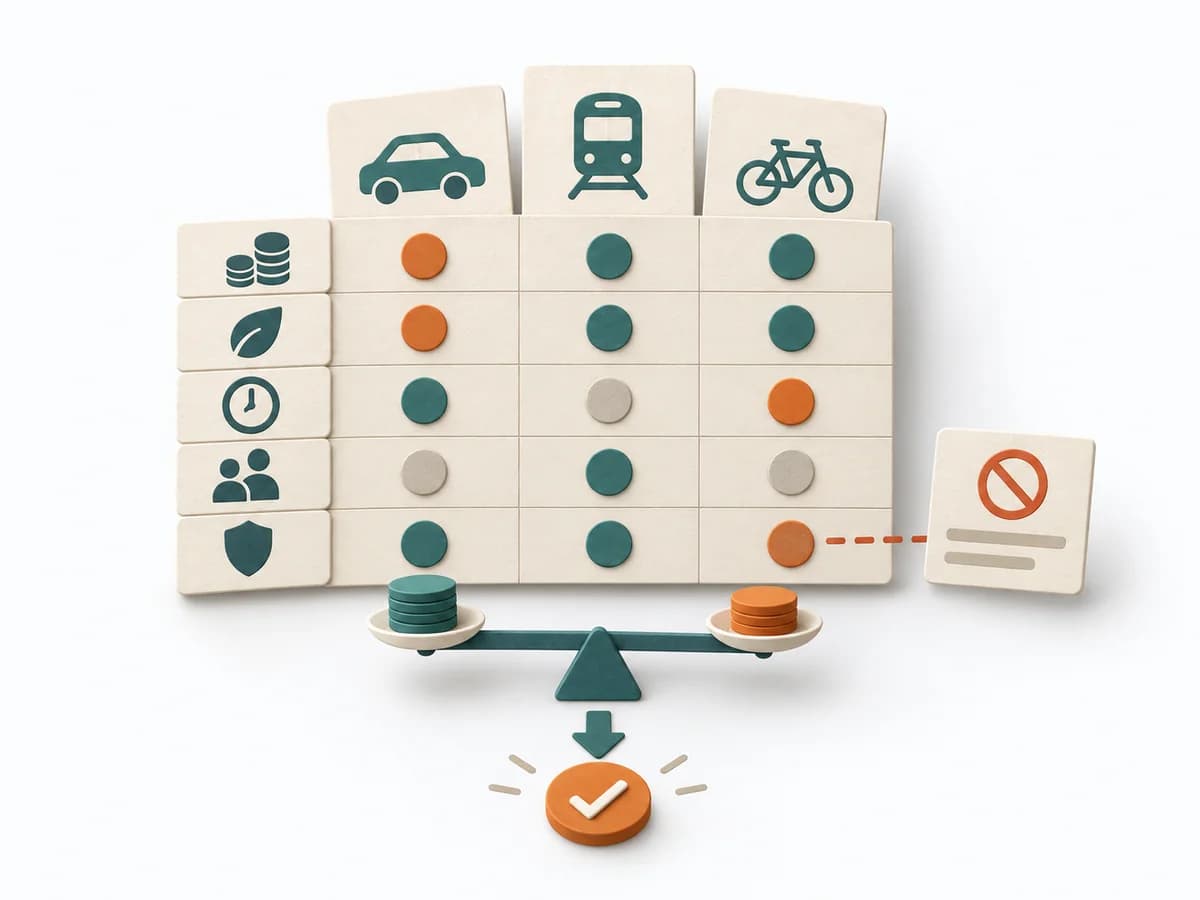 Decision Making Trade-off Analysis |  Operations Change Analysis |  Decision Making Force Field Analysis |
|---|---|---|---|---|
Purposedifferent | For decisions with follow-on paths and dependencies, a linear comparison is often not enough. A Decision Tree shows how options branch under conditions and which consequences hang on each branch. | With limited resources, quality, speed, cost, and risk almost always compete with each other. Trade-off Analysis makes these tensions explicit and prevents decisions from producing hidden side effects. | For a deviation after a change, the method isolates the influence of the altered condition. It narrows down which differences are relevant and which are just accompanying noise. | In change initiatives, supporting and restraining forces sit at the table at the same time. Force Field Analysis makes these tensions explicit and shows where change can be pushed forward by strengthening or relieving. |
Complexitydifferent | Medium | Medium | Medium | Low |
Timedifferent | 30-90 min | 45-120 min | 45-120 min | 45-90 min |
Participantsdifferent | 1-6 | 2-8 | 2-6 | 3-12 |
Formatdifferent | Workshop + async | Workshop + async | Workshop + async | Workshop |
Outputdifferent | Decision Tree, Option Map, Assumption List | Trade-off Matrix, Criteria List, Decision Rationale, Accepted Downsides | Change Matrix, Cause Hypotheses, Validation Questions, Action List | Force Field Map, Change Levers, Risk Notes |
Tagsno overlap | DecisionTreeOptions | TradeoffsDecisionCriteriaOptions | ChangeRoot causeTroubleshootingComparison | ChangeDecisionStrategy |