View methods side by side.
Choose up to four methods. Add them using the search and share the comparison by copying its link.
| Criterion |  Decision Making Decision Tree | 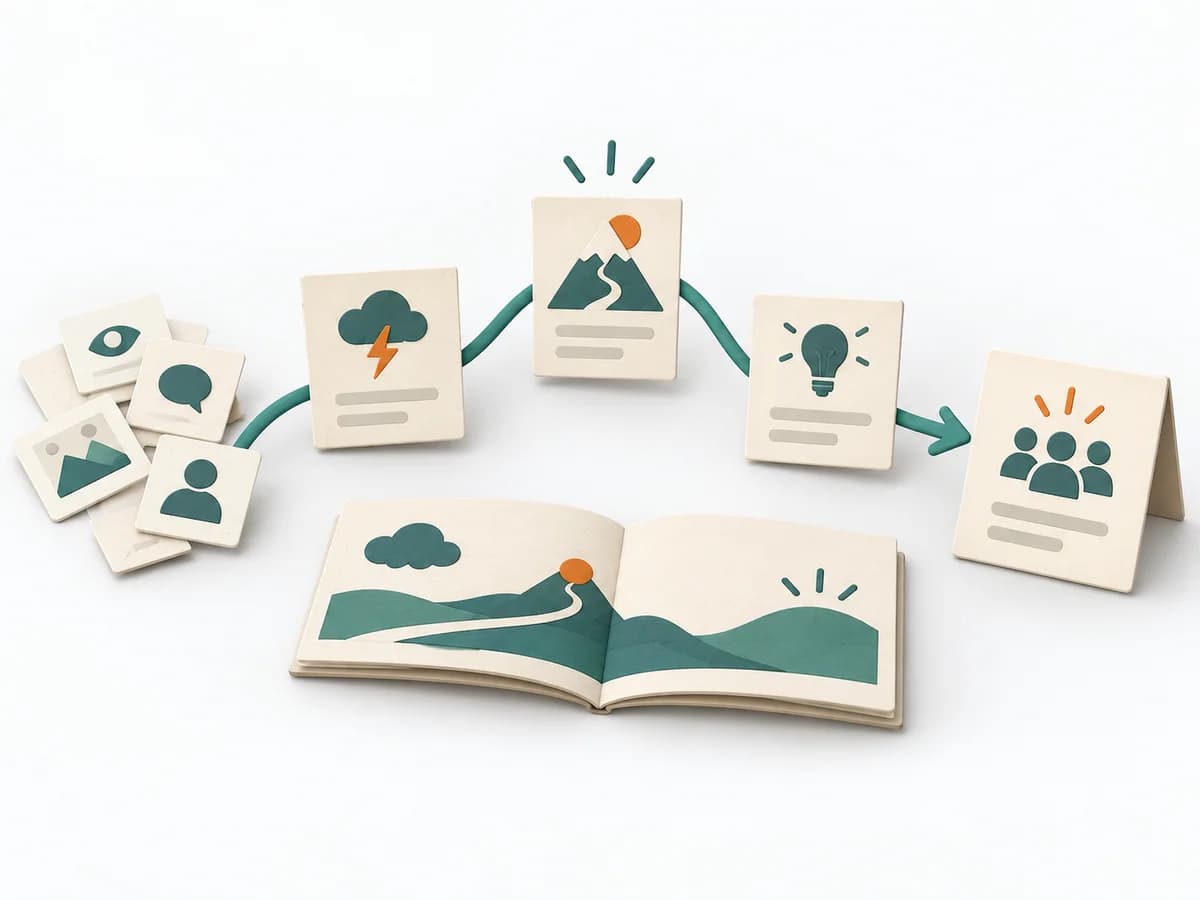 Facilitation Storytelling |  Facilitation Alignment Mapping |  Facilitation Stakeholder Salience Model |
|---|---|---|---|---|
Purposedifferent | For decisions with follow-on paths and dependencies, a linear comparison is often not enough. A Decision Tree shows how options branch under conditions and which consequences hang on each branch. | When an insight needs to have an effect, storytelling translates dry facts into a comprehensible development. It combines context, tension, and consequence into a form that people remember and pass on more easily. | When several people work toward one goal but hold different mental maps, Alignment Mapping makes the discrepancies visible. It arranges goals, assumptions, and priorities so shared direction becomes verifiable. | When stakeholders appear to matter very differently, the Stakeholder Salience Model rates their actual priority through power, legitimacy, and urgency. It turns individual contributions into a visible selection. The result is captured as a Salience diagram and a class-based strategy. |
Complexitysame | Medium | Medium | Medium | Medium |
Timedifferent | 30-90 min | 45-120 min | 1-2 h | 60-90 min |
Participantsdifferent | 1-6 | 1-6 | 4-12 | 3-6 |
Formatdifferent | Workshop + async | Workshop + async | Workshop | Workshop |
Outputdifferent | Decision Tree, Option Map, Assumption List | Narrative Outline, Key Message, Story Arc | Alignment Map, Open Issues, Decision Questions | Salience Diagram, Strategy per Class |
Tagsno overlap | DecisionTreeOptions | CommunicationNarrativeStakeholdersFacilitation | AlignmentStakeholdersStrategyFacilitation | StakeholdersFacilitationAlignmentGovernance |