View methods side by side.
Choose up to four methods. Add them using the search and share the comparison by copying its link.
| Criterion |  Decision Making Decision Tree | 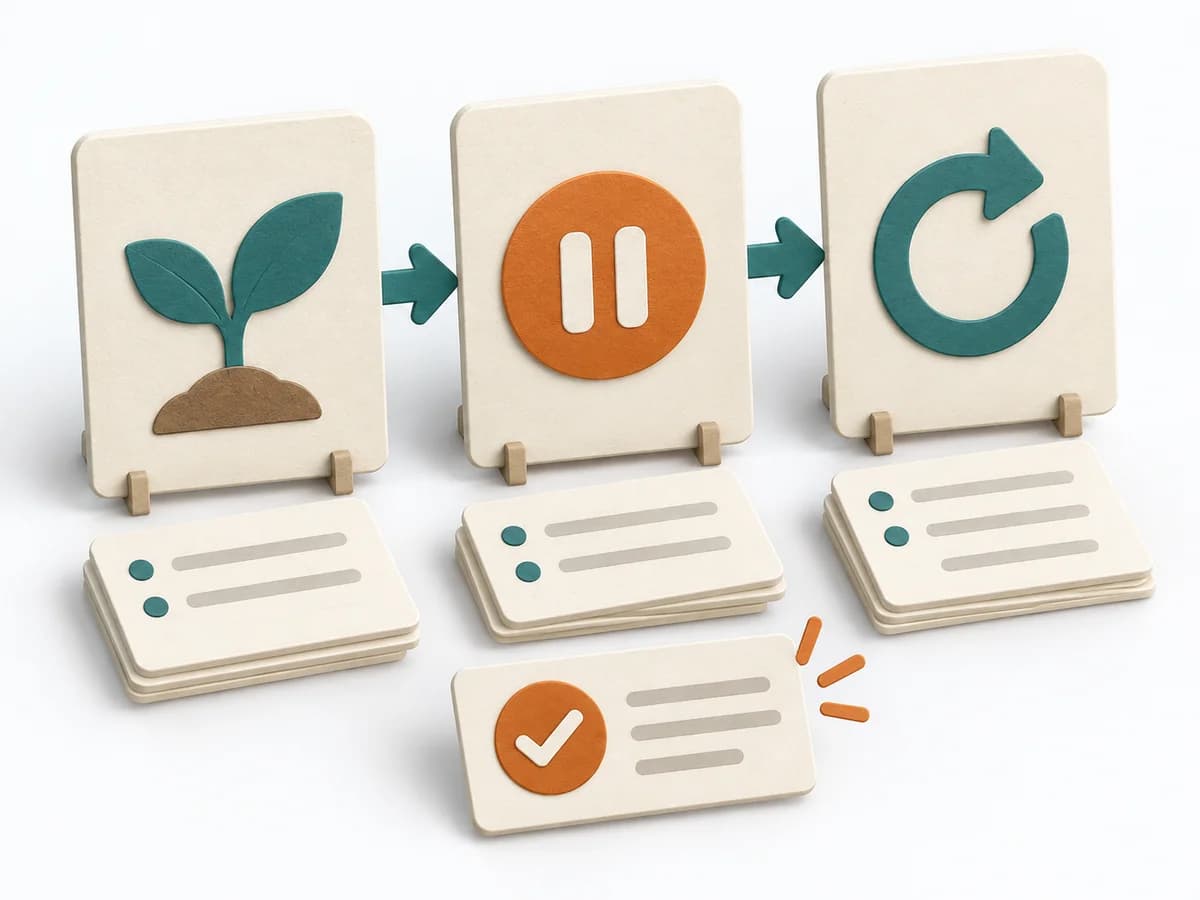 Agile Start Stop Continue |  Decision Making Force Field Analysis | 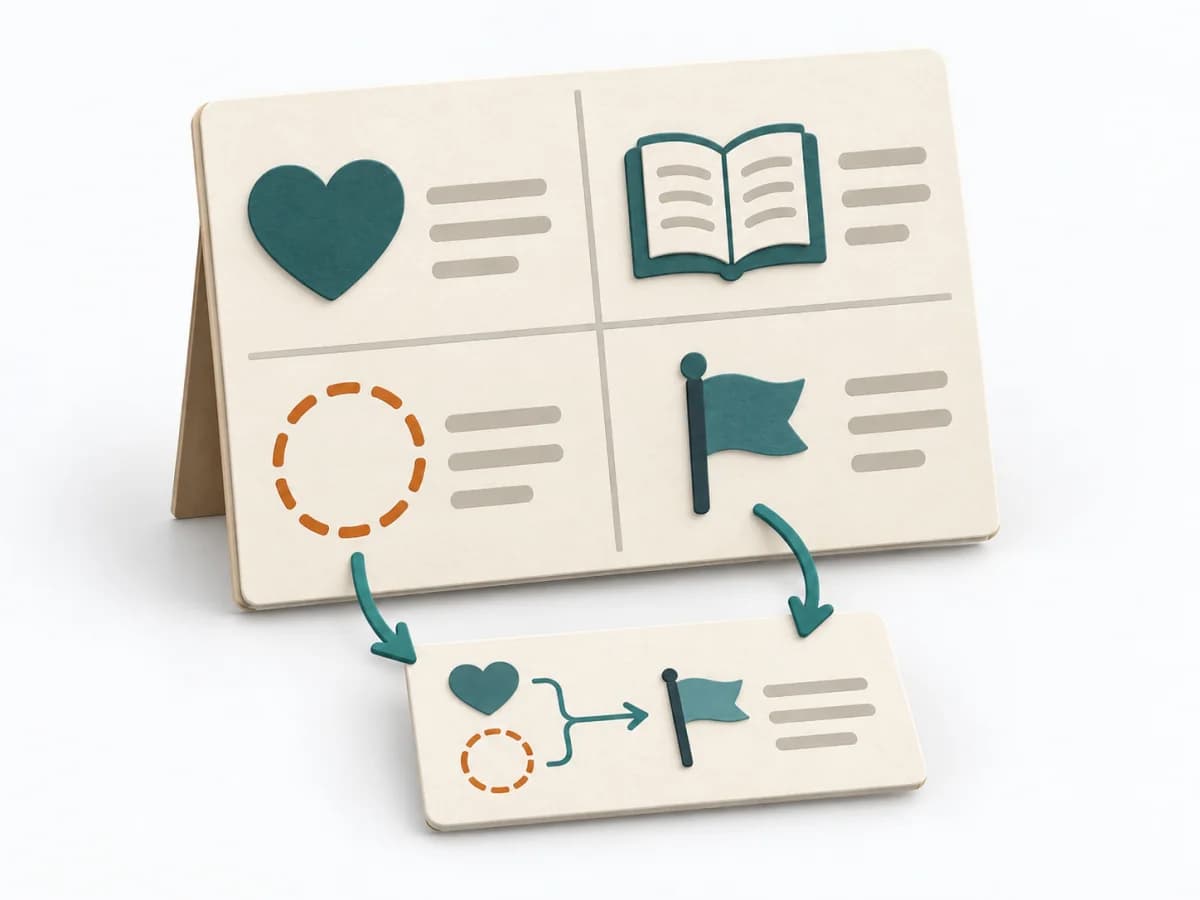 Agile 4Ls Retrospective |
|---|---|---|---|---|
Purposedifferent | For decisions with follow-on paths and dependencies, a linear comparison is often not enough. A Decision Tree shows how options branch under conditions and which consequences hang on each branch. | When a team wants to deliberately adjust its working behavior, it makes habits visible and assessable. It focuses on concrete changes instead of diffuse mood. | In change initiatives, supporting and restraining forces sit at the table at the same time. Force Field Analysis makes these tensions explicit and shows where change can be pushed forward by strengthening or relieving. | When a sprint should not only be assessed but also learned from, it captures experience in clear learning categories. It records what worked, what's missing, and what should run differently next time. |
Complexitydifferent | Medium | Low | Low | Low |
Timedifferent | 30-90 min | 30-60 min | 45-90 min | 45–75 min |
Participantsdifferent | 1-6 | 3-12 | 3-12 | Team members involved |
Formatdifferent | Workshop + async | Workshop | Workshop | Workshop |
Outputdifferent | Decision Tree, Option Map, Assumption List | Start Stop Continue Board, Improvement Actions | Force Field Map, Change Levers, Risk Notes | 4Ls Board, Learning Themes, Improvement Actions |
Tagsno overlap | DecisionTreeOptions | RetrospectiveImprovementTeamReflection | ChangeDecisionStrategy | RetrospectiveLearningReflectionTeam |