View methods side by side.
Choose up to four methods. Add them using the search and share the comparison by copying its link.
| Criterion |  Decision Making Decision Tree | 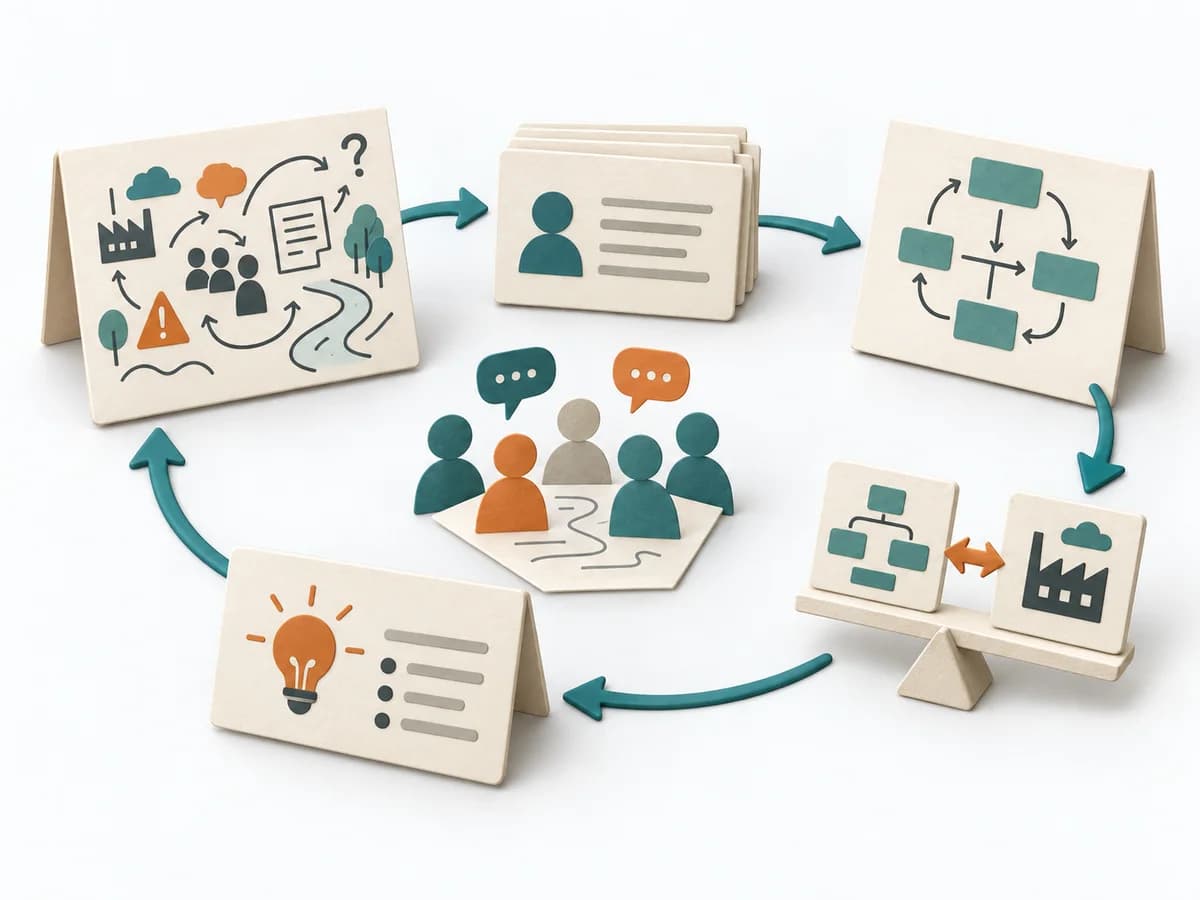 Systems Thinking Soft Systems Methodology |  Product Discovery Assumption Mapping | 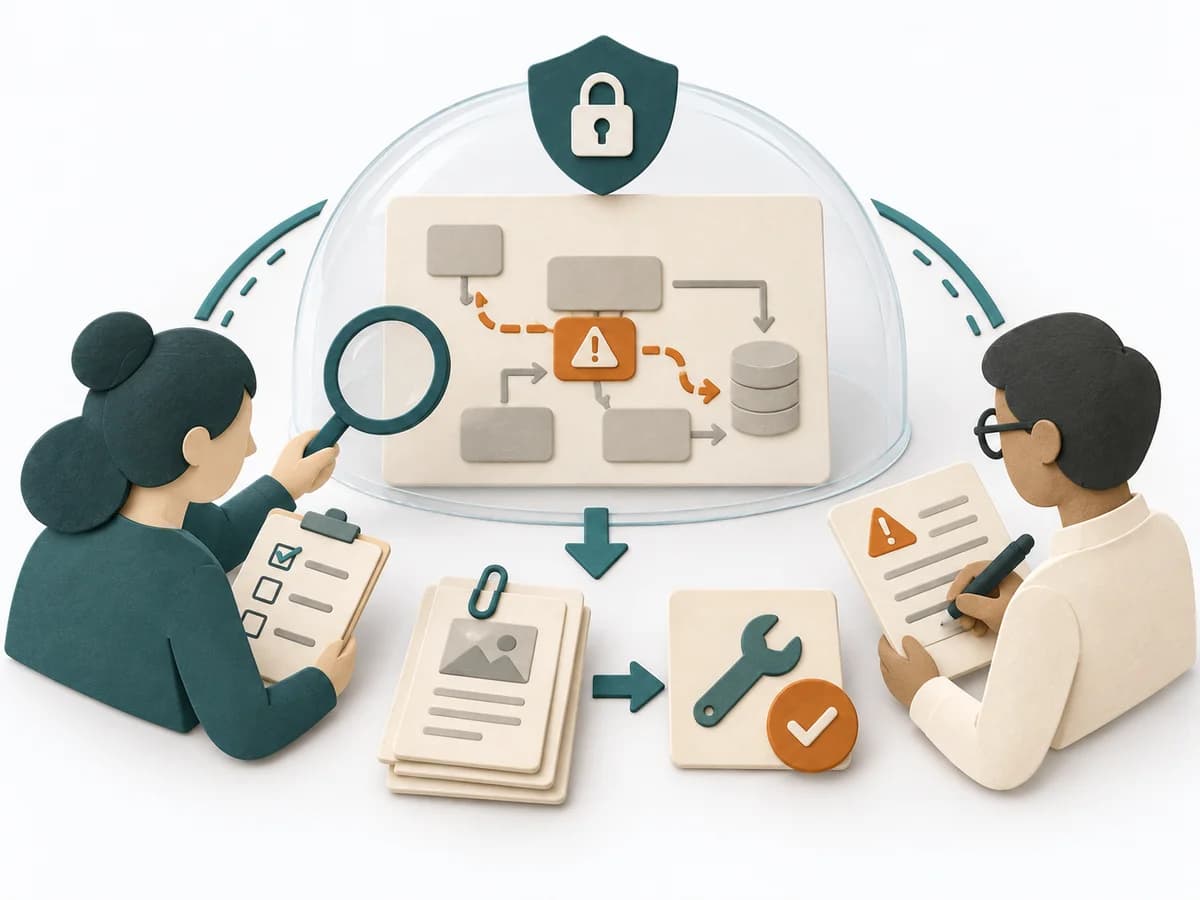 Decision Making Red Teaming |
|---|---|---|---|---|
Purposedifferent | For decisions with follow-on paths and dependencies, a linear comparison is often not enough. A Decision Tree shows how options branch under conditions and which consequences hang on each branch. | Soft Systems Methodology helps explore unclear or politically charged problems systematically. Instead of forcing a quick answer, the method builds a shared understanding of perspectives and room for action. | When assumptions still sit unordered in the room, it weighs uncertainty against leverage. It makes visible which hypotheses should be checked first. | For strategic decisions with high reach, agreement and gut feeling are often not enough. Red teaming brings deliberate opposition into the situation and tests where a plan breaks under real counterarguments. |
Complexitydifferent | Medium | High | Medium | High |
Timedifferent | 30-90 min | 0.5-3 Tage | 45-60 min | 1-4 h |
Participantsdifferent | 1-6 | 5-15 | 2-8 | 3-8 |
Formatdifferent | Workshop + async | Workshop | Workshop + async | Workshop |
Outputdifferent | Decision Tree, Option Map, Assumption List | Rich Picture, Root Definitions, Conceptual Models, Change Agenda | Assumption map, Test backlog, Risk ranking | Challenge Findings, Risk Register, Mitigation Plan |
Tagsno overlap | DecisionTreeOptions | Soft systemsComplexitySensemakingSystems thinking | AssumptionsRiskExperimentsValidation | RiskDecisionSensemaking |