View methods side by side.
Choose up to four methods. Add them using the search and share the comparison by copying its link.
| Criterion | 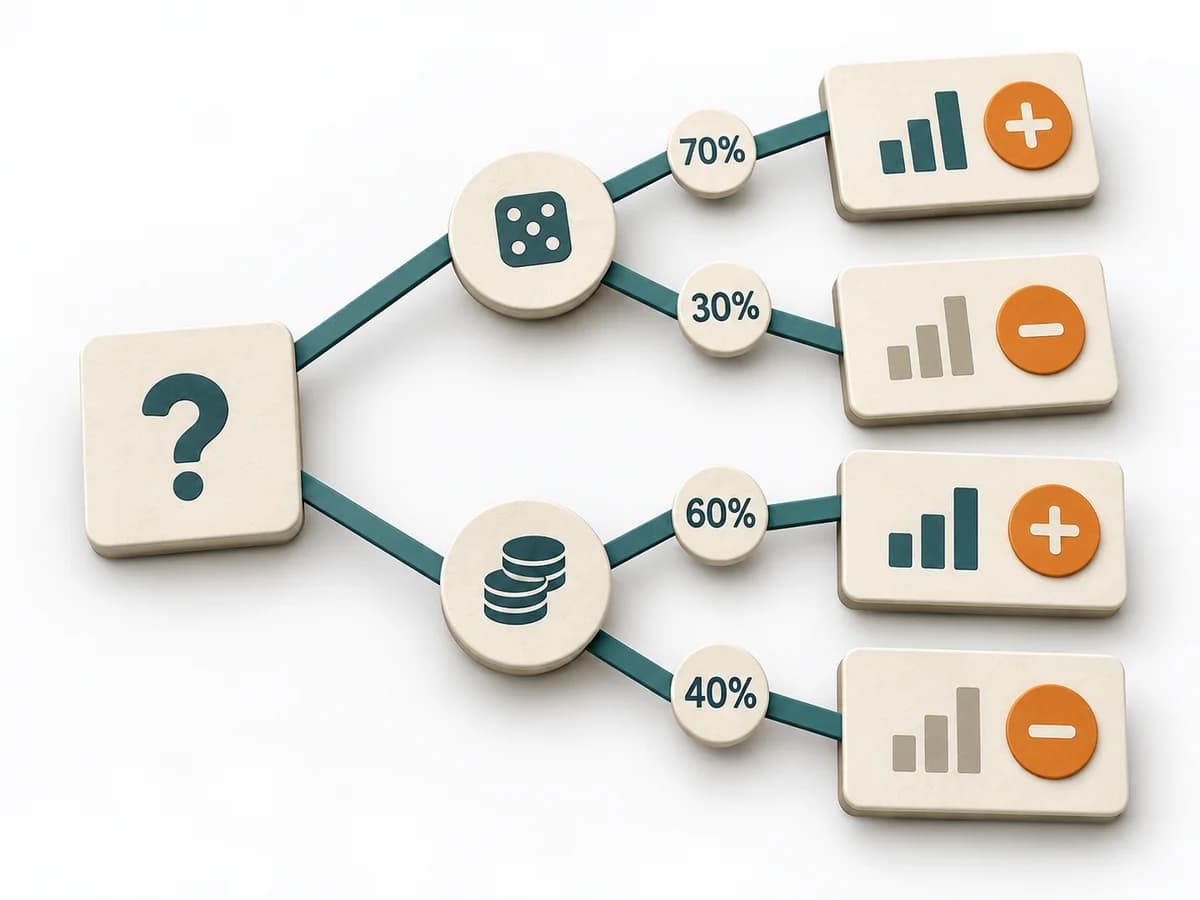 Decision Making Decision Tree | 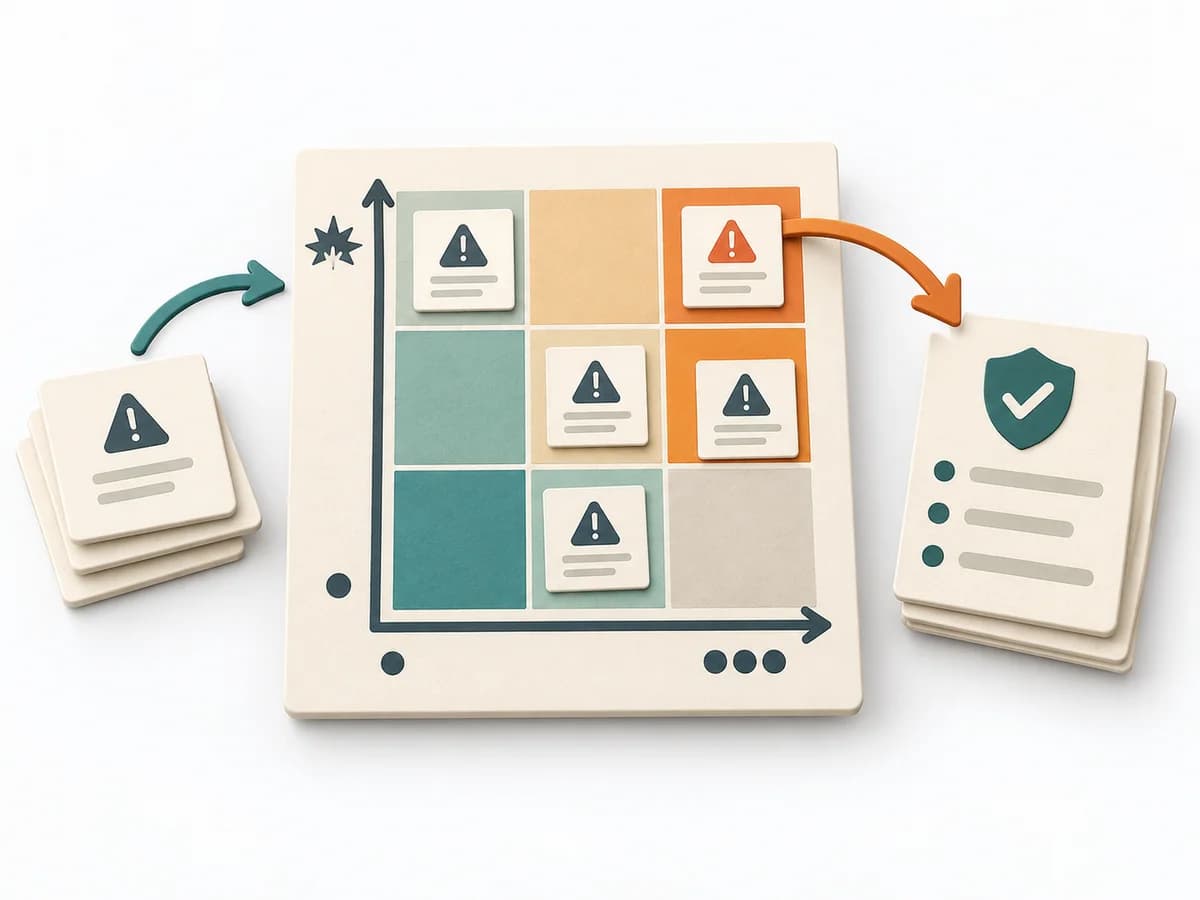 Decision Making Risk Matrix |  Product Strategy DIBB | 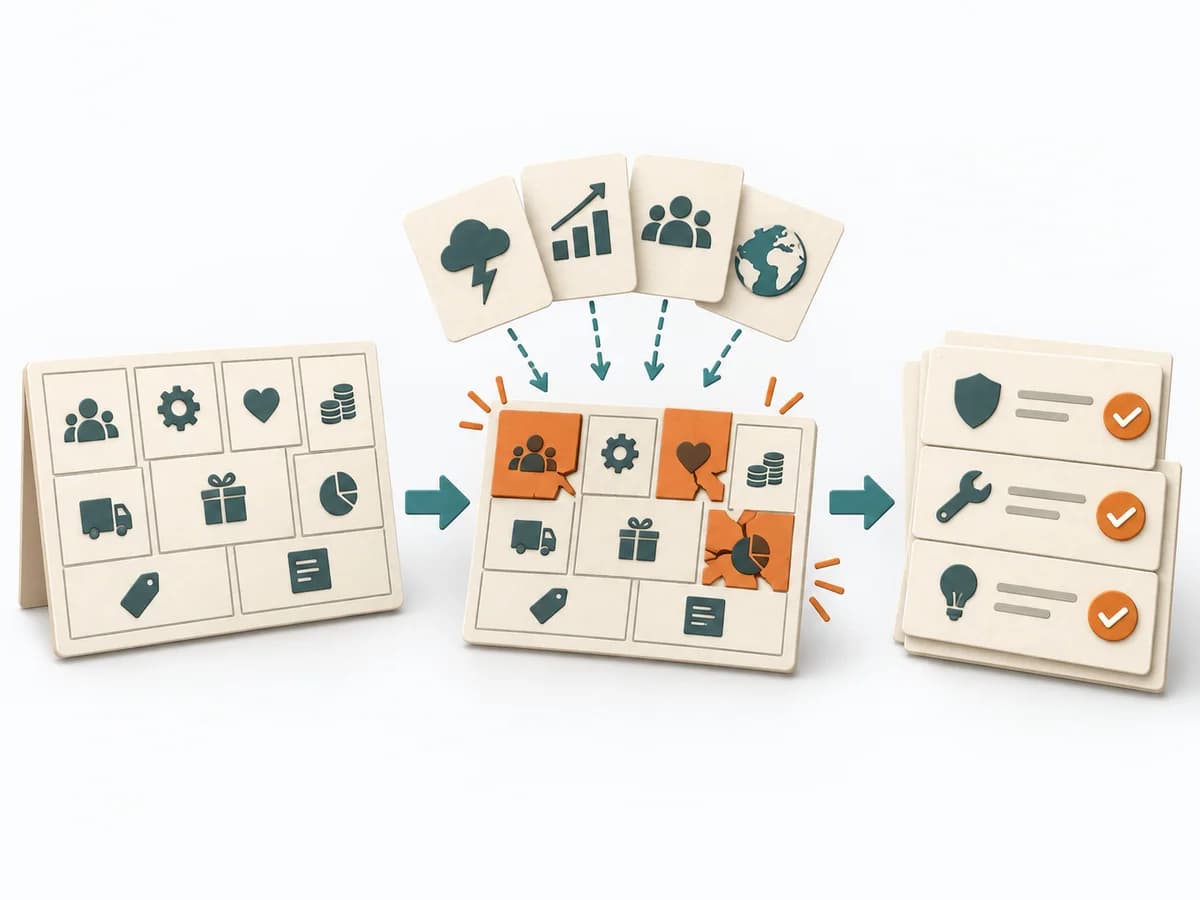 Business Strategy Business Model Stress Test |
|---|---|---|---|---|
Purposedifferent | For decisions with follow-on paths and dependencies, a linear comparison is often not enough. A Decision Tree shows how options branch under conditions and which consequences hang on each branch. | When a project faces many possible disruptions, it quickly becomes unclear which risks deserve attention first. It separates options, evaluation criteria, and open risks. The result is captured as a Risk Matrix and a Top Risk List. | DIBB helps clarify target groups, value, goals, and priorities by making the logic behind a decision explicit. It captures results as a DIBB document, belief list, bet list, and learning report. | A Business Model Stress Test checks how well a business model holds up under pressure and headwinds. It compares strengths, risks, market logic, and courses of action. The result is captured as a stress-test report and action plan per scenario. |
Complexitydifferent | Medium | Low | Low | High |
Timedifferent | 30-90 min | 30-60 min | 1-2 h | Half day |
Participantsdifferent | 1-6 | 3-10 | 2-8 | 3-8 |
Formatdifferent | Workshop + async | Workshop + async | Workshop + async | Workshop |
Outputdifferent | Decision Tree, Option Map, Assumption List | Risk Matrix, Top Risk List | DIBB document, Belief list, Bet list, Learning report | Stress Test Report, Action Plan per Scenario |
Tagsno overlap | DecisionTreeOptions | RiskDecisionPrioritizationAssessment | StrategyDecisionAssumptionsHypothesis | StrategyBusiness modelRiskDiagnosis |