View methods side by side.
Choose up to four methods. Add them using the search and share the comparison by copying its link.
| Criterion |  Decision Making Decision Tree | 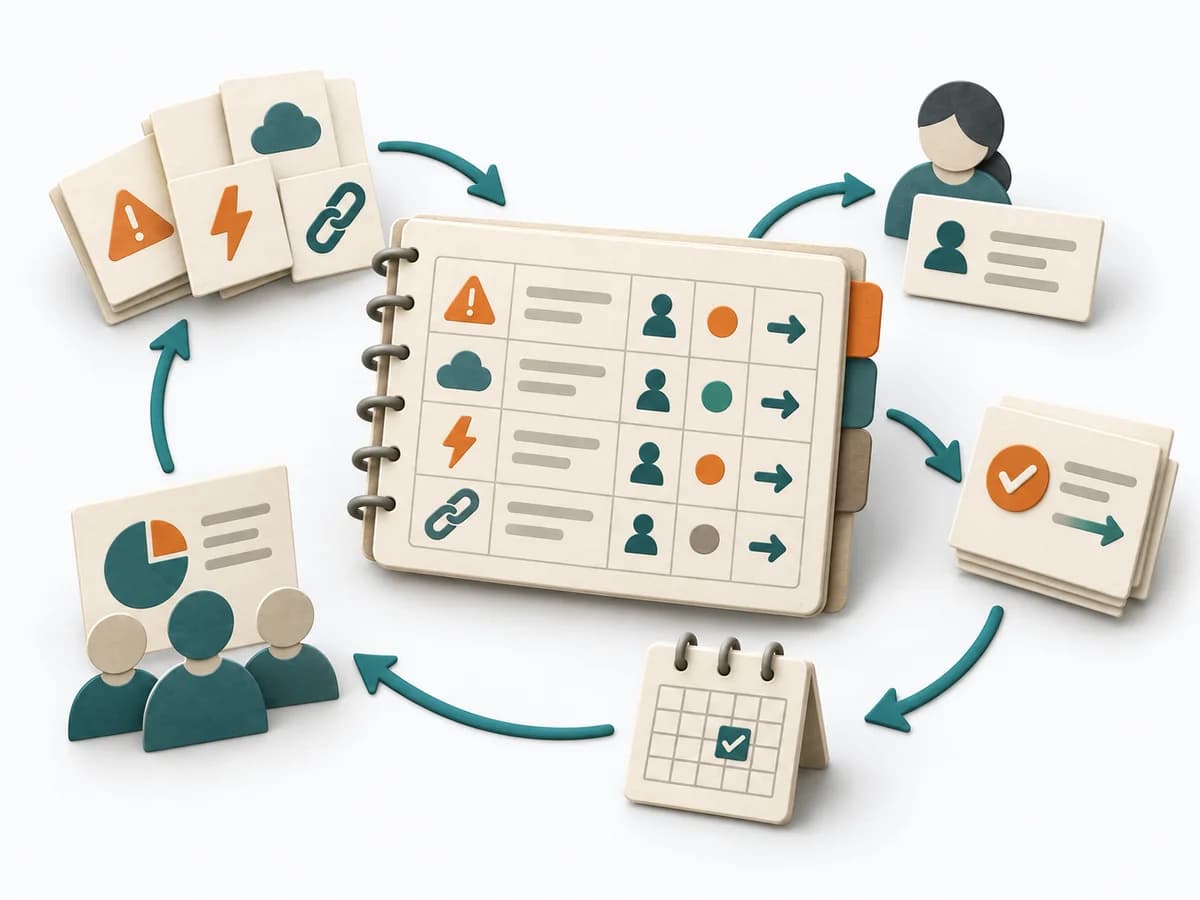 Delivery RAID Log |  Decision Making RAPID |  Decision Making Decision Rights Mapping |
|---|---|---|---|---|
Purposedifferent | For decisions with follow-on paths and dependencies, a linear comparison is often not enough. A Decision Tree shows how options branch under conditions and which consequences hang on each branch. | Helps clarify scope, sequence, and delivery flow in concrete terms. It makes work, boundaries, and order steerable. The result is captured as a RAID Log and a source for status reporting. | In complex management decisions, clarity is often missing about who recommends, who agrees, and who makes the decision. RAPID creates this assignment and stabilizes decisions across several levels. | In organizations with many stakeholders, it often blurs who actually decides and who is merely consulted. It separates options, evaluation criteria, and open risks. The result is captured as a Decision Rights matrix and an agreement. |
Complexitydifferent | Medium | Low | Medium | Medium |
Timedifferent | 30-90 min | 30 min Setup, dann laufend | 45-90 min | 90-180 min |
Participantsdifferent | 1-6 | 1-3 maintaining, briefing for everyone | 3-12 | 4-12 |
Formatdifferent | Workshop + async | Async | Workshop + async | Workshop |
Outputdifferent | Decision Tree, Option Map, Assumption List | RAID Log, Status Report Source | RAPID Role Map, Recommendation, Decision Log | Decision Rights Matrix, Agreement |
Tagsno overlap | DecisionTreeOptions | RiskTrackingStakeholdersGovernance | DecisionRolesGovernance | DecisionGovernanceAlignmentResponsibility |