View methods side by side.
Choose up to four methods. Add them using the search and share the comparison by copying its link.
| Criterion | 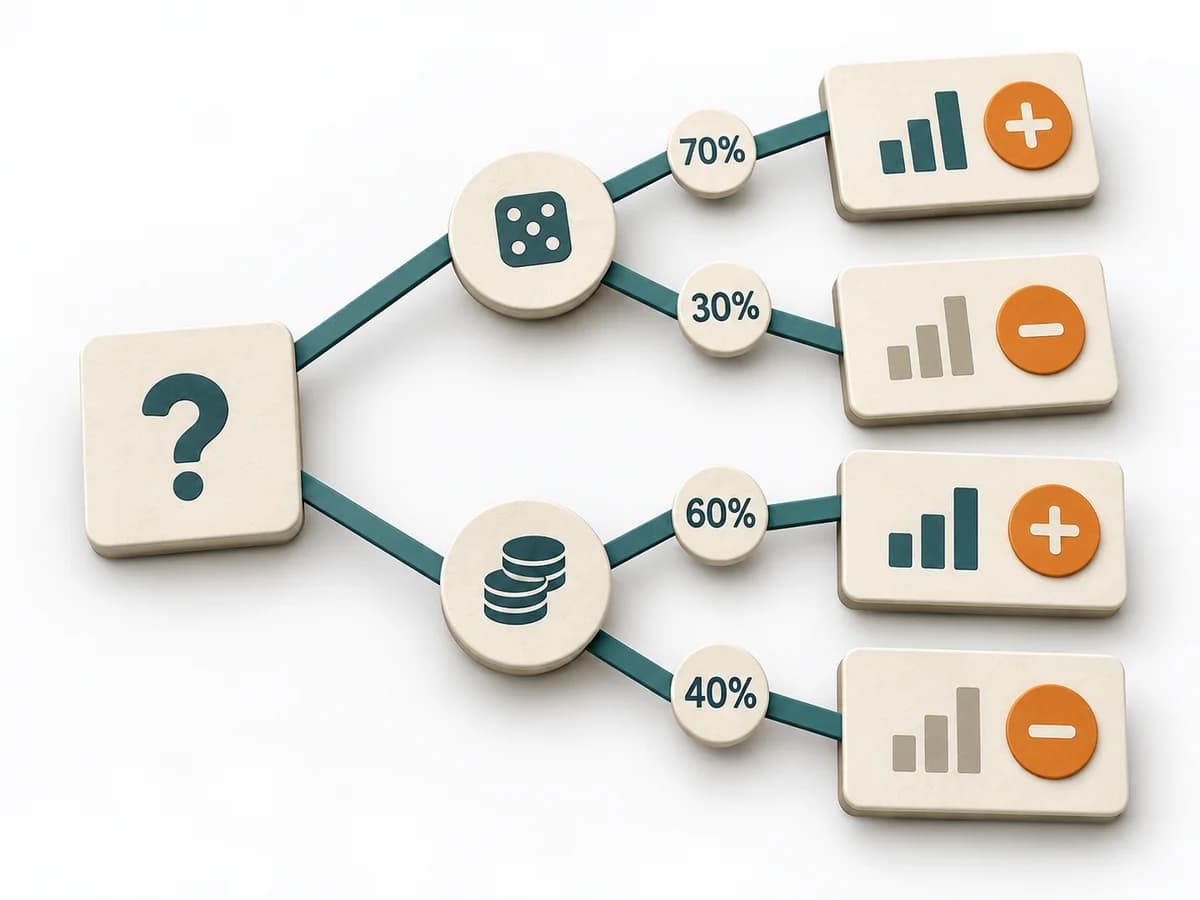 Decision Making Decision Tree |  Delivery MoSCoW |  Facilitation Alignment Mapping |  Facilitation Stakeholder Mapping |
|---|---|---|---|---|
Purposedifferent | For decisions with follow-on paths and dependencies, a linear comparison is often not enough. A Decision Tree shows how options branch under conditions and which consequences hang on each branch. | When a release carries too many demands and priorities are only ever negotiated, MoSCoW creates clear boundaries for the next cut. Must, Should, Could, and Won't make commitment, room for maneuver, and trade-off logic visible to everyone involved. | When several people work toward one goal but hold different mental maps, Alignment Mapping makes the discrepancies visible. It arranges goals, assumptions, and priorities so shared direction becomes verifiable. | When an initiative depends on many people, interests, and power dynamics, Stakeholder Mapping systematically orders the environment. It shows who influences, who is affected, and where relationship management or safeguarding matters first. |
Complexitydifferent | Medium | Low | Medium | Low |
Timedifferent | 30-90 min | 30-90 min | 1-2 h | 60–90 min |
Participantsdifferent | 1-6 | 3-12 | 4-12 | 2-8 |
Formatdifferent | Workshop + async | Workshop + async | Workshop | Workshop + async |
Outputdifferent | Decision Tree, Option Map, Assumption List | Prioritized Backlog, Release Scope, Tradeoff Notes | Alignment Map, Open Issues, Decision Questions | Stakeholder Map, Engagement Plan, Risk Notes |
Tagsno overlap | DecisionTreeOptions | PrioritizationScopeDecision | AlignmentStakeholdersStrategyFacilitation | StakeholdersAlignmentFacilitationChange |