View methods side by side.
Choose up to four methods. Add them using the search and share the comparison by copying its link.
| Criterion |  Decision Making Decision Tree |  Systems Thinking Iceberg Model |  Operations Family Tree Analysis | 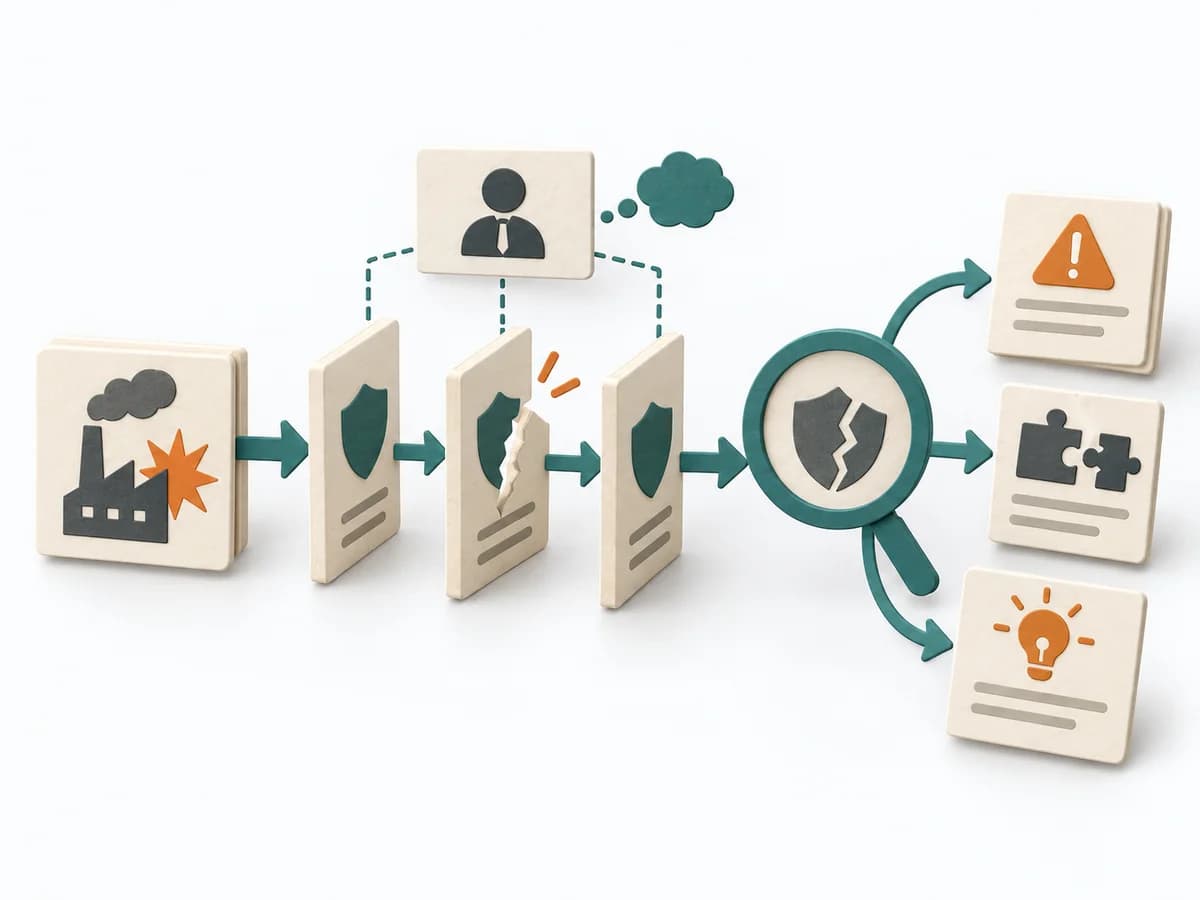 Operations MORT Analysis |
|---|---|---|---|---|
Purposedifferent | For decisions with follow-on paths and dependencies, a linear comparison is often not enough. A Decision Tree shows how options branch under conditions and which consequences hang on each branch. | The Iceberg Model separates visible events from patterns, structures, and mental models. This turns a single observation into a deeper understanding of why a problem keeps recurring. | For a series of incidents with a similar pattern, the method arranges individual events as branches of a common origin. It makes visible which conditions keep recurring. | For a safety-relevant event or a system with high protection requirements, the method examines where controls failed. It exposes both technical and organizational gaps. |
Complexitydifferent | Medium | Low | Medium | High |
Timedifferent | 30-90 min | 30-60 min | 2-4 h | Mehrere Tage bis Wochen |
Participantsdifferent | 1-6 | 2-10 | 2-6 | 2-6 |
Formatsame | Workshop + async | Workshop + async | Workshop + async | Workshop + async |
Outputdifferent | Decision Tree, Option Map, Assumption List | Iceberg Worksheet, Pattern Notes, Intervention Ideas | Family Tree Diagram, Pattern Notes, Systemic Measures | MORT Worksheets, Findings per Branch, Corrective Actions, Systemic Recommendations |
Tagsno overlap | DecisionTreeOptions | Systems thinkingRoot causePatterns | Root causePatternsIncidentSystemic | Root causeSafetySystemicIncident |