View methods side by side.
Choose up to four methods. Add them using the search and share the comparison by copying its link.
| Criterion |  Decision Making Decision Tree |  Decision Making Decision Rights Mapping | 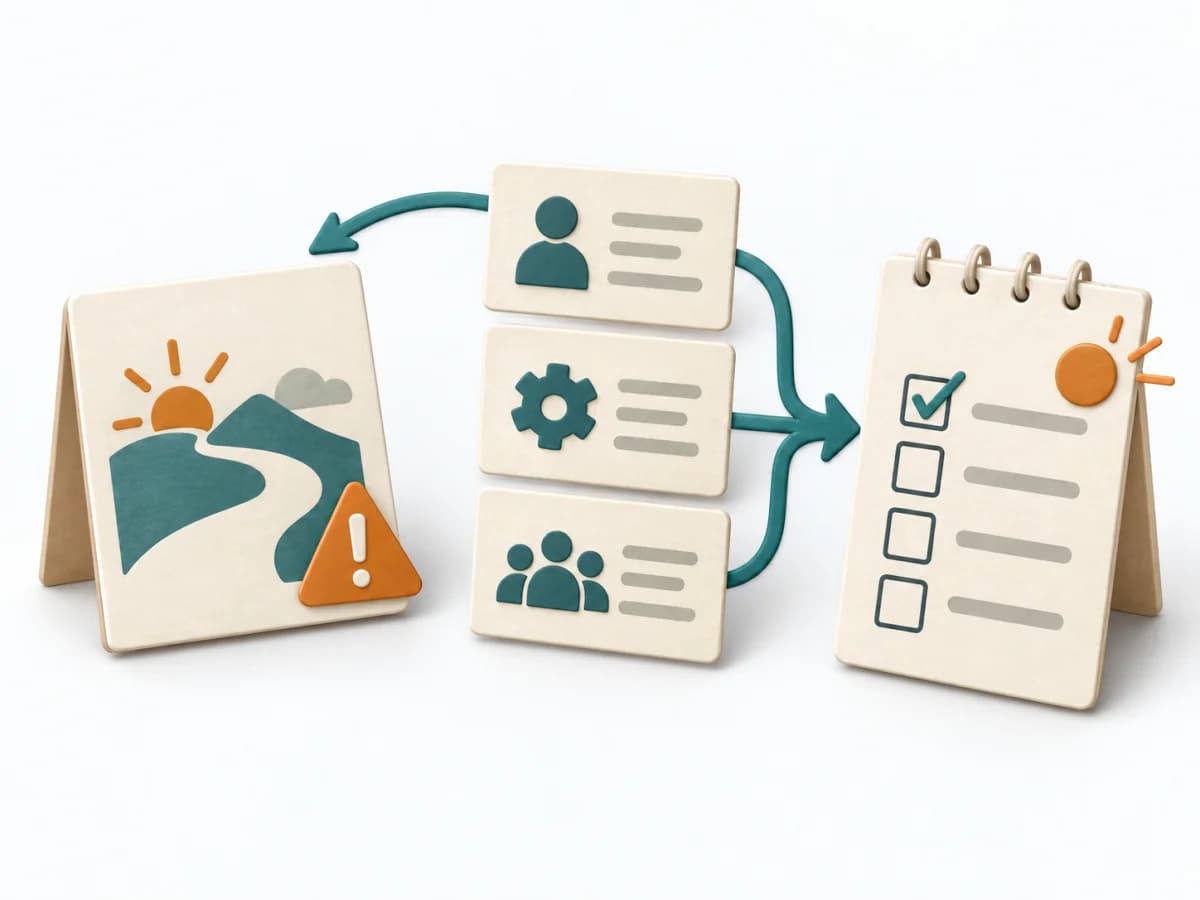 Decision Making Pre-Mortem | 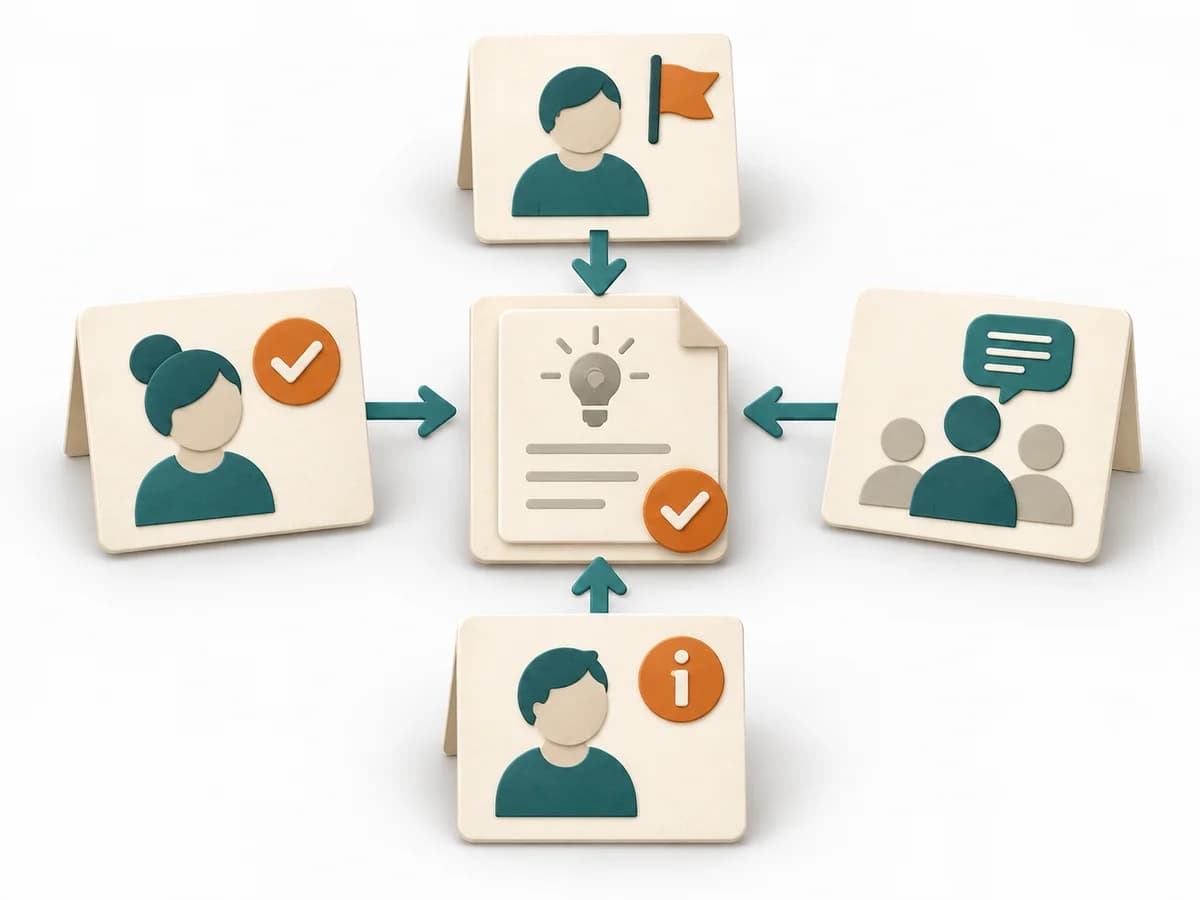 Decision Making DACI |
|---|---|---|---|---|
Purposedifferent | For decisions with follow-on paths and dependencies, a linear comparison is often not enough. A Decision Tree shows how options branch under conditions and which consequences hang on each branch. | In organizations with many stakeholders, it often blurs who actually decides and who is merely consulted. It separates options, evaluation criteria, and open risks. The result is captured as a Decision Rights matrix and an agreement. | In early initiatives with many uncertainties, planning quickly turns too optimistic. A pre-mortem makes the expected failure visible in advance and sharpens the view of causes, gaps, and countermeasures. | In cross-functional decisions, responsibilities quickly blur between approval, influence, and execution. DACI arranges these roles so decision pressure, contribution, and information stay cleanly separated. |
Complexitydifferent | Medium | Medium | Low | Low |
Timedifferent | 30-90 min | 90-180 min | 20–45 min | 30-60 min |
Participantsdifferent | 1-6 | 4-12 | Small cross-functional group | 2-10 |
Formatdifferent | Workshop + async | Workshop | Workshop | Workshop + async |
Outputdifferent | Decision Tree, Option Map, Assumption List | Decision Rights Matrix, Agreement | Risk list, Mitigation plan, Assumption log | DACI Matrix, Decision Owner, Decision Log |
Tags1 shared | DecisionTreeOptions | DecisionGovernanceAlignmentResponsibility | RiskDecisionFailurePlanning | DecisionRolesGovernanceAlignment |