View methods side by side.
Choose up to four methods. Add them using the search and share the comparison by copying its link.
| Criterion |  Decision Making Decision Tree | 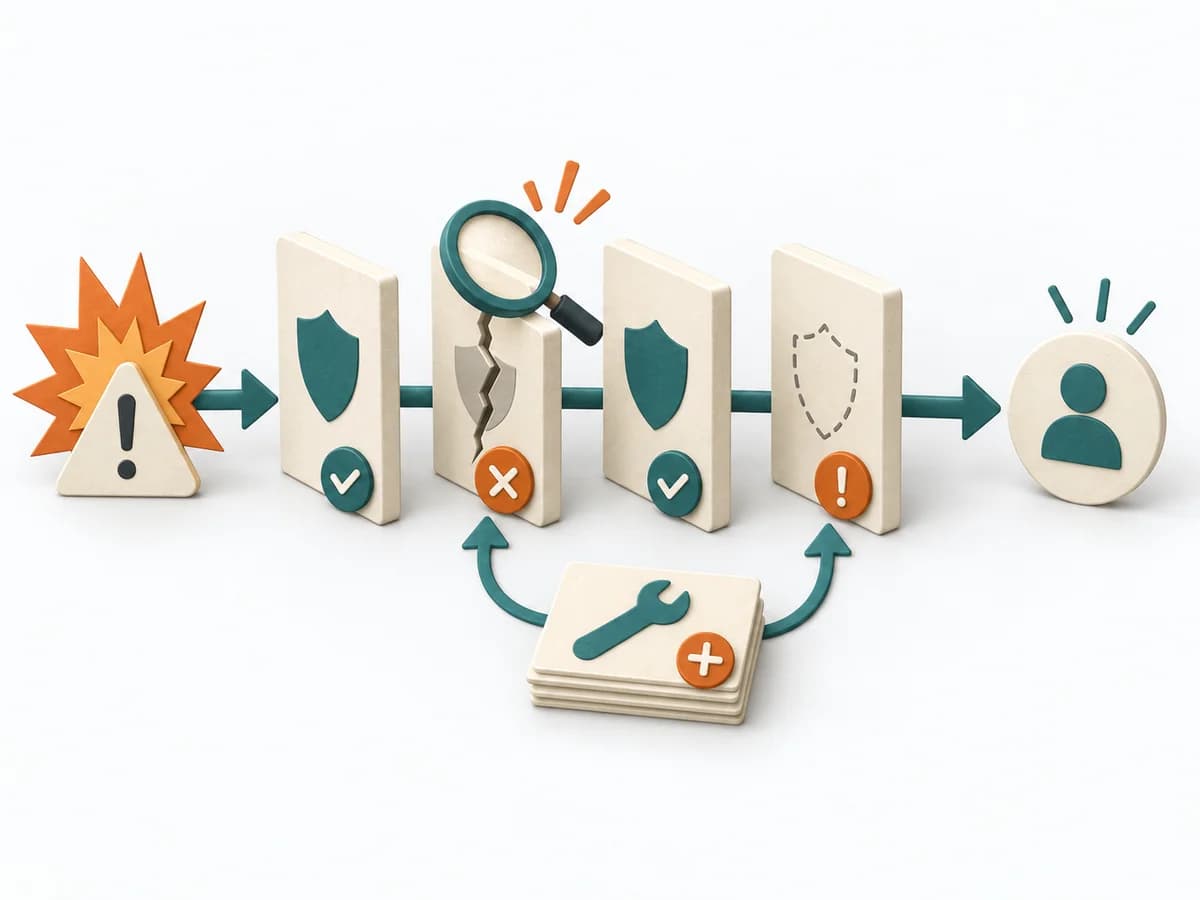 Operations Barrier Analysis |  Operations Kepner-Tregoe |  Operations Root Cause Analysis |
|---|---|---|---|---|
Purposedifferent | For decisions with follow-on paths and dependencies, a linear comparison is often not enough. A Decision Tree shows how options branch under conditions and which consequences hang on each branch. | For a risk that can only be managed through multiple layers of protection, the method examines the effectiveness of each barrier. It shows where safeguards are missing, too weak, or fail under real conditions. | For a disturbance that's hard to pin down, the method cleanly separates problem, cause, and decision. It reduces mixing when symptoms allow several interpretations. | When a problem keeps recurring and the cause stays unclear, the method exposes the underlying mechanism. It separates symptom, guess, and robust explanation from one another. |
Complexitydifferent | Medium | Medium | High | Medium |
Timedifferent | 30-90 min | 2-4 h | 2-8 h | 1-4 h |
Participantsdifferent | 1-6 | 2-6 | 2-8 | 3-8 |
Formatsame | Workshop + async | Workshop + async | Workshop + async | Workshop + async |
Outputdifferent | Decision Tree, Option Map, Assumption List | Barrier Inventory, Failure Analysis per Barrier, Action Backlog | Problem Analysis, Decision Analysis, Risk Plan | Problem Statement, Cause Hypotheses, Confirmed Causes, Action Plan |
Tagsno overlap | DecisionTreeOptions | Root causeSafetyIncident | Problem solvingRoot causeDecisionOperations | Root causeProblem solvingQualityIncident |