View methods side by side.
Choose up to four methods. Add them using the search and share the comparison by copying its link.
| Criterion |  Decision Making Decision Rights Mapping | 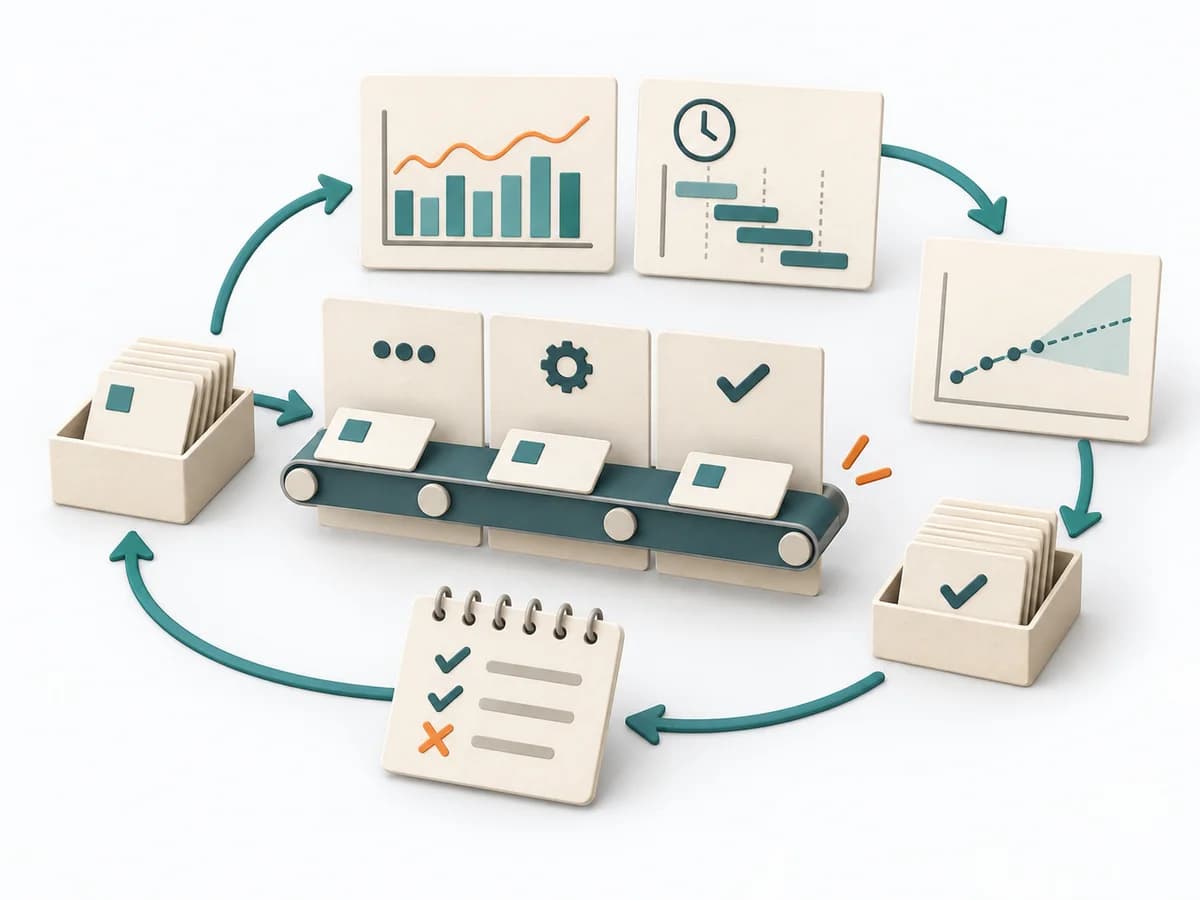 Agile NoEstimates |  Facilitation Stakeholder Salience Model |  Facilitation Power Interest Grid |
|---|---|---|---|---|
Purposedifferent | In organizations with many stakeholders, it often blurs who actually decides and who is merely consulted. It separates options, evaluation criteria, and open risks. The result is captured as a Decision Rights matrix and an agreement. | When estimating slows a team down more than it helps, it shifts the focus to flow, small slices, and real lead time. It sorts work by value, risk, and delivery ability. The result is captured as Throughput Data, Flow Forecast, and Slicing Rules. | When stakeholders appear to matter very differently, the Stakeholder Salience Model rates their actual priority through power, legitimacy, and urgency. It turns individual contributions into a visible selection. The result is captured as a Salience diagram and a class-based strategy. | When many stakeholders compete for attention at once, the Power Interest Grid sorts them by influence and stake. It turns individual contributions into a visible selection. The result is captured as a Power Interest Grid and a stakeholder-specific strategy. |
Complexitydifferent | Medium | Medium | Medium | Low |
Timedifferent | 90-180 min | laufend | 60-90 min | 30-60 min |
Participantsdifferent | 4-12 | 2-12 | 3-6 | 2-8 |
Formatdifferent | Workshop | Workshop + async | Workshop | Workshop |
Outputdifferent | Decision Rights Matrix, Agreement | Throughput Data, Flow Forecast, Slicing Rules | Salience Diagram, Strategy per Class | Power Interest Grid, Strategy per Stakeholder |
Tagsno overlap | DecisionGovernanceAlignmentResponsibility | EstimationForecastingFlow | StakeholdersFacilitationAlignmentGovernance | StakeholdersFacilitationAlignmentPlanning |