View methods side by side.
Choose up to four methods. Add them using the search and share the comparison by copying its link.
| Criterion | 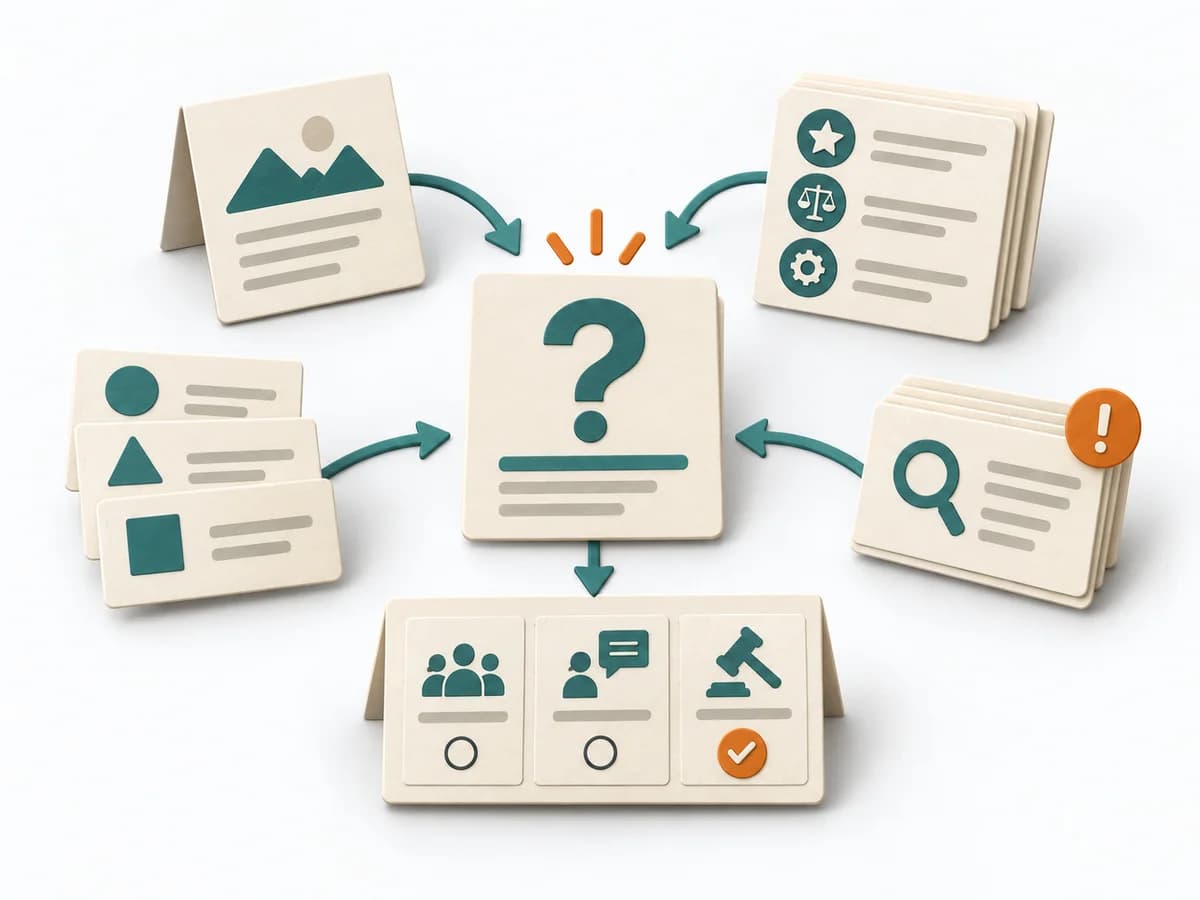 Decision Making Decision Framing Workshop |  Product Strategy DIBB | 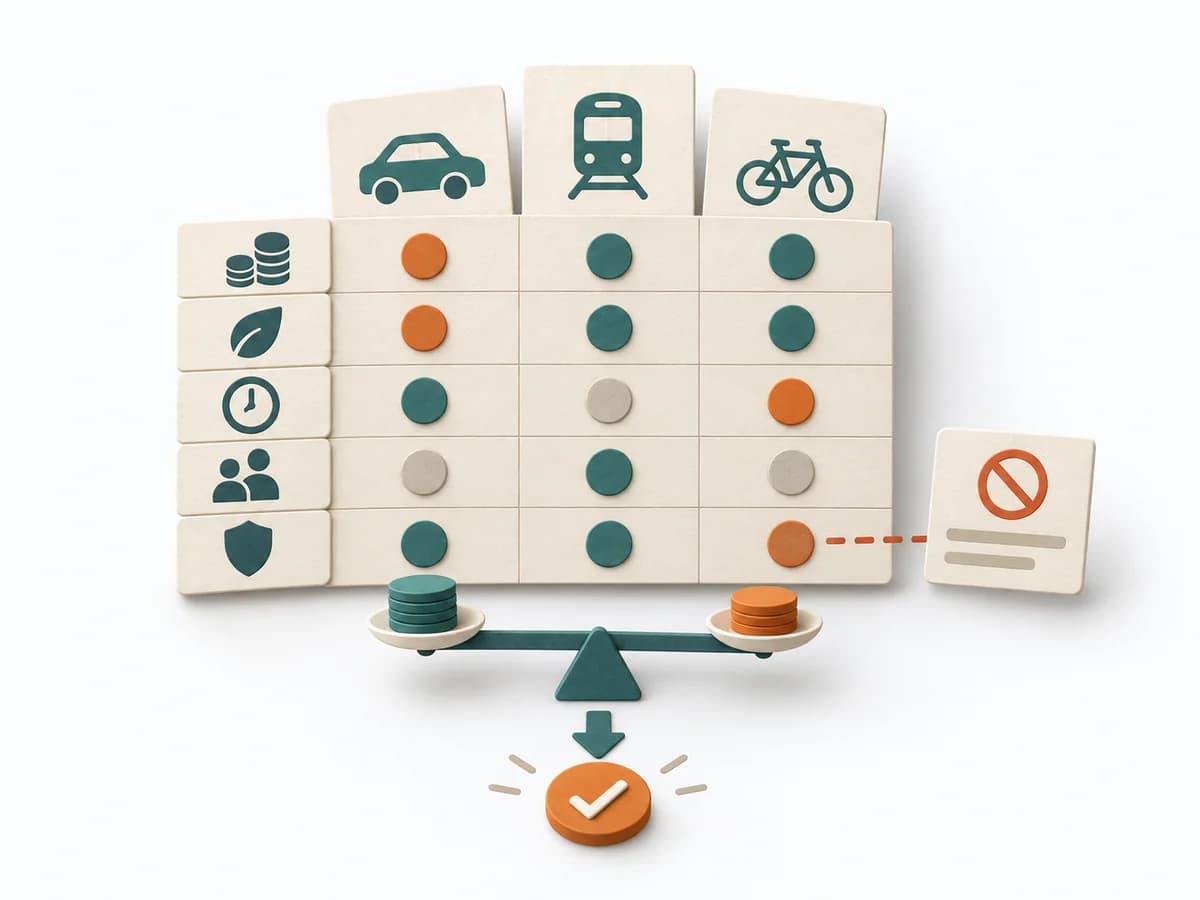 Decision Making Trade-off Analysis |  Facilitation Alignment Mapping |
|---|---|---|---|---|
Purposedifferent | When a decision is poorly framed, even good answers deliver little value. A Decision Framing Workshop sharpens the problem, goal, and boundaries before the actual weighing begins. | DIBB helps clarify target groups, value, goals, and priorities by making the logic behind a decision explicit. It captures results as a DIBB document, belief list, bet list, and learning report. | With limited resources, quality, speed, cost, and risk almost always compete with each other. Trade-off Analysis makes these tensions explicit and prevents decisions from producing hidden side effects. | When several people work toward one goal but hold different mental maps, Alignment Mapping makes the discrepancies visible. It arranges goals, assumptions, and priorities so shared direction becomes verifiable. |
Complexitydifferent | Medium | Low | Medium | Medium |
Timedifferent | 60-120 min | 1-2 h | 45-120 min | 1-2 h |
Participantsdifferent | 4-10 | 2-8 | 2-8 | 4-12 |
Formatdifferent | Workshop | Workshop + async | Workshop + async | Workshop |
Outputdifferent | Decision Frame, Decision Question, Criteria List, Evidence Plan | DIBB document, Belief list, Bet list, Learning report | Trade-off Matrix, Criteria List, Decision Rationale, Accepted Downsides | Alignment Map, Open Issues, Decision Questions |
Tagsno overlap | Decision framingAlignmentCriteriaOptions | StrategyDecisionAssumptionsHypothesis | TradeoffsDecisionCriteriaOptions | AlignmentStakeholdersStrategyFacilitation |