View methods side by side.
Choose up to four methods. Add them using the search and share the comparison by copying its link.
| Criterion |  Decision Making DACI | 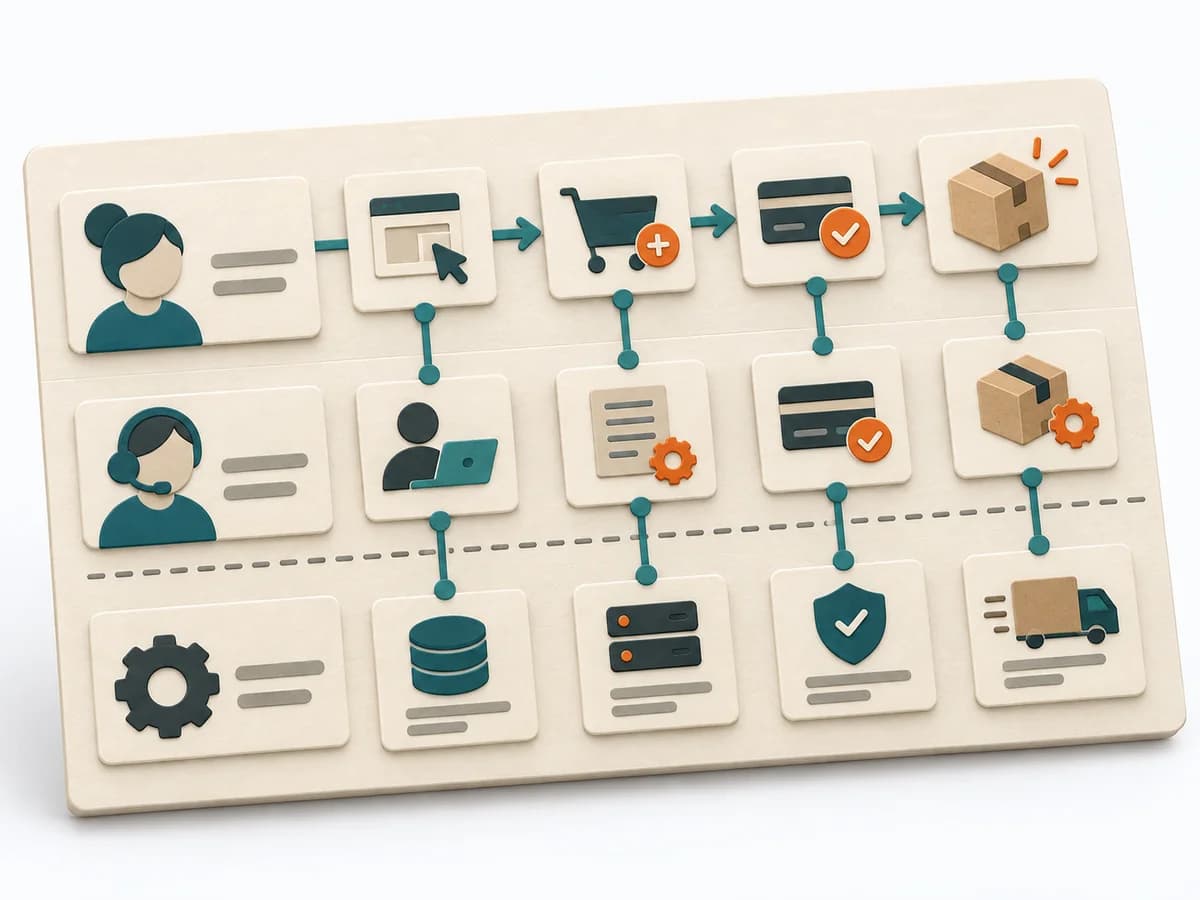 UX Design Service Blueprinting |  UX Research Customer Journey Mapping |  Decision Making Decision Rights Mapping |
|---|---|---|---|---|
Purposedifferent | In cross-functional decisions, responsibilities quickly blur between approval, influence, and execution. DACI arranges these roles so decision pressure, contribution, and information stay cleanly separated. | When a service experience is spread across several touchpoints, it brings frontstage and backstage together. It shows where user contact and internal responsibility must fit. | When a user journey falls apart across many touchpoints, customer journey mapping makes the experience visible as a coherent arc. Phases, emotions, and breaks become legible enough to prioritize critical moments deliberately. | In organizations with many stakeholders, it often blurs who actually decides and who is merely consulted. It separates options, evaluation criteria, and open risks. The result is captured as a Decision Rights matrix and an agreement. |
Complexitydifferent | Low | High | Medium | Medium |
Timedifferent | 30-60 min | 0.5-2 Tage | 2-4 h | 90-180 min |
Participantsdifferent | 2-10 | 6-12 | 4-10 | 4-12 |
Formatdifferent | Workshop + async | Workshop | Workshop | Workshop |
Outputdifferent | DACI Matrix, Decision Owner, Decision Log | Service Blueprint, Fail Points, Ownership Map | Journey Map, Pain-point List, Opportunity Backlog | Decision Rights Matrix, Agreement |
Tagsno overlap | DecisionRolesGovernanceAlignment | Service designOperationsJourneyBlueprint | JourneyServiceService design | DecisionGovernanceAlignmentResponsibility |