View methods side by side.
Choose up to four methods. Add them using the search and share the comparison by copying its link.
| Criterion | 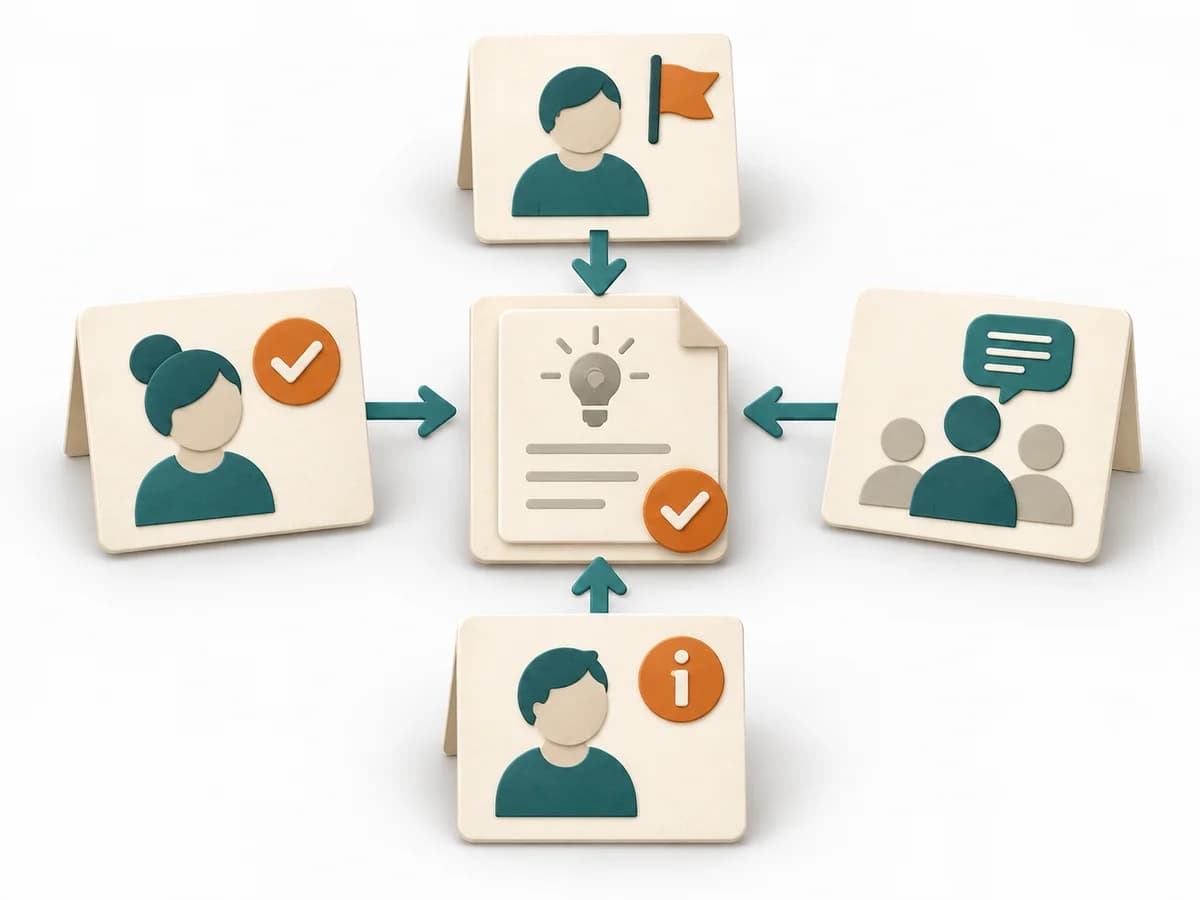 Decision Making DACI |  Agile 4Ls Retrospective |  Agile Start Stop Continue |  Decision Making Decision Rights Mapping |
|---|---|---|---|---|
Purposedifferent | In cross-functional decisions, responsibilities quickly blur between approval, influence, and execution. DACI arranges these roles so decision pressure, contribution, and information stay cleanly separated. | When a sprint should not only be assessed but also learned from, it captures experience in clear learning categories. It records what worked, what's missing, and what should run differently next time. | When a team wants to deliberately adjust its working behavior, it makes habits visible and assessable. It focuses on concrete changes instead of diffuse mood. | In organizations with many stakeholders, it often blurs who actually decides and who is merely consulted. It separates options, evaluation criteria, and open risks. The result is captured as a Decision Rights matrix and an agreement. |
Complexitydifferent | Low | Low | Low | Medium |
Timedifferent | 30-60 min | 45–75 min | 30-60 min | 90-180 min |
Participantsdifferent | 2-10 | Team members involved | 3-12 | 4-12 |
Formatdifferent | Workshop + async | Workshop | Workshop | Workshop |
Outputdifferent | DACI Matrix, Decision Owner, Decision Log | 4Ls Board, Learning Themes, Improvement Actions | Start Stop Continue Board, Improvement Actions | Decision Rights Matrix, Agreement |
Tagsno overlap | DecisionRolesGovernanceAlignment | RetrospectiveLearningReflectionTeam | RetrospectiveImprovementTeamReflection | DecisionGovernanceAlignmentResponsibility |