View methods side by side.
Choose up to four methods. Add them using the search and share the comparison by copying its link.
| Criterion | 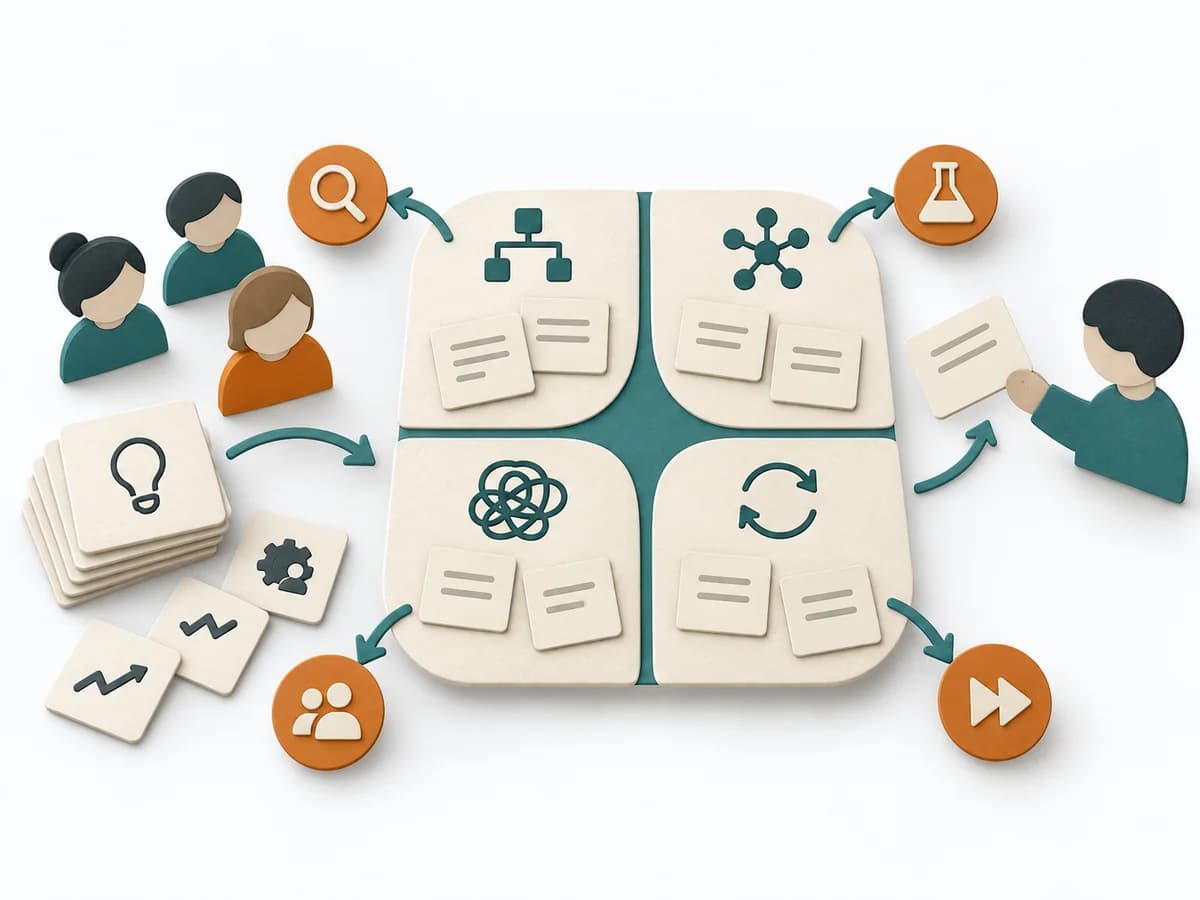 Decision Making Cynefin Workshop | 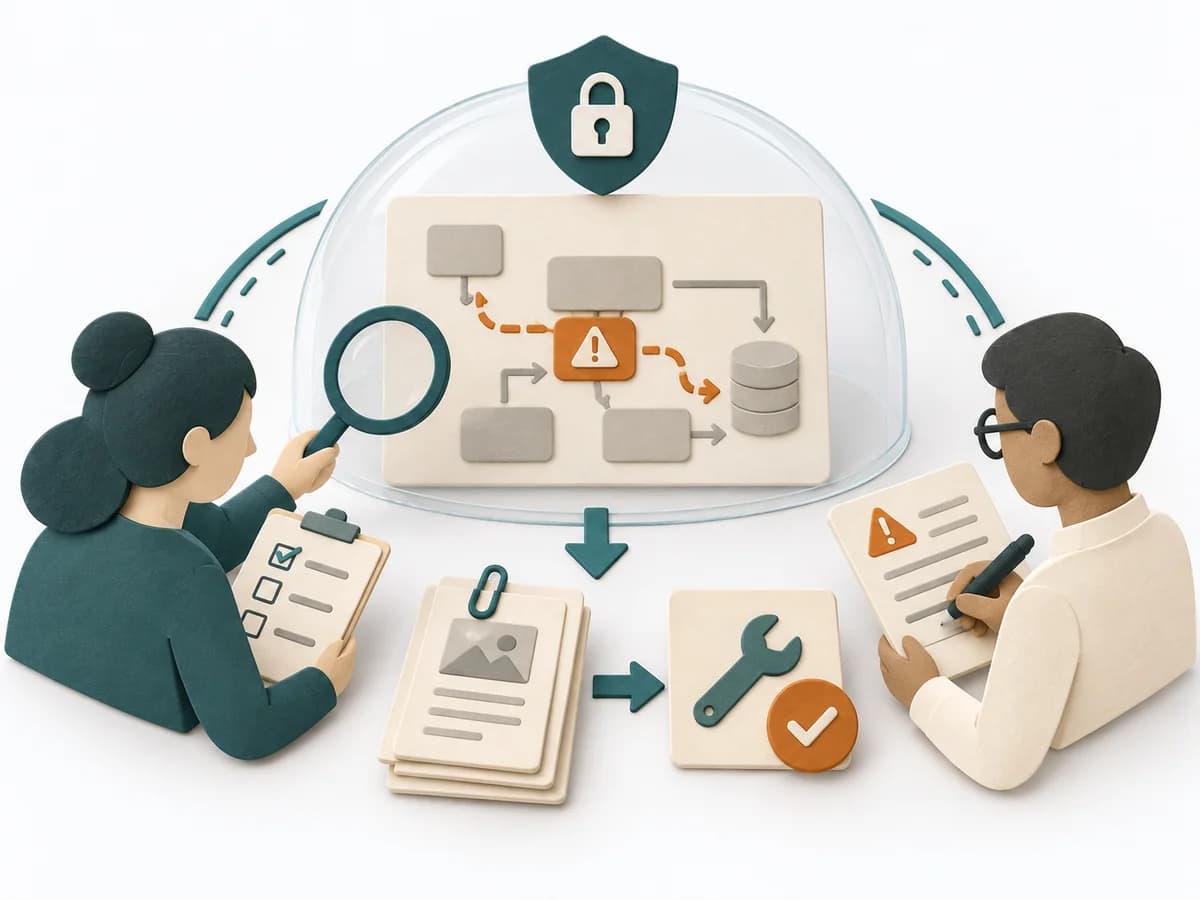 Decision Making Red Teaming | 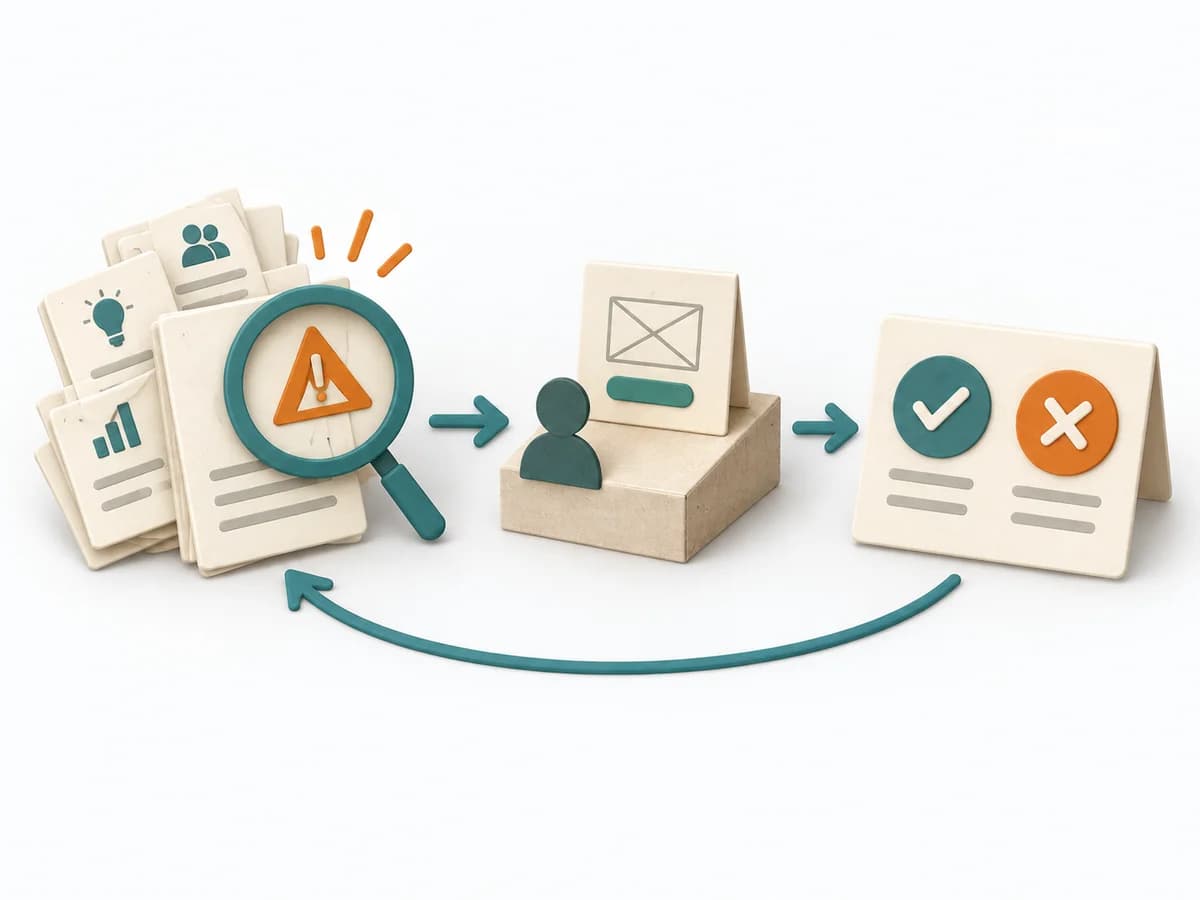 Product Discovery Riskiest Assumption Test | 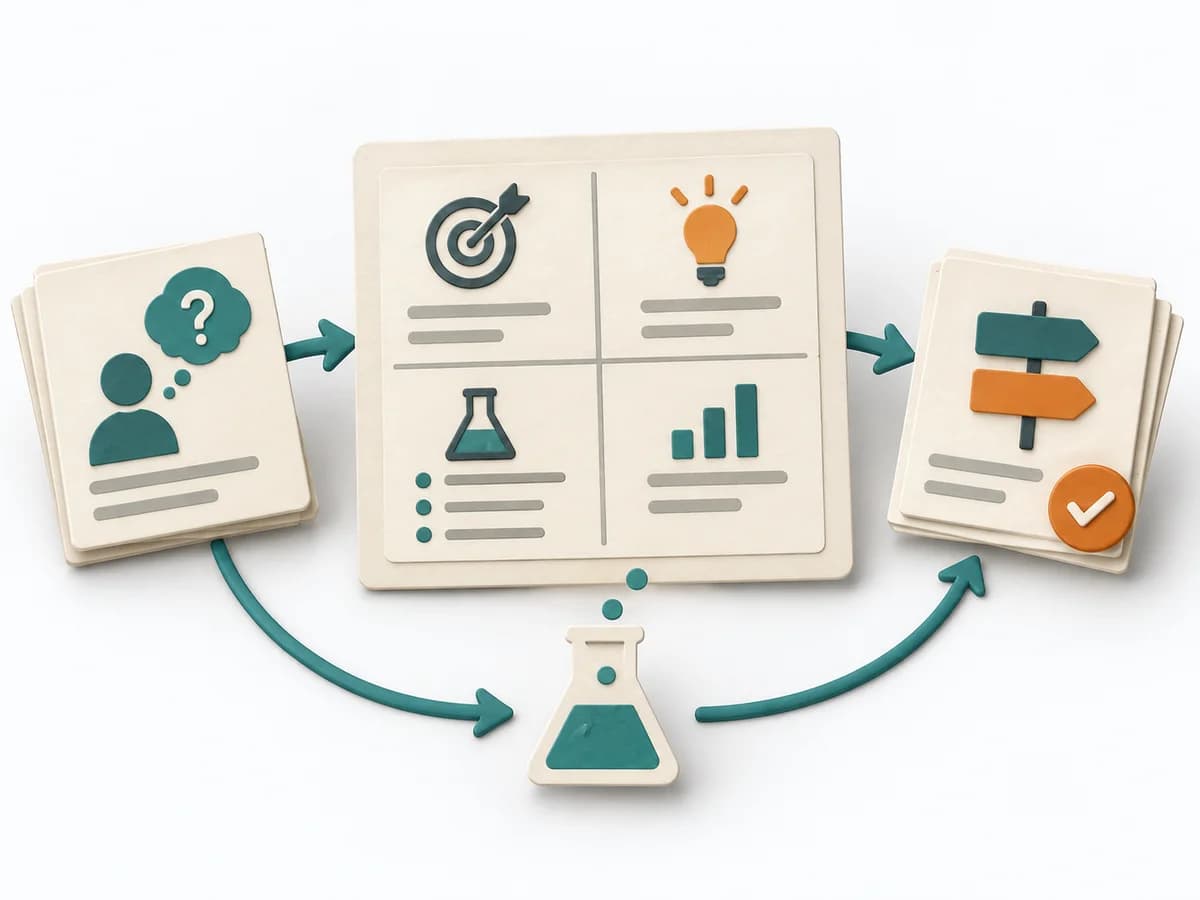 Product Discovery Experiment Canvas |
|---|---|---|---|---|
Purposedifferent | When problems are unclear, chaotic, or only seemingly familiar, standard recipes fall short. A Cynefin Workshop sorts situations by the nature of their problem and connects them with matching action logic. | For strategic decisions with high reach, agreement and gut feeling are often not enough. Red teaming brings deliberate opposition into the situation and tests where a plan breaks under real counterarguments. | When an idea hinges on one critical unknown, it prioritizes testing that exact piece of uncertainty first. It separates problem, assumption, solution, and evidence. The result is captured as a prioritized list of assumptions, a test plan, and a result report. | When experiments become unreadable after the fact, it arranges hypothesis, signal, and learning goal on a single canvas. It separates problem, assumption, solution, and evidence. The result is captured as a Completed Experiment Canvas and a Success Metric. |
Complexitydifferent | Medium | High | Medium | Low |
Timedifferent | 60-180 min | 1-4 h | 1-2 Wochen pro Iteration | 30-60 min |
Participantsdifferent | 4-20 | 3-8 | 2-6 | 1-5 |
Formatdifferent | Workshop | Workshop | Workshop + async | Workshop + async |
Outputdifferent | Cynefin Map, Domain-specific Actions, Sensemaking Notes | Challenge Findings, Risk Register, Mitigation Plan | Prioritized Assumption List, Test Plan, Results Report | Completed Experiment Canvas, Success Metric |
Tagsno overlap | ComplexitySensemakingDecision | RiskDecisionSensemaking | ExperimentsValidationDiscoveryAssumptions | ExperimentsValidationDiscoveryHypothesis |