View methods side by side.
Choose up to four methods. Add them using the search and share the comparison by copying its link.
| Criterion | 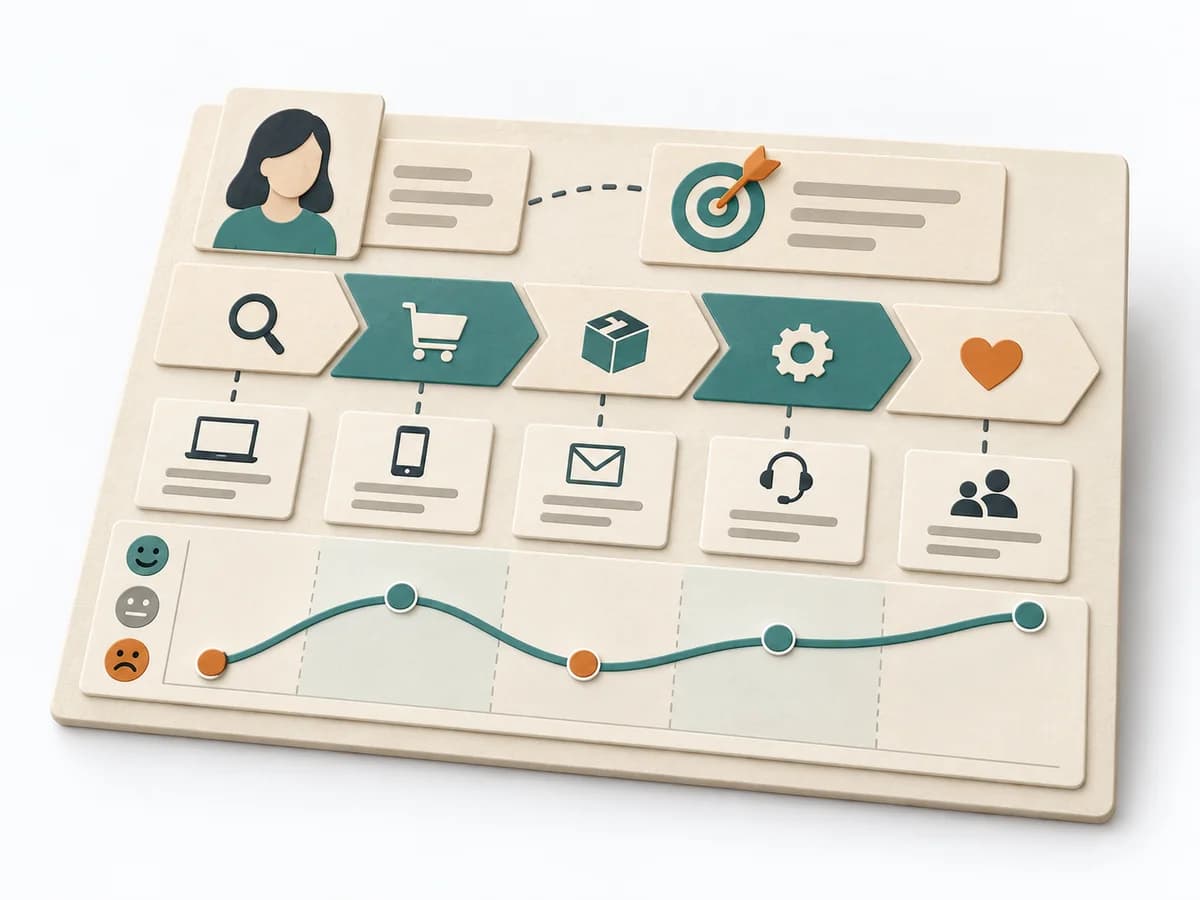 UX Design Customer Journey Canvas | 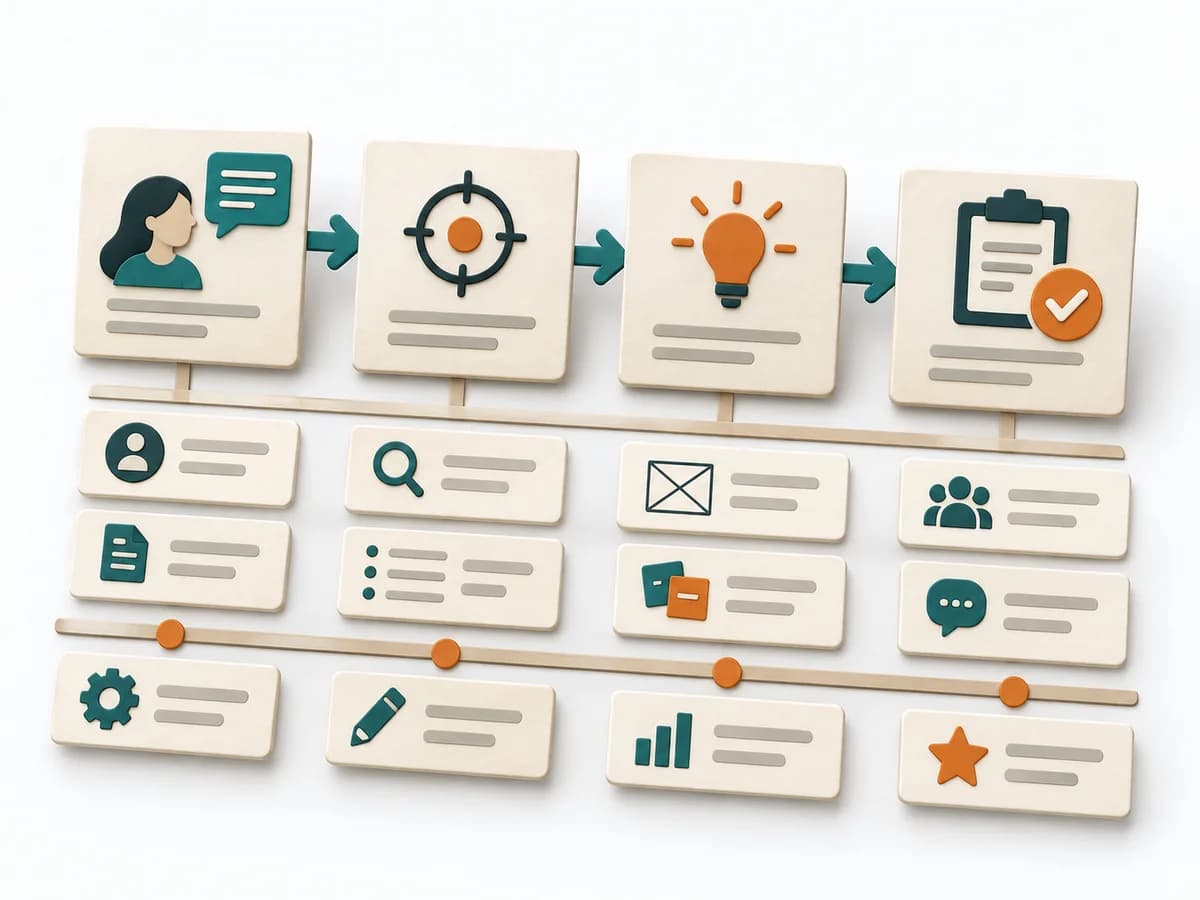 Product Discovery User Story Mapping | 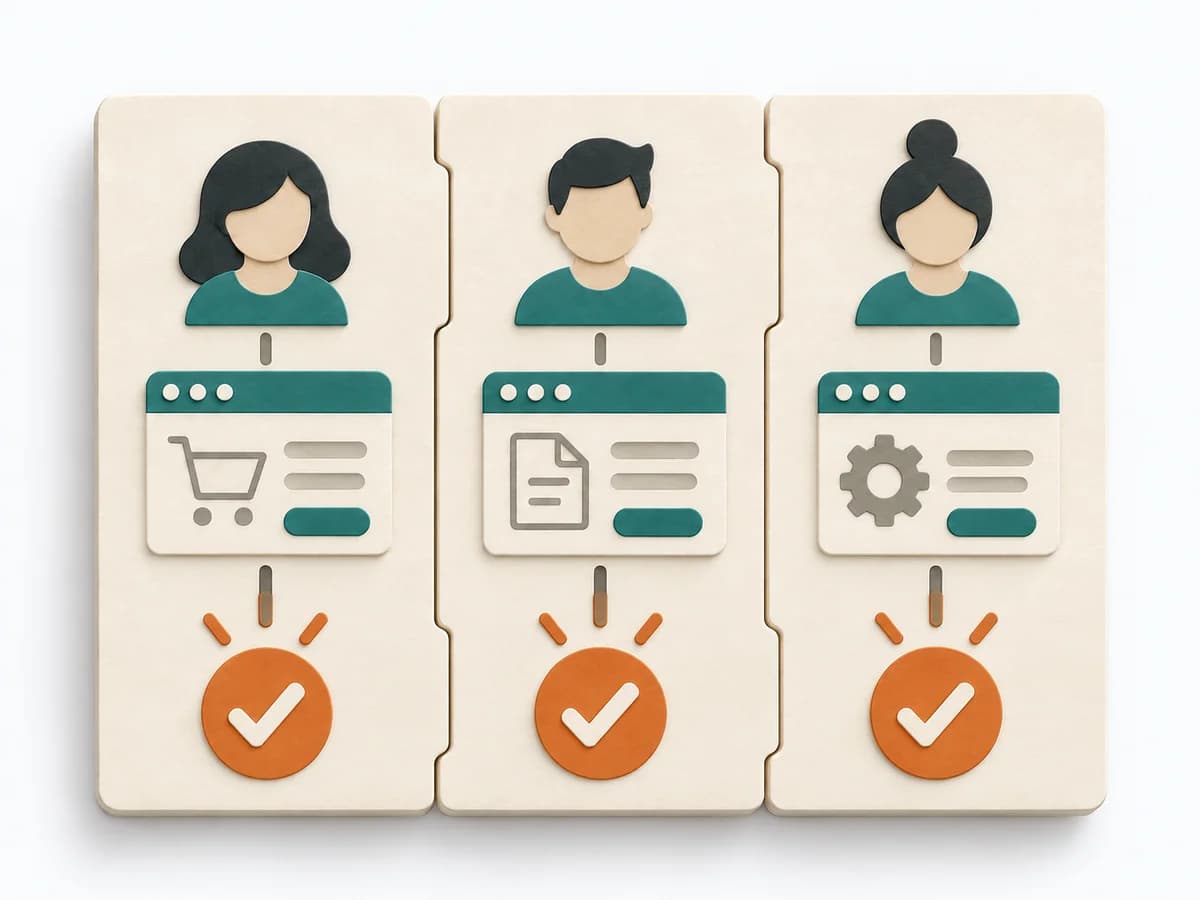 Agile Story Splitting |  UX Research Customer Journey Mapping |
|---|---|---|---|---|
Purposedifferent | When a journey needs to be understood across several phases, it arranges experience, touchpoints, and opportunities into one picture. It makes gaps and friction along the user path clear. | When user goals and delivery scope could drift apart, it orders the journey from goal to slice. It makes visible where an MVP can genuinely be cut. | When a story becomes too large for a clean flow, it breaks scope down along value and risk. It shapes the work into a form that ships earlier and is easier to verify. | When a user journey falls apart across many touchpoints, customer journey mapping makes the experience visible as a coherent arc. Phases, emotions, and breaks become legible enough to prioritize critical moments deliberately. |
Complexitysame | Medium | Medium | Medium | Medium |
Timedifferent | 1-3 h | 2-4 h | 30-60 min | 2-4 h |
Participantsdifferent | 3-10 | 4-10 | 2-6 | 4-10 |
Formatdifferent | Workshop | Workshop | Workshop + async | Workshop |
Outputdifferent | Customer Journey Canvas, Pain Points, Experience Opportunities | Story Map, Release Slices, Backlog Candidates | Smaller Stories, Acceptance Criteria, Split Rationale | Journey Map, Pain-point List, Opportunity Backlog |
Tagsno overlap | JourneyCustomerService designCanvas | BacklogJourneyPlanningMVP | BacklogIterationDelivery | JourneyServiceService design |